Author Archives: arlenekeith

Re-entering civilization (both past and present)

Standard

We are about to start our sixth day on the trail and the streets of Eilat feel long ago and far away. We have covered miles of remote desert, and while we know that civilization is close by (Israel is a small country) we have seen nothing of it except crossing the odd road here and there.IMG_0675
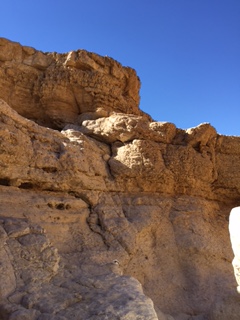
Until today.

We passed through Timna National Park and I stood in awe in front of the Solomon Pillars. They are tall pillars of eroded 500 million year old rock. You can see the seam where that rock meets with even older rock. Hard to wrap your head around. There are also the remnants of an Egyptian temple dating back to 4000 BC. This whole area was also mined for copper by King Solomon and is still mined.

The colours are breathtaking and I want to pick up every second rock I see as a keepsake. Alas some of the climbs are not so much “steep” (the tame descriptor used in the trail guide) but rather vertical paths toward the sky, hemmed by sheer 1000 foot drops. Trying to navigate getting the pack and ourselves down takes all of our  concentration, strength and stamina. I think carrying  extra rocks would be a mistake.


Jen is doing amazing and is getting more adapted to the trail and stronger every day. On a huge hike up she got to the top under her own steam covering terrain that had terrified her on the first day. She has huge blisters under her toenails but carries on regardless.
IMG_0677On the trail, life is simplified to the basics of survival. The food we brought is lasting well. We have been lucky with water as our first cashe lasted until we came across a school group camp out. They had an abundant supply and filled us up. And then we were able to refill again at Timna. Still, caring many liters a day is wearing on us. The solar charger is almost sufficient to keep our devices charged so we can write but often we don’t have Internet service.

The other day I was dying for something sweet. I looked down and there on the trail was a single green skittle. I couldn’t believe it. I generously offered to share it with Jen but she didn’t want to eat off the ground (imagine – like she’s the queen of England). I happily popped the nugget of deliciousness into my mouth without a second of hesitation (my veneer of civilized behaviour is much thinner than most people). I have found other assorted little gifts along the trail, including four tomatoes and a little piece of wire. I always take them as I feel they are the equivalent of the hunger games gifts from the sky.

Last night after a hard 10 hour day we were wiped out and veered off the trail looking for a place to camp that was flat and out of the wind. We were just about to turn around when we saw a car, and lo and behold there was a road just over the hill. And on that road was a building under construction. By some miracle the door was unlocked (someone’s oversight as it had ancient priceless antiquities in glass cabinets) and looked to be what will eventually be a visitor centre. So… we visited. It was a treat to spend the night indoors and we were grateful for our  good fortune.IMG_0665

We have seen some interesting wildlife. Some ibex, a bunch of huge desert rats scurrying around the mountain side and then some little ones that we hiked through, a bright blue little lizard of some sort, some  little prairie chicken lookalikes racing ahead of us. And a couple of nights ago we saw a scorpion skittering under one of our cups. A good lesson to stay diligent in keeping tents zipped.

Also my poles collapsed once on flat ground and sent me down into the rocks, that was another good, free lesson to remember – always check the poles are tight and secure. Having one loose in at the wrong time could be catastrophic.
It Starts!!!

Standard

This morning I enjoyed my last shower for an indefinite period. We are in Eilat at the southern tip where Israel, Egypt and Jordan meet and where the trail begins.

We arrived in Tel Aviv inadvertently on Shabbat (which is from sundown Friday to sundown Saturday) and all public transportation had ceased. There was not a plane, train, bus or donkey to be had in the state of Israel. Taxi was the only mode of transport and we paid a steep premium. Our hostel on the Tel Aviv beach had funky plumbing and a communal bathroom but a gorgeous view of the surf and suited us just fine. We wandered to a nearby takeout for a delicious “salty cheese and olive” bannock turnover for dinner for 16 shekels (approximately $7.00) and felt completely safe.

While waiting last night for our flight to Eilat we met a lady named Joy and her 18-month-old baby. She was from Montreal and was on her way to Petra in Jordan to meet her Jordanian husband. Our original plan was to see Petra before starting the trail but because the cost was prohibitive, we nixed it. So when she invited us to drive there with her and eat with her family in their cave we jumped on it. But alas, we were turned away at the Jordanian border because of a recently implemented advance visa requirement. So it was another taxi to the shelter hostel in Eilat.

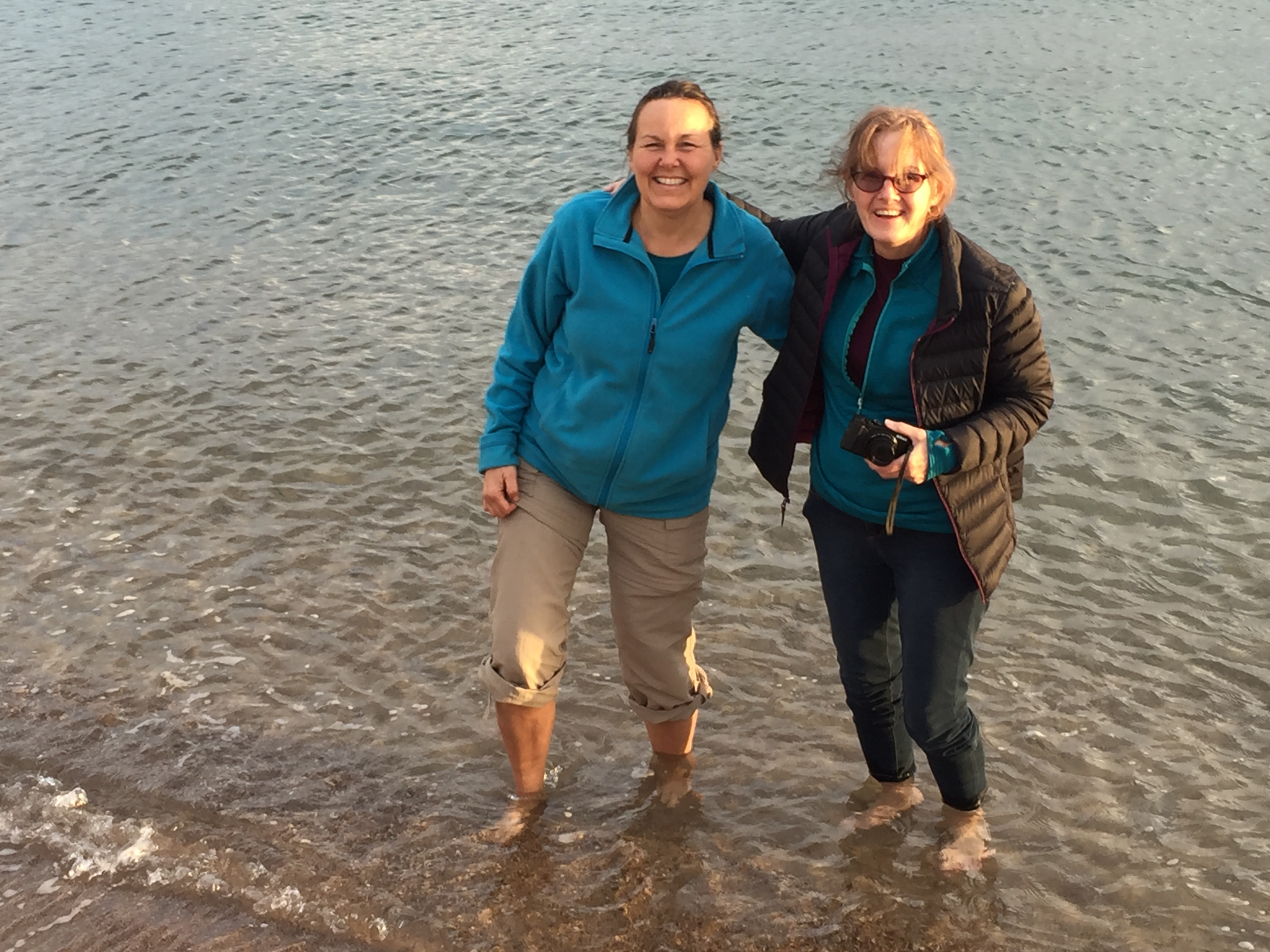
We got stove fuel today, sorted our packs and celebrated the begin of the trek by dipping our feet in the Red Sea. Tomorrow we start to walk. We are anxious to be on our way even though the weight of our packs is daunting. The weather has been cool, windy and rainy but it’s time to limbo (not “Limpo”) and we are ready. (I just hope the bar is not set to low)!
image

Israel – Boots on the Ground

Standard

February 4th , Toronto Airport

I sit here at gate thirty in the far reaches of the Toronto airport. I am on the floor with my iPad plugged in to the support pole so I don’t use precious battery power even though, fortunately, my new solar charger arrived last night at the ninth hour. Other last minute stuff items were sun screen, sun glasses, and more pharmaceuticals. I am also wearing different clothes than planned on account of my recent eating habits.

My thoughts are with Jim and his family as they see to the cremation of his father today. The emotions that accompany and surround a significant loss combined with suddenly being on my way have left me feeling unsettled (not to mention the bizarre occurrence of seeing a large rat scurry across my kitchen floor this morning. I had no time to deal with it so I left a note for Colin). And there appears to be a slight ruckus nearby…loud, angry voices in a language I don’t understand. People are standing and looking but I’m staying down.

Feb. 5th , Ben Gurion Airport – Tel Aviv

Shortly after my last entry the ruckus died away, Jim called and filled me in and overall, I felt more settled. Then as people were boarding I was called behind the security counter where I was questioned for 30 minutes about my purpose in Israel, where I lived, what I did, how long, etc. by three different people. They were polite but intense. It was reassuring that safety is taken so seriously but  even knowing it was random selection of a solo traveller, it was a little disconcerting being the object of the questioning. I was the last person to board the plane minutes before take off. The 11 hour flight was uneventful and now I rest and write while I wait for Jennifer to arrive in a few hours. It cost me 348 Shekels ($140.00) to get an Israeli SIM card and a month with 1 Gigi of data.
Boots on the ground

In memory of Reggie Doyle

Standard

Reggie Doyle was a kind and unassuming man who liked to be in the background. His clear, blue eyes shone with intelligence and danced with humour at the antics of his grandchildren. Sometimes he would get giggling at some little thing that the kids would say or do and it was impossible not to start laughing yourself. His wry sense of humour was infectious.

My father-in-law loved his family and he loved his animals. Every morning he fed his animals before he fed himself and in years gone by he had some of the biggest goats this land has ever seen. He never hesitated to help family, friends, neighbours or animals in need. In fact he was locally known as the unofficial vet. Whenever anyone had a problem with their animals it was often Reggie they called, and chances are, he knew what to do. He had a saying that if a 2 cc, s were good then 4 cc’s were twice as good.

Reggie was a hard worker and was always busy. For most of his career he worked as a high hoe operator and his skill with the big machines were legendary. Many of the buildings and sites in Brockville and Kingston were excavated by Reggie. Also legendary was his love of ketchup and Dairy Queen. No meal was complete without ketchup and coming home from work in Kingston, a stop at Dairy Queen was customary. They would have his order ready and waiting for him.

Reggie met Sheila when they were young teenagers and they started their family early. They moved from Richmond, Quebec in 1971 and raised their family in Lyn near Brockville.

Reggie developed an extremely rare condition. He passed away at home early Saturday morning with Sheila, his wife of 53 years by his side. He was much loved and will be deeply missed as a friend, father, father-in-law, grandfather, brother, uncle, cousin, and husband.

In the end, Reggie and his condition was the talk of the medical community and I think it tickled him to be medically famous. Rest in peace Reggie. We will all miss you.

Weighing in for the Trail

Standard

I’ve just returned from my first cruise, and while it was a lovely family excursion, I fear my waistband will never recover. With the hiking trip to Israel a mere two weeks away, I had planned to stick with salads and protein on the boat. What a ridiculously naïve notion. I didn’t last through the first meal before succumbing to the cornucopia of food, and the rest of the week was a buffet-shaped blur.

Having said that, I have streamlined my gear and I am weighing everything that I am taking with me (except my notably rounder self). My toothbrush is literally cut in half. In addition to that I am bringing

• one pot, a cup, lightweight poly utensils,
• a little stove, a first aid kit
• a whistle, a Swiss card (a cool credit sized card that you can build a house with)
• tent, sleeping bag, sleeping mat
• 3 t-shirts, bra, underwear, a fleece
• one pair of long pants, one pair of shorts
• a pair of long johns, a merino base top layer
• 2 pair of wool socks, 2 liner socks, flip flops
• headlight, reading glasses, toilet paper
• water purification tablets, light weight rope
• a rain cover, hiking poles
• a lightweight down jacket, a fleece pillow case (to stuff at bedtime)
• three big Nalgene water bottles, a 2-litre platypus water carrier
• bug juice, sun protector, lip balm
• 3 handkerchiefs (one for sweat, one for nose, one for head),
• a tea towel, all-in-one wash
• a little bottle of olive oil (for food and skin)
• my phone and charger (for camera and emergencies)
• IPad for writing
• passport and guide book.

The list sounds extensive but the gear pile looked surprisingly small considering we will be self-sustaining for over two months while hiking in various conditions and terrains. And yet when it was all loaded into the pack it felt heavy enough. I am also bringing packets of oatmeal, powdered eggs, cliff bars, my favorite licorice spice tea, and mountain house meals for the first several days in the desert where food and water sources are rare.

Maybe carrying some extra body weight at the beginning of this trip isn’t a terrible thing. And maybe after walking 1000 kilometers I will return wiry and tough but right now my reserves are uncomfortably straining the seams of my hiking pants. And when I am hauling my reserves across the desert gnawing on stale bread and dry oatmeal, thoughts of  eggs benedict, bacon and midnight buffets on the cruise will be the stuff of dreams.

A New Adventure in the Land of Milk and Honey

Standard


For years I have wanted to do a “thru-hike” – a long, continuous hike where you carry all of your gear and sleep on the trail. My criteria were: I wanted a place I have never been, warmth, and a remote and interesting trail. There were three well-known long hikes that I knew of – The El Camino, which is too crowded for my taste, the Appalachian, which is too cold this time of year, and the West Coast Trail, which I bicycled from Oregon to the Mexican border when I was 19 years old. When I found the Israel National Trail I hit pay dirt.
The INT (Israel National Trail) crosses a unique and varied landscape dotted with archeological sites as it zig zags its way from Israel’s southern border with Egypt. It crosses through the Negev Desert, Jerusalem, along the shores of the Sea of Galilee and the Red Sea, through Tel Aviv, and up into the mountainous northern region to the border of Lebanon. It is 1000 kilometers long and has only been fully opened since 2011. It meets my criteria in almost every way. It is not well known so it won’t be crowded (and let’s be honest – who wants to walk across a desert in the Middle East right now). It will be their winter so it may be rainy but still not crazy cold (my days of camping in sub-zero temperatures and trekking into death zone altitudes are over) and I have never been to Israel but have a fascination with its historical significance.

There are the obvious concerns but I figure it’s probably just as dangerous to go for a drive in the car. And there are advantages – Israel is a tiny country with cell coverage and internet though most of it (useful, as I plan to blog every few days), it is medically advanced, and not to be underestimated, I have a friend with connections there in high places if need be.
I am going with Jennifer Williamson. She is my daughter’s (Sabrina) boyfriend’s (Ben) mother. She lives in Edmonton with her husband Fraser. We have only met a few times but we get along famously and I think we will have a grand adventure together. There will be just the two of us with our tents, sleeping bags, cook stove and the one and only English guide book written. (What could possibly go wrong she says?)
This might seem sudden but the seed for this trip was planted long before my blueberries. And right now, while they are sleeping for the winter, I’m going to give it a go. I know my body is still compromised from this past planting season but I’m banking on the hope that it will settle into the meditational rhythm of hiking that makes me feel so centered and in tune. It’s a covetous place that is sometimes elusive but I almost always find it on the trail.
Jennifer and I will meet in Tel Aviv on February 5th. We will then fly or bus to Eilat at Israel’s southern tip where we will begin trekking. If all goes well we should finish the trail within two months. I will arrive home April 12th in time for my blueberries to stretch their branches, rub the sleep out of their buds and burst into splendiferous bloom.
A few days ago, my good friend, Kathy, gave me a beautiful leather bound journal that said “the journey of a thousand miles begins with one step”. So it is written and so it shall be. As always, I will keep you posted.

Blueberry Fields Forever (with pictures)

Standard

I thought I would be done for the season by now, either due to weather or injury. But the water is still running, the ground not yet frozen, and with care I can use my arm again.

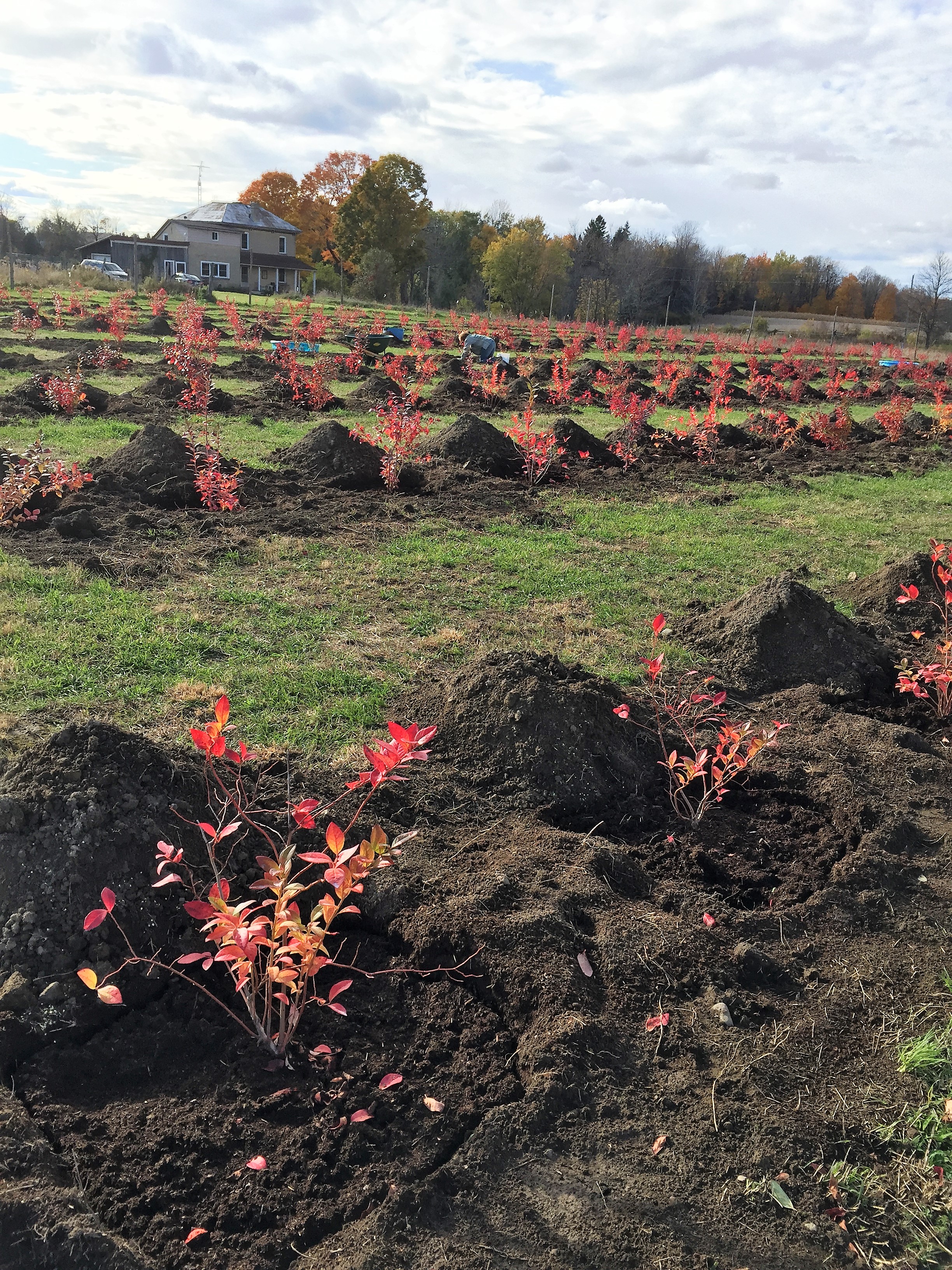
A few weeks ago, my rib blew. It was caused by too much exertion and it was my own fault. I’d been ignoring my body’s warning signals for days in an effort to meet a self-imposed fall planting deadline but I was benched in one awful hurry. Moving, breathing, things like that were excruciating. After two weeks of some very good drugs and much needed rest, I am somewhat operational again. I still can’t plant but I can use the tractor. I’m happy the weather is holding so I can spread the 7 dump trucks loads of mulch I had delivered the other day. I may be stumbling across the finish line of this long season bow legged and broken but I am thrilled with the progress. My deer fence is finished, and over 1000 plants are in the ground.

planting this fall planting this fall

IMG_0281

one side of the deer fence one side of the deer fence
before the piles of clay were removed, the irrigation laid, and mulch added. before the piles of clay were removed, the irrigation laid, and mulch added

I owe thanks to so many people! Friends and my family have supported me and contributed in so many ways; planting, digging holes for the plants, cutting trees for the deer fence, bush-hogging, laying irrigation lines and punching in emitters, watering, weeding, mowing, spreading sulphur and mulch, carrying peat moss, picking out rocks and clay, making meals, tilling, the list goes on. It has been a hard seven months and, without question, I could not have done it by myself. Literally, as I write, tears of gratitude blur my eyes. A very special thank you to Nancy and Brent who were here for over two months helping me.

At some point in every big project there comes a time when enthusiasm wanes and nothing is left but a lot of hard work. It usually doesn’t take much to make me smile but especially during the times when I was alone and the day was long that simple things gave me a lot pleasure – the smell of fresh pine mulch, seeing perfect root growth on the “bare root” plants that I potted in the spring as I gently took them from their containers to plant this fall, getting a full load of mulch on the tractor loader on the first try, or just looking at my blueberry fields and realizing how far I have come and how much I have learned this year.

My friend, Nancy Ramadan, told me, there will be blueberries at the end of your rainbow. I really hope she’s right.

Getting There

Standard

I feel like I have been catapulted out of a time machine a couple of months into the future. I lifted my head, and somehow, it is now June. My romantic notion of planting blueberries surrounded by sunshine and butterflies has been buried beneath thousands of pounds of peat moss. The reality was wheelbarrows, back pain, and being too tired to chew after shoveling for 14 hours in the field day after day. I’m not gonna lie to you–there have been low moments (Colin came home one day and found me sobbing in the mulch pile). But meltdowns notwithstanding, I am happy with what I’ve accomplished so far and I couldn’t have done it without the help of family and friends. Thank you so much! We got 501 plants in the ground–a respectable first season, in my humble opinion.

After the planting was finished, Jim helped me get the irrigation system set up. Then I spread mulch on the rows (8 dump truck loads), and tilled and seeded the isles (I am getting better with the tractor).

With great trepidation, I started digging holes for the deer fence with my new auger. The Kubota salesman had shown me how and I was determined but nervous. In the pouring rain, the ground wet and heavy, I engaged the power take off (that’s what makes the auger spin; I know things like that now!) and punctured the ground. Very slowly, with the machine vibrating like Lucifer was rising from the pits of hell, I dug my first hole. And then my second, then third. On the fourth I hit a rock and the machine stopped working. Fighting discouragement and a little bit of panic, I called the dealership. Through phone direction, I was able to access, identify and remove the broken “shear bolt” in the turning thing that attaches the PTO (power take off) shaft to the auger. I felt a small glow of pride. I haven’t replaced it yet because I drove in and got the wrong size…but I know how. Crazy!!

The remaining 600 plants will stay in pots until the late fall or early next spring as I ran out of time before my planting window closed. I spend a lot of time keeping them watered, preventing them from flooding, or blowing helter skelter in the wind and breaking. I have become very weather preoccupied but I work at not dwelling on what is beyond my control. If I had the chance to do it all again, I would plant the majority of the “container grown” in the ground first and pot the “bare root” after, rather than the other way around. Ah well, hindsight is always 20/20. In the meantime, I am working on building a deer fence and getting the rest of the trenches prepared.

All in all, things have settled down. The urgency and stress are now minimal but for some reason I feel slightly disconnected and removed. It’s hard to describe. It’s like my life is in abstract and feels remote and inaccessible. I know it sounds weird; it feels weird too. Maybe it’s just a reaction after the commotion of the last few months. Maybe I’m just tired. I think a movie is in order… with popcorn…and a nap.

It’s Planting Time – (request for recycled plant pots)

Standard

phone pics 164i

phone pics 155

phone pics 134

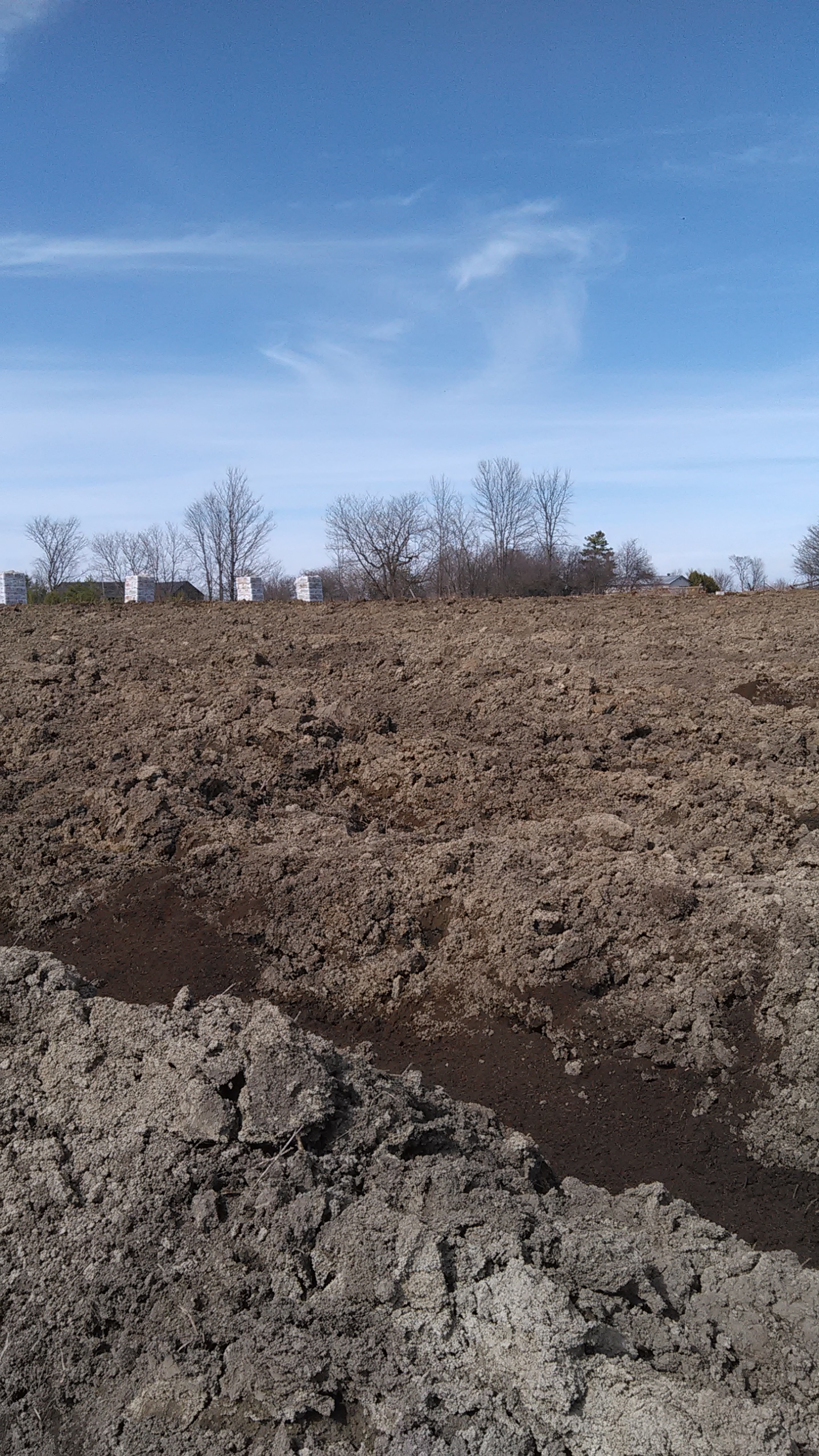
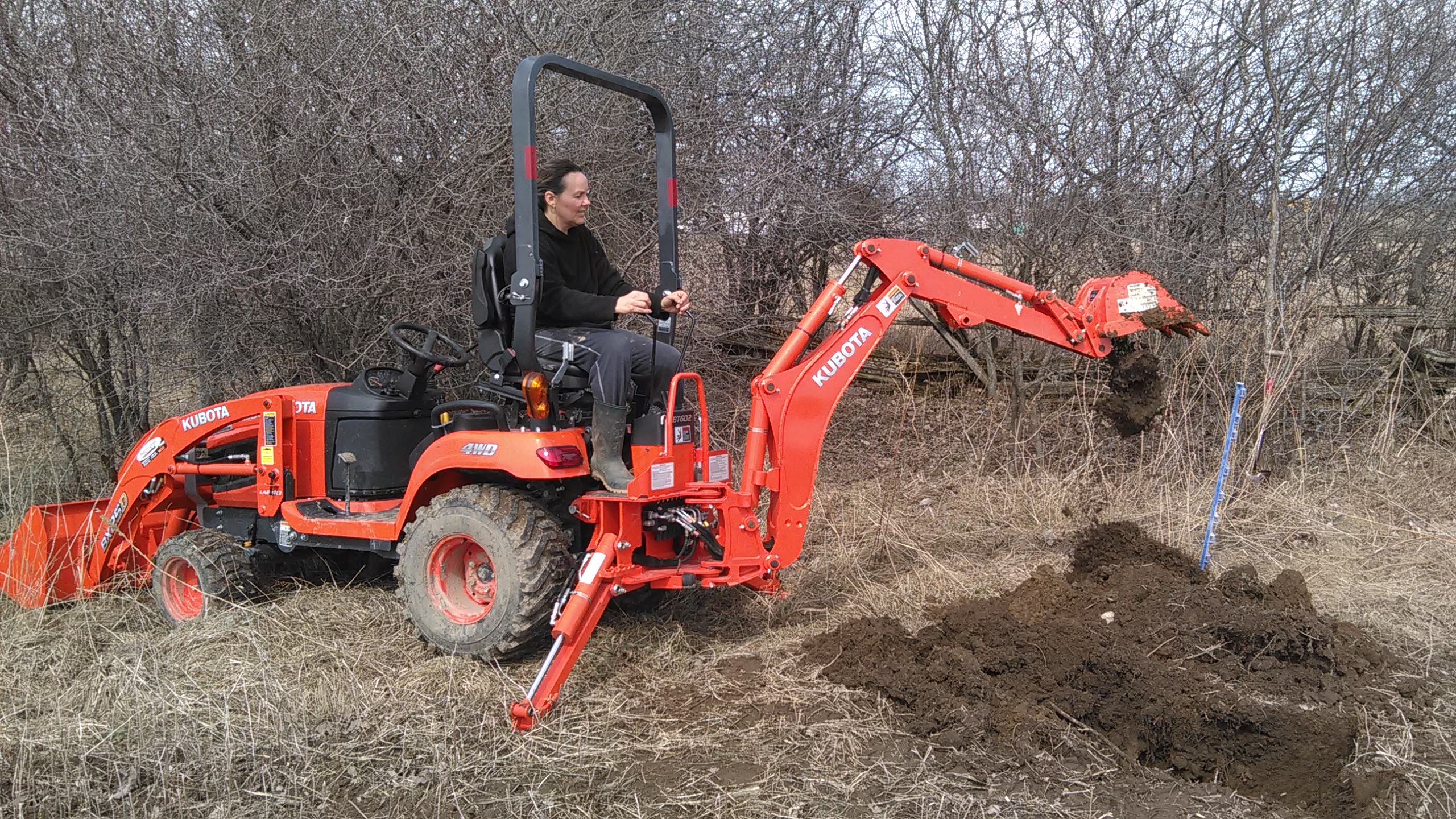
I started digging my holes with my little tractor and it took me 3 hours to go 20 feet (on account of my skill level). At that rate I wouldn’t be finished before November. So, I hired an excavator. After he had finished, my field was a landscape of high mountains merging into deep trenches. Looking at it was intimidating.

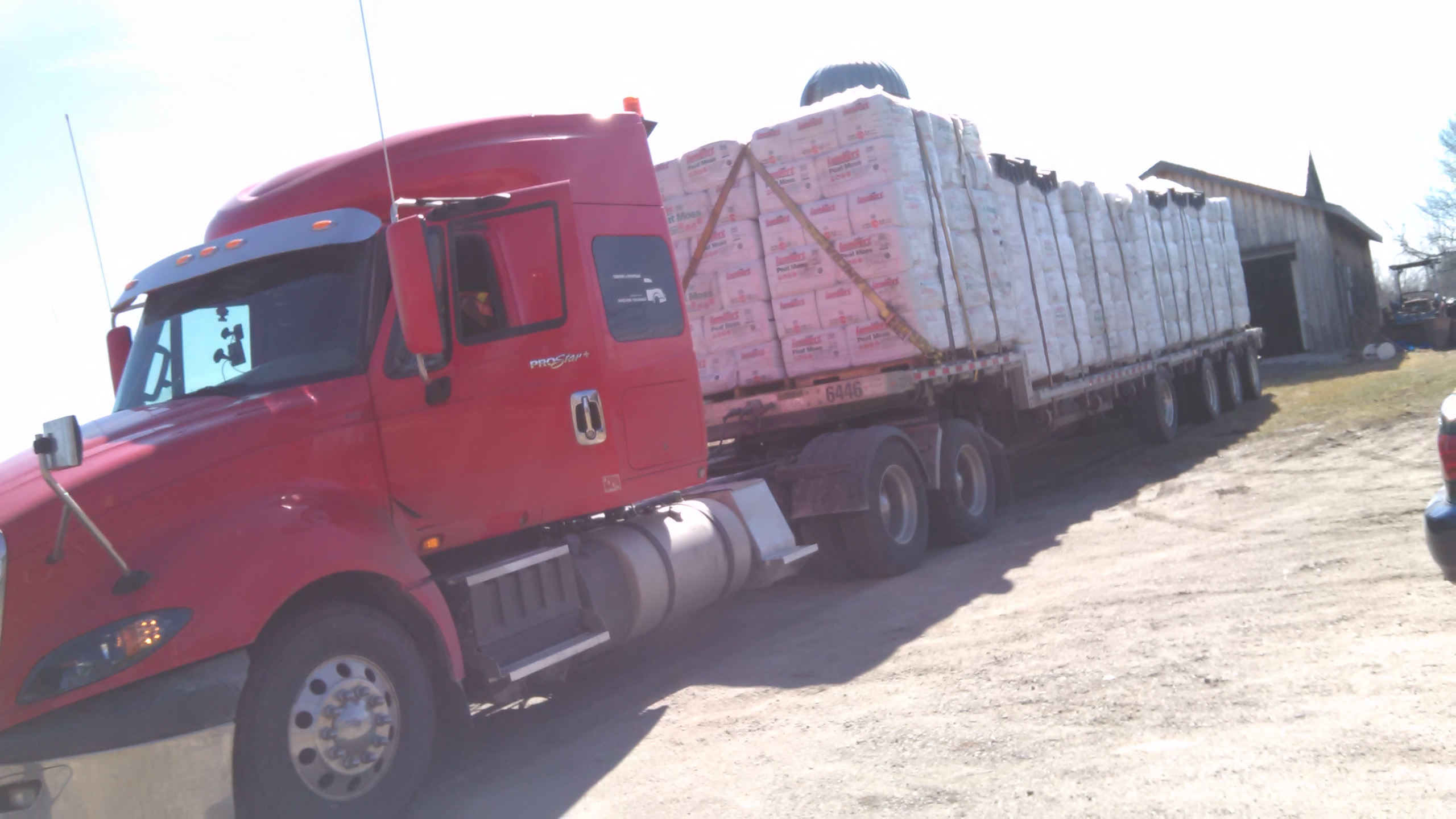
If the enormity of what I had bitten off didn’t sink in looking at the war zone that used to be my filed, it did when a full tractor trailer load of peat moss took half an hour to get turned into my driveway. “How are you going to unload it”, the driver asked me”. “What!!…you deliver it, you don’t unload it?” I replied with incredulity. “To be honest, I have never delivered a load like this to just a regular house”, he responded back. It seems that when people order full tractor trailer loads of peat moss they have things like fork lifts and big machinery and staff to unload it. I had none of that but I hired a forklift and oprator.

I knew that I needed to finish up with 1200 2’x2’ holes 18” deep, four feet apart. Each hole needed to be filled with saturated peat moss in which I could then plant a blueberry plant. Figuring out the logistics of how to transform the trenches into the right sized holes was a roundabout process which involved a lot more work than it should have. I continually remind myself that there is a cost to learning. Whether you are in school or out, learning costs time, money and energy. And it certainly did.

Finally, after the months of preparation, it was time to get my plants. My brother Greg generously drove me to the Michigan Nursery with his truck and trailer. While it was super exciting, it was also somewhat nerve racking. My two main concerns were, would all the plants fit and would we get though the border ok? When we arrived at the nursery and saw the size of the boxes I nearly collapsed. It did take some maneuvering and adjusting but, in the end, we managed to make it work with not an inch to spare. Thank goodness, as the inspector may not have been able to get back that day and my permit was only good until 10 that night. We were towing over 8000 pounds and I prayed the bulging trailer tires would hold.

When we reached the border, my heart was racing. I had 14 pages of permits, licences’ and inspections but who knows -anything can happen at the border. I can’t describe to you my relief when, after only a few hours and a few glitches, we were cleared and driving away. It felt surreal. We continued slow and steady all the long way home.

Now I am happily a blueberry grower and no longer just a blueberry planner. The planting progress is slow but steady. If you use your imagination there are a few rows where you can see the tiniest glimmer of what will be a blueberry field. If you would enjoy coming for a few hours, I welcome any and all hands. BUT ALSO – because we have moved directly from winter to summer, I need to pot a few hundred plants so they don’t die before I can get them in the ground. If you or any of your friends have large planting pots that you are finished with, I sure could use them.

Expunge thy Weeds and Grow Forth

Standard

In 1992, Cornell University published a book about high-bush blueberry production. The 200-page award-winning* tome gathers advice from nearly 30 experts, and has effectively become my bible. One night while reading scripture, my eyes stumbled across a sentence that went something like this: ‘Weed control the preceding planting year is essential.’ Essential, it said. I read it ten times; the word didn’t change. During my past nine months of research I have repeatedly read about the importance of soil amendment the preceding planting year (which I have done), but nothing about weed management (which I have not done). Maybe most people would assume that pre-planting weed control is a given but it didn’t occur to me. My planting is mere weeks away so it was a bit of an emotional bombshell.

I called Charles for a second opinion (he and his wife Judi own and operate a huge, successful blueberry farm near Toronto) hoping he would tell me that “essential” was too strong a word. But no – turns out it is exactly the right word! To my horror, he said the weeds take the nutrients and water from the soil, provide a habitat for pests, disease and fungus, and will overpower the shallow, tender root system.

Ok, breathe. Time for plan B. Laying adjacent to the field I’d prepared for berries, was another field that a neighbouring farmer had planted with soybeans last year (with my permission of course) and he’d already purged it of perennial weeds. This, I decided, was to be the new home of my soon-to-be-picked-up blueberry plants. I will need to increase the 6000 cubic feet (560 bales on 27 pallets) of peat moss that I already have on order to compensate for the higher soil ph. and change the size and layout of the rows but I can do that with no problem as I haven’t finalized my irrigation system or netting yet. An inconvenience, but a workable one.

When I set out on this hair-brained adventure, I fully expected a learning curve. But to find out about the weed problem too much later would have been a sharp and unfortunate turn south. With deep gratitude I thank the angel on my shoulder for opening my eyes to the bible. Praise be unto thee, oh Highbush Blueberry Production Guide, publication number NRAES-55.

*The publication was awarded a blue ribbon in the 1993 ASAE Educational Aids Competition, whatever that is.