Category Archives: Uncategorized

Homeward bound 

Standard

I spent the final leg of my journey on the beach in Hua Hin. As weird as it sounds, it took some getting used to, but eventually I settled into the relaxation and savoured the sun and the sea without calamity – that is, until my last day. 

The misfortune I’m about to tell you about is, admittedly, completely due to my own bad judgement. I can only assume that my brain was fried from too much sun and memories of last year’s return trip from Israel, when sand fleas covered my face in bites the night before my flight home. This time would be different, I told myself. This time I wanted to arrive back to the farm looking glam and pretty. What a spectacular backfire!

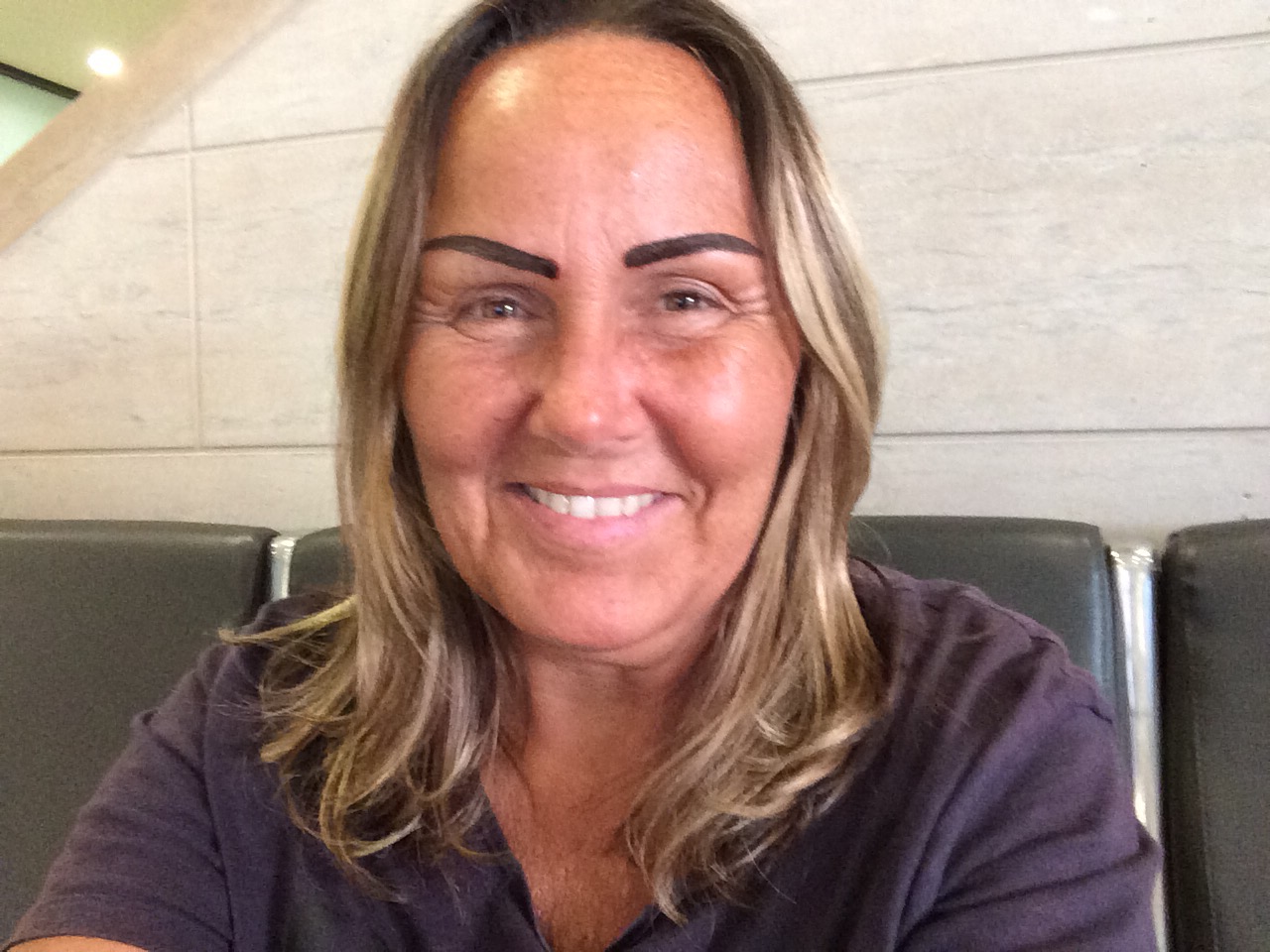
 The morning I left, I planned a massage, a haircut and a manicure, all of which were great. Things went sideways when I decided to add tattooing my eyebrows to the beauty treatment agenda. Yes, you read that right. I had been thinking about doing something with my moth-eaten brows for awhile but hadn’t really looked into it. In retrospect, to take that leap in Thailand, where I could barely communicate with the aesthetician, defied logic and reason. So many lessons learned! (Or maybe just one lesson: don’t invest in cosmetic tattoos on a whim in a foreign country.) Hence, I will return home with lovely, clean hair, beautiful nails, and strong, exceedingly prominent, slightly lopsided eyebrows. 

I am very embarrassed, and will admit that I am loath to include a picture. I’m not big on pictures of myself at the best of times, but for you dear reader, you who has followed my adventures and made me feel less alone at times when melancholy had found me, for you I will share this sorry (but hopefully someday hilarious) testament to the vagaries of spontaneity. You can find it at the bottom of this post, along with what’s left of my pride. My daughter Sabrina says I’m still beautiful, bless her heart, and that eyebrow tattoos fade and can be repaired. She adds that if all else fails, we can find a nice spot under a bridge for me where I can make a new home.

On a less traumatic note, the trip was great. I have seen spectacular sights and learned new things. I’m healthy but very excited to plant my feet on Canadian soil. I’m excited to reunite with family and friends and Colin’s dog, Diesel. I also am eager to see how my blueberries fared the winter.

As always, sincere heartfelt thanks for reading. Your unfailing support, emails and comments have sustained me through heaven, hell and high water. See you on the flip side! (I’ll be the one with the large dark glasses and a floppy hat.)

C
Stormy Daze 

Standard

I stuffed my wet belongings into my wet pack. It had been a rough few days. The latest episode involved me being woken up at 3am in my hostel ‘roof hammock’ by a freak tropical storm that soaked me, body and spirit. The sudden night drenching was funny later, but at the time, I was too disgruntled to be amused. 

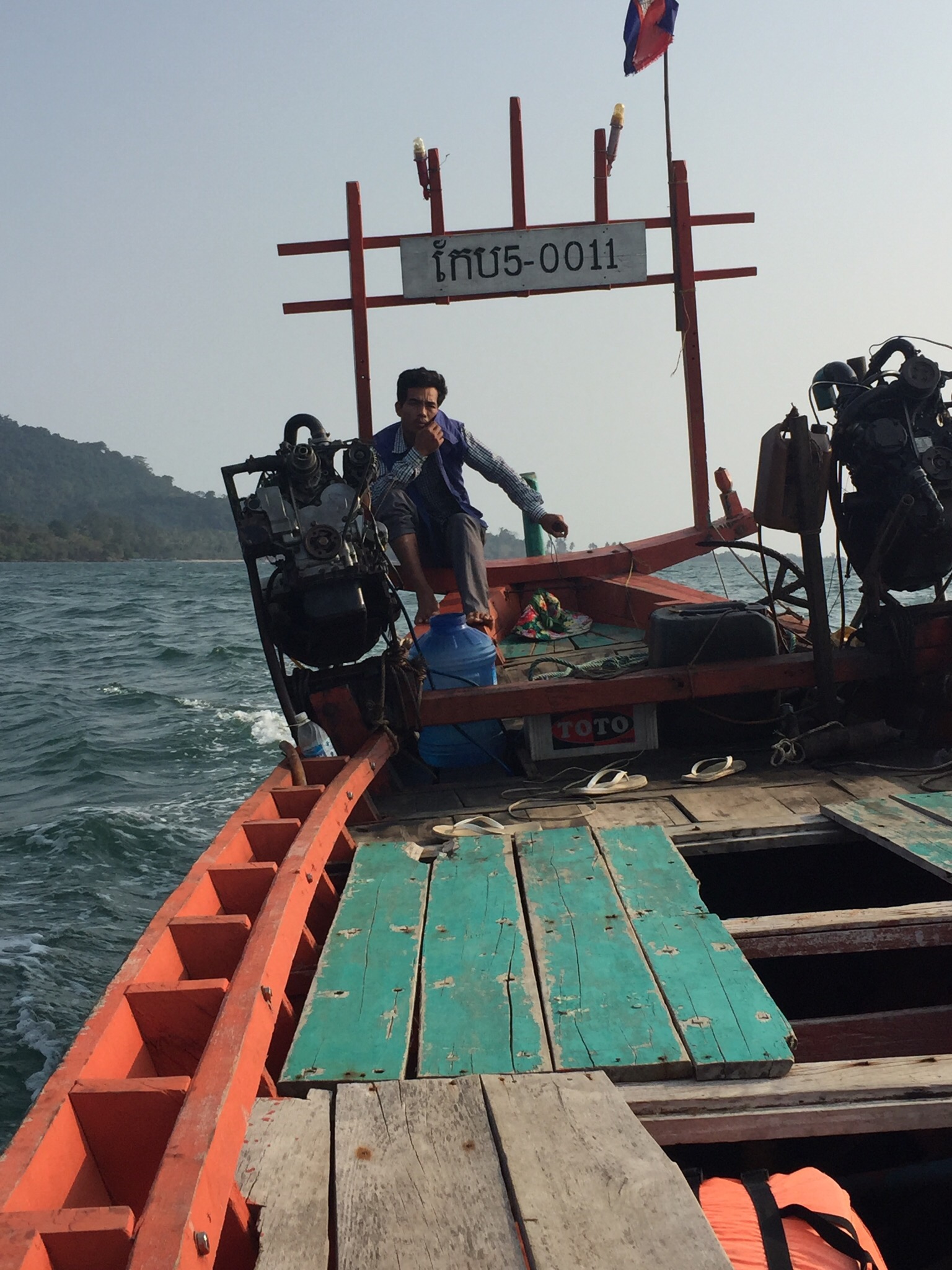
My misadventures began with a confrontation between myself and a swindling hostel owner in the Cambodian/Vietnamese border town of Kep which didn’t end well for me. The next morning I hopped a boat bound for the almost unpopulated Koh Tonsai (Rabbit Island) to pitch my tent and regain my happy head space. That night at 2am, I woke up in a perfect cartoon caricature of ‘terrified freeze mode’ to the snapping and snarling of two dogs fighting against my tent wall. Dogs again! I love our canine friends but they have been my nemesis on this trip. My heart pounded and my thoughts raced but a statue couldn’t have been more still. They settled down once dominance was established but not before a few teeth had punctured my flyless tent. Not laying far enough away for my comfort, I maintained a nervous vigil until morning. 

The boatman manning the craft back to the mainland wouldn’t honour my return ticket (because the ticket seller forgot to write my boat number on the back) but I was tired and in no mood to be messed with. Gritting my not so white ivories, I braced my feet in the sand, clamped my hands onto the boat gunnel and wouldn’t let go until the captain accepted my valid ticket and allowed me aboard. He ultimately relented, but only because his only other option was to physically pry my fingers off. Unintimidated, I wobbled past him with all the dignity I could muster and matched his grimace, scowl for scowl. The five Chinese tourists onboard, however, found the whole incident hilarious and cackled uproarously. 

That night, back in Kep, the tropical storm delivered another sleepless night. The dispiriting events, combined with meeting a few solo-travelling young women who had been robbed of money and passports by motorbike snatchings (one of whom had been dragged and held at gun point) settled in my mind – all signs pointed to a change of plan –  I decided to ditch Vietnam and set a course for the Thai Islands to soak up some sun. 

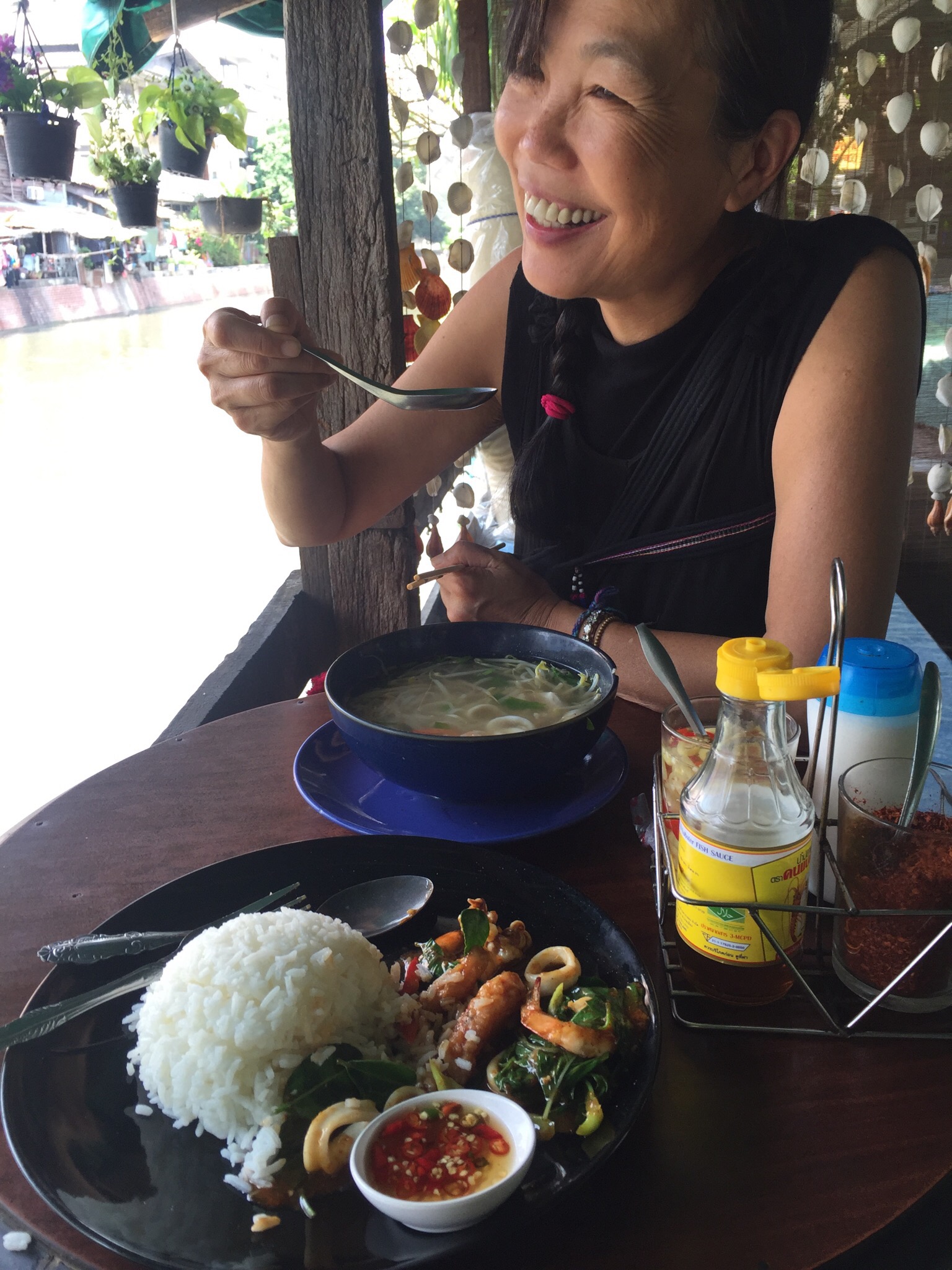
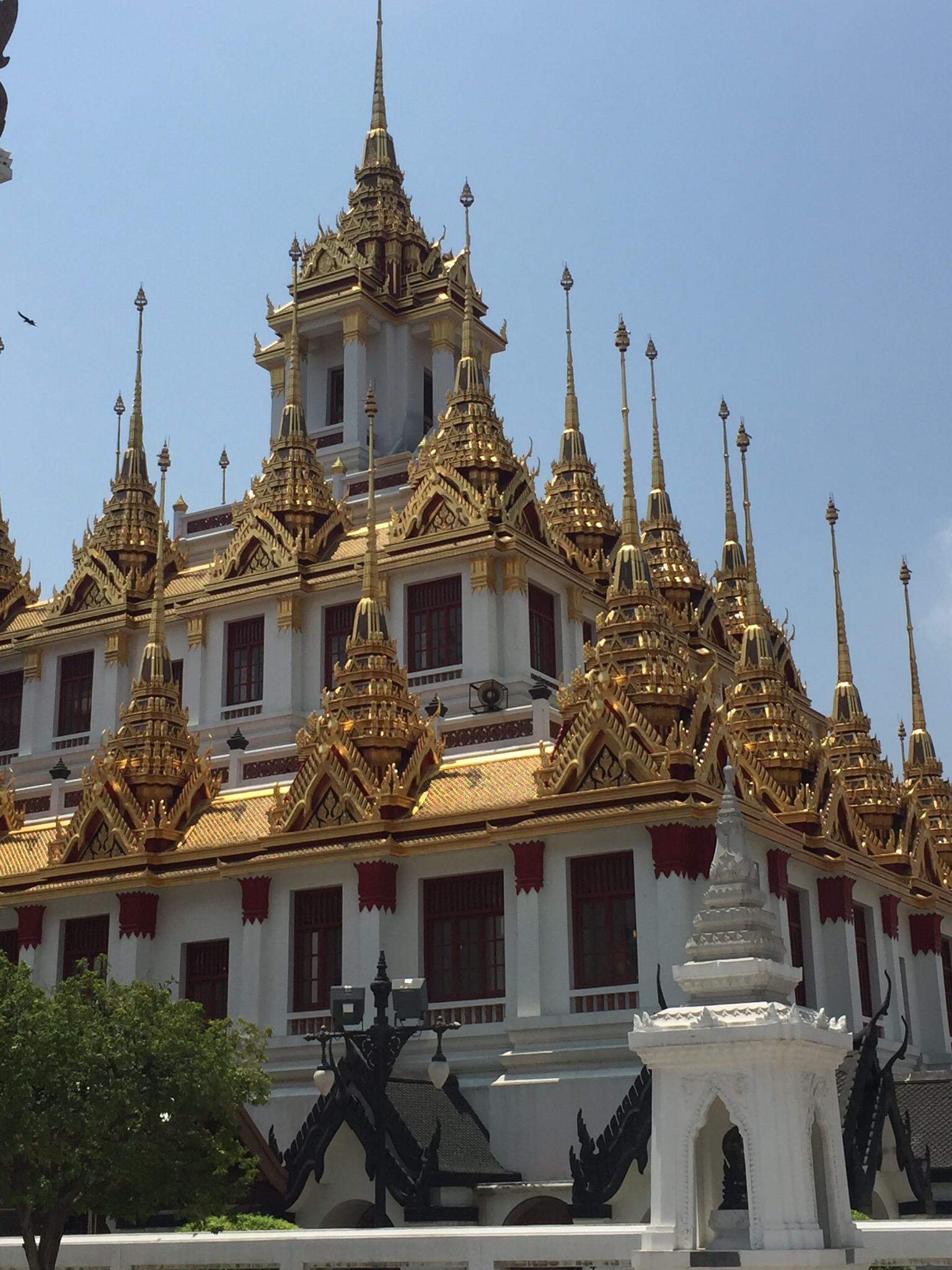
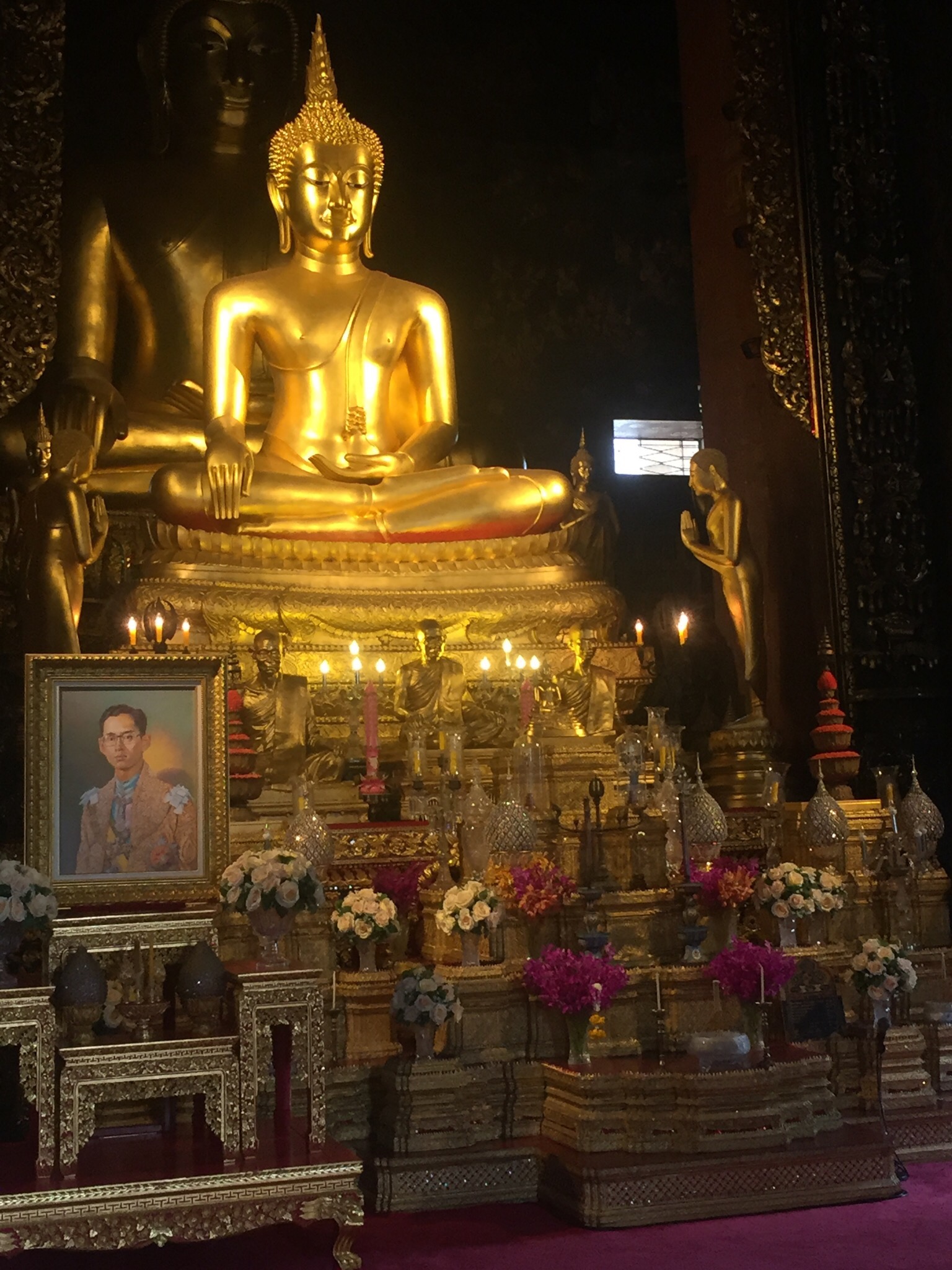
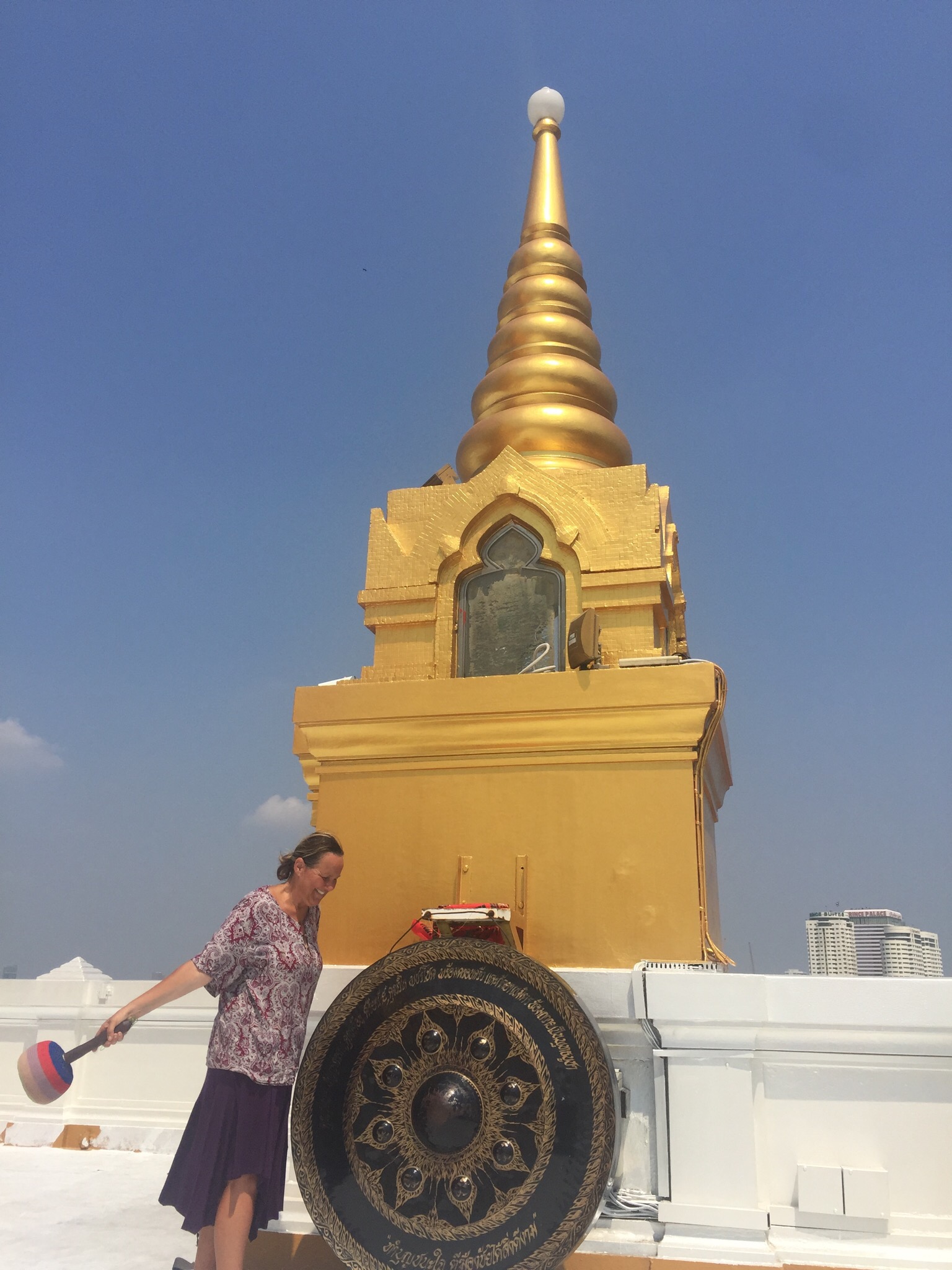
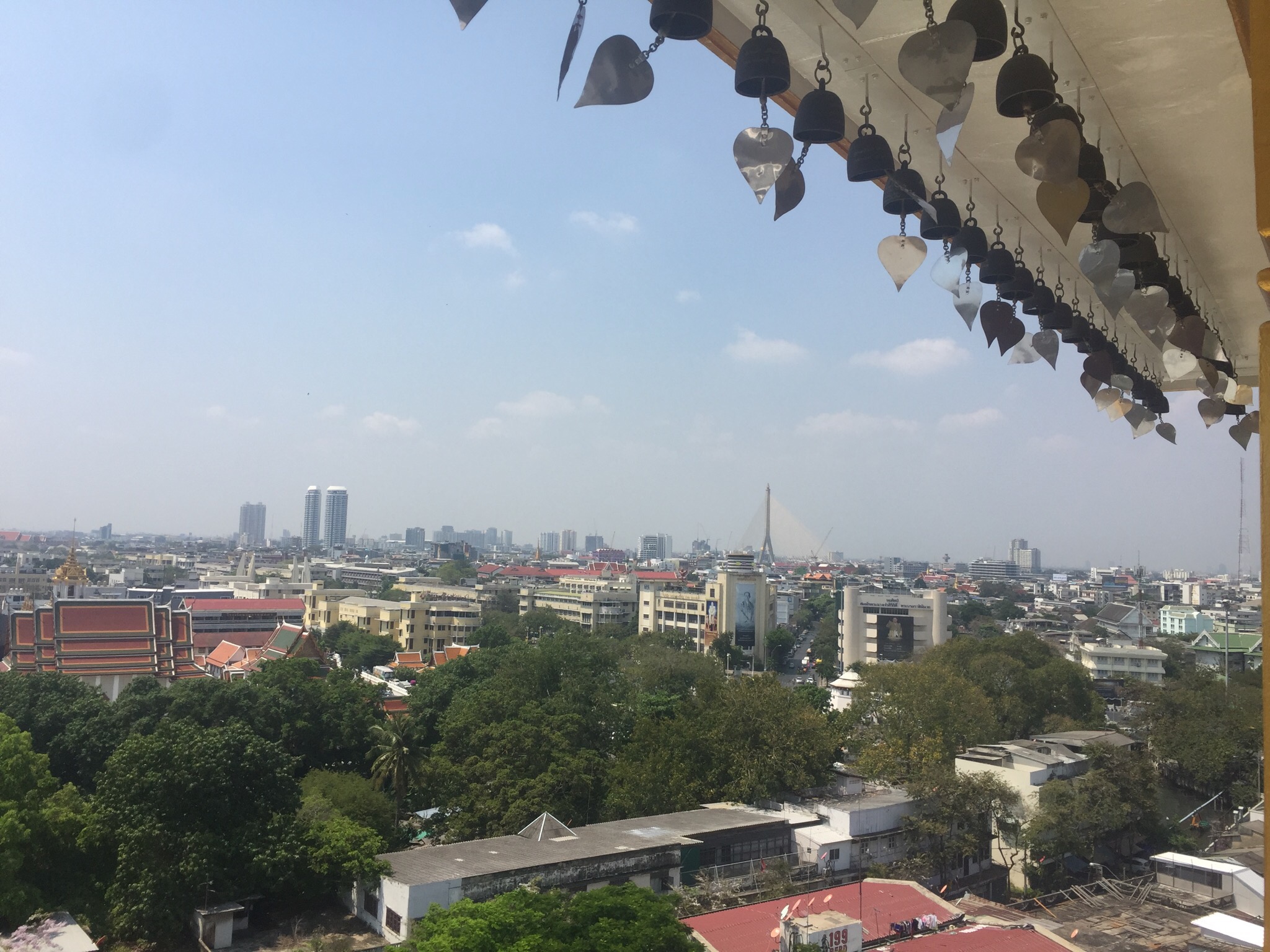
Passing through Bangkok on my way south I met a lovely Taiwanese lady with delicate sensibilities who knew the city well. We feasted on scrumptious red curry seafood, visited art galleries, magnificent temples, and climbed windy towers. And at some point, the cloud that had latched itself onto me was finally blown away. For the most part it has been an incredible trip, full of beautiful experiences and nice people, but I came to the conclusion that wherever you go, there is no escaping  occasional sad and stormy days and the odd bad egg. In the words of Lao Tzu – “life is a series of natural and spontaneous changes, don’t resist them, that only leads to sorrow. Let reality be reality. Let things flow naturally forward in whatever way they like”. And in the words of yours truly, –  it’s a welcome relief when the sun burns through the cloud and the spring is back in your step. 

The Killing Fields

Standard

S-21 and the killing fields of Cambodia were marked in my travel guide as a ‘must see’ but until I was there, I had no understanding of what happened. With reverence, I write this post in memory of the lost.

On April 17, 1975 the Khmer Rogue, ruled by Pol Pot, defeated the U.S.-backed Cambodian leadership. The already war-torn country had been bombed by the U.S. for the past 8 years in what was called the secret war, and people celebrated the new leadership. But it was short-lived. Within days of taking power the cities were all but deserted as people were forced to leave their homes and possessions to work 16 hours a day in field labour camps. The Khmer Rouge wanted Cambodia returned to a peasant state. Phones were silent and borders were closed. Teachers, doctors, Buddhist monks, anyone displaying any signs of intelligence were captured, tortured into signing false confessions of espionage, and executed. Soft hands and wearing glasses would get you killed. Pol Pot ruled with secrecy, hatred, fear, and violence for a fanatical utopian vision of a pure, classless society.

S-21, now the Tuol Sleng Genocide Museum, was one of 200 prisons where people suffered dehumanizing interrogations and torture by the Khmer Rouge. A former high school, it was converted from a place of laughter and learning to a place of unimaginable atrocities. Between 14,000 and 20,000 people were held there. There are 12 confirmed survivors.

Interrogation room

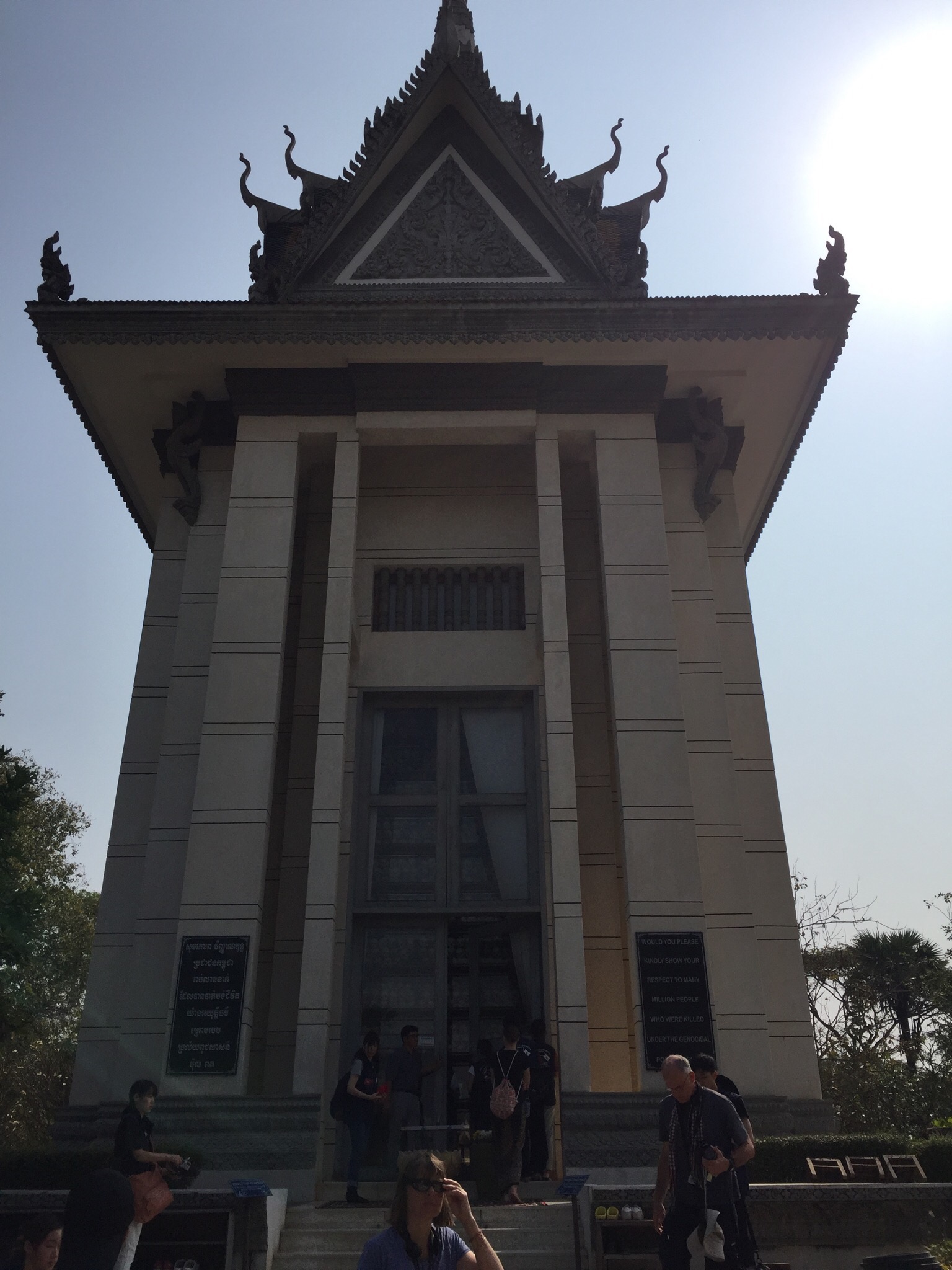
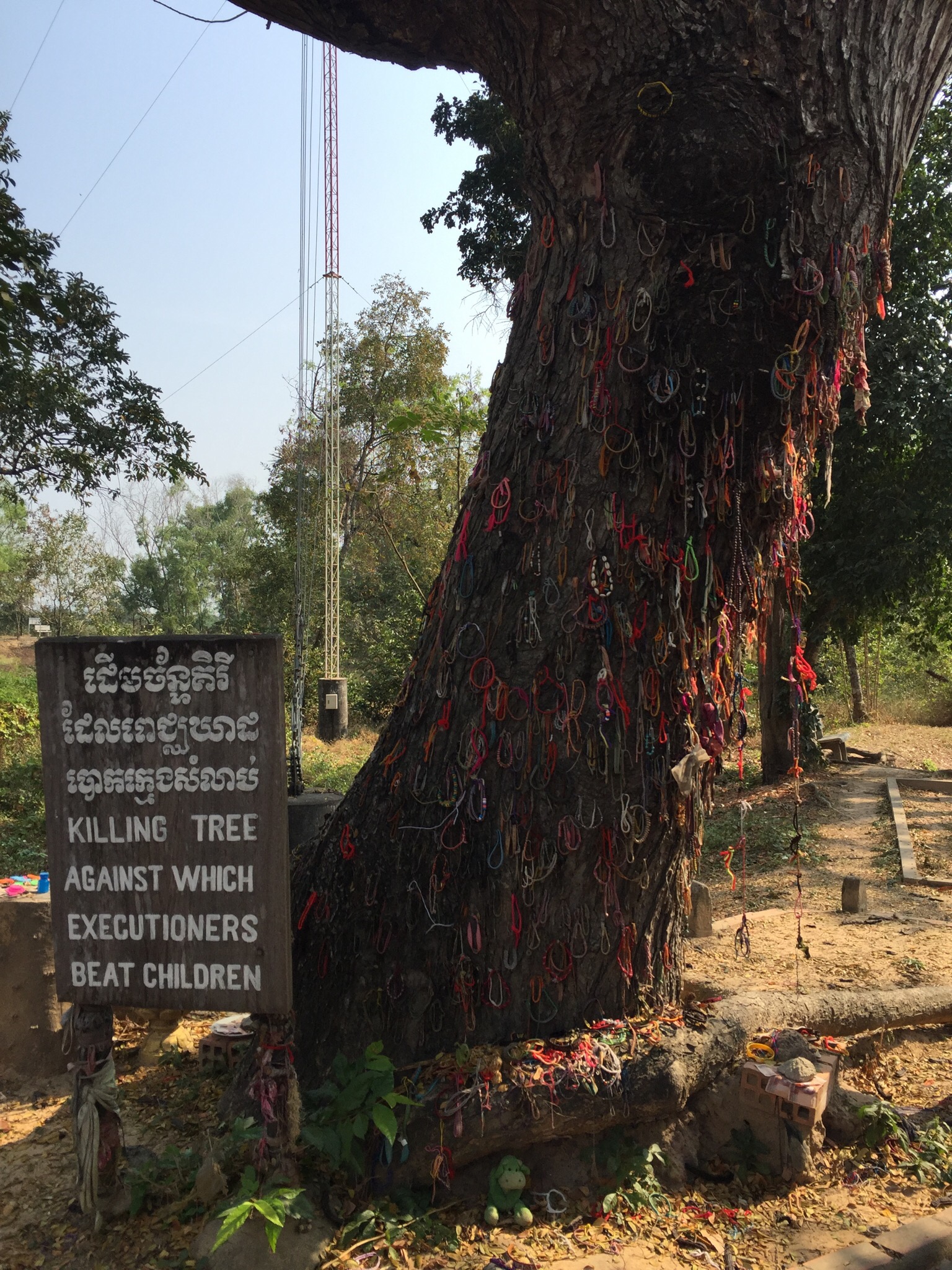
 Prisoners who didn’t die from torture were blindfolded, bound and taken to Cheoux Ek. Once a peaceful farmers meadow, it became a killing field. Peoples heads were smashed in with hatchets or other tools, and thier necks were slit with with palm fronds because bullets were not to be wasted. They were then thrown into a pit, sometimes still alive, with countless others. If a parent was executed, the whole family was executed so no-one was left to take revenge. Music was played to drown out the screams. Today, after a heavy rain, bones continue to be unearthed. The Stupa, at the centre of the memorial site, holds the skulls of thousands of the victims where people come to honour the dead and search for thier loved ones. There are over 300 killing fields in Cambodia.

In 1979 Vietnamese troops with a Cambodian contingent overthrew Pol Pot. In the four years that the Khmer Rouge were in power, roughly 2,000,000 people, in a population of just over 8,000,000 died under the brutal regime. Despite all the evidence, Pol Pot continued to represent Cambodia in the UN for 12 years after he was thrown from power. It was not until 2009 that the first Khmer Rouge high official was taken to trial. 2009!

The world has turned its eyes away through some of the twentieth centuries worst genocides; Armenia, the holocaust, Ruanda, the list goes on.  Blurred by tears but with eyes open, I touched the faces of the lost through the glass. I have to believe that we can learn from the past. I will remember.

A Little Nuts

Standard

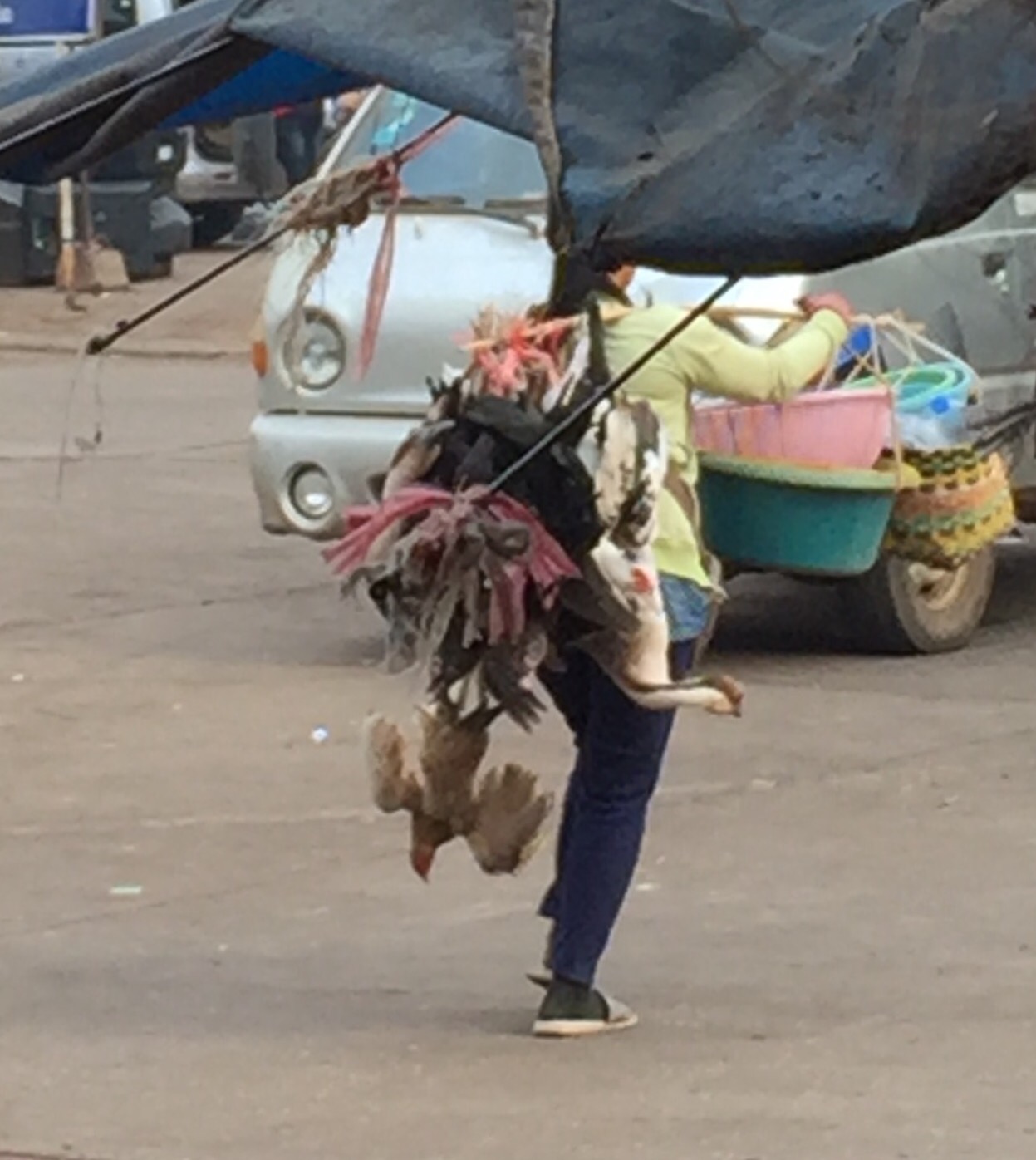
The streets of Cambodia on a bicycle is no place to be timid. The golden rule is stay alert! There is lots of ‘I’m here’ horn beeping, but no road rage. Everybody accepts the fact that everyone else has a right to be there, is just trying to get where they need to be, maneuvers to make space, and proceeds with no feathers ruffled (except of course for the live chickens). I got the hang of claiming my place in the controlled chaos and felt weirdly safer than riding a bike at home. I saw a young girl wobble her way through a busy intersection on a full-sized bike (standing because she couldn’t reach the pedals) with her baby brother in the basket. No one batted an eyelash.  


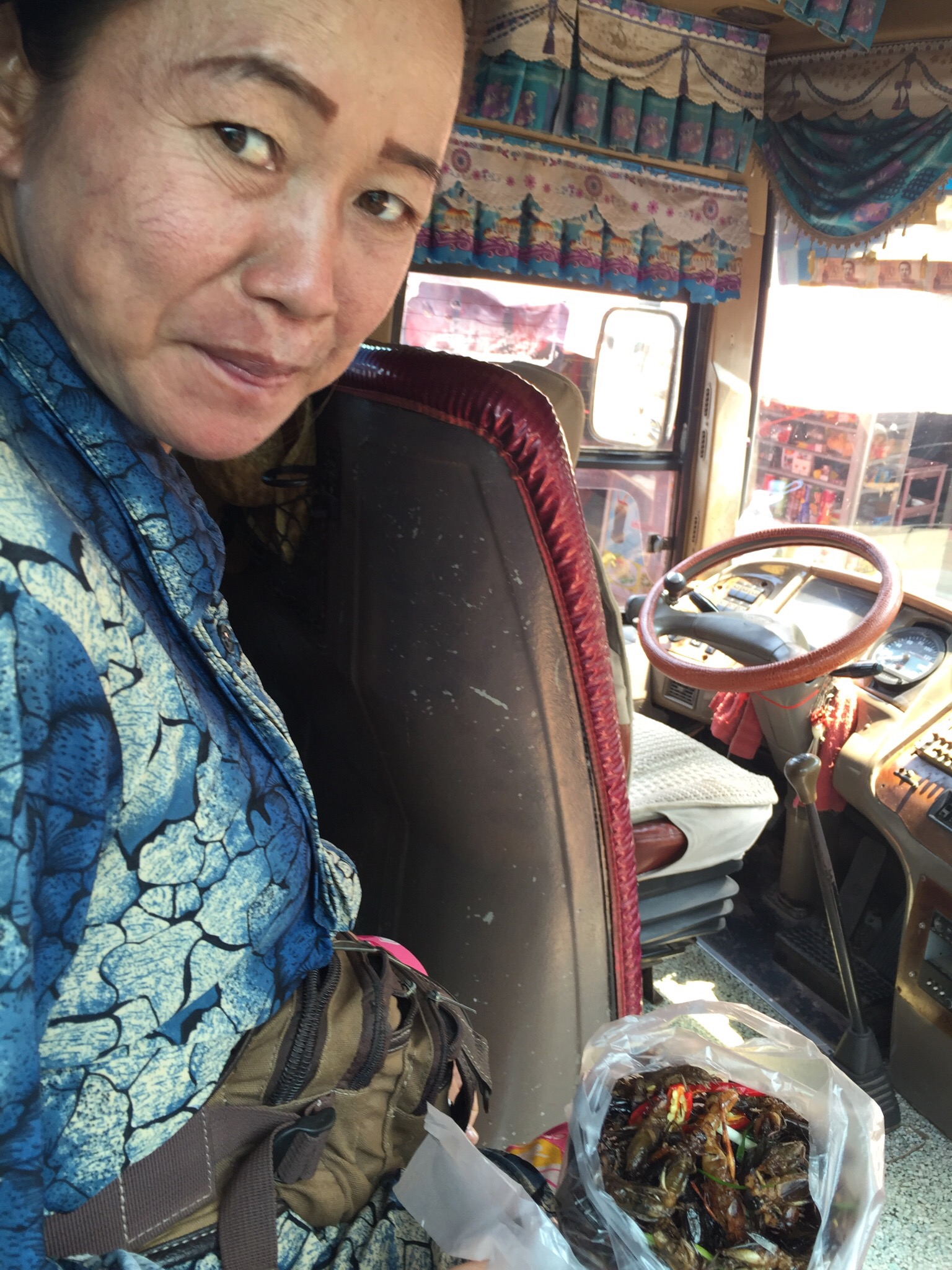
I now almost always ride to see the sights and only take the bus for long journeys. On one bus trip, I offered the lady sitting beside me some of my watermelon and mango. She politely refused, but returned the courtesy when she pulled out her bag of roasted cockroaches. Mindful of protocol, I thanked the good Buddha she had refused my watermelon. When we were both finished eating, we glanced at each other and burst out laughing. We were each picking our teeth with toothpicks. There is a saying here – “same same, but different”. We got it.   

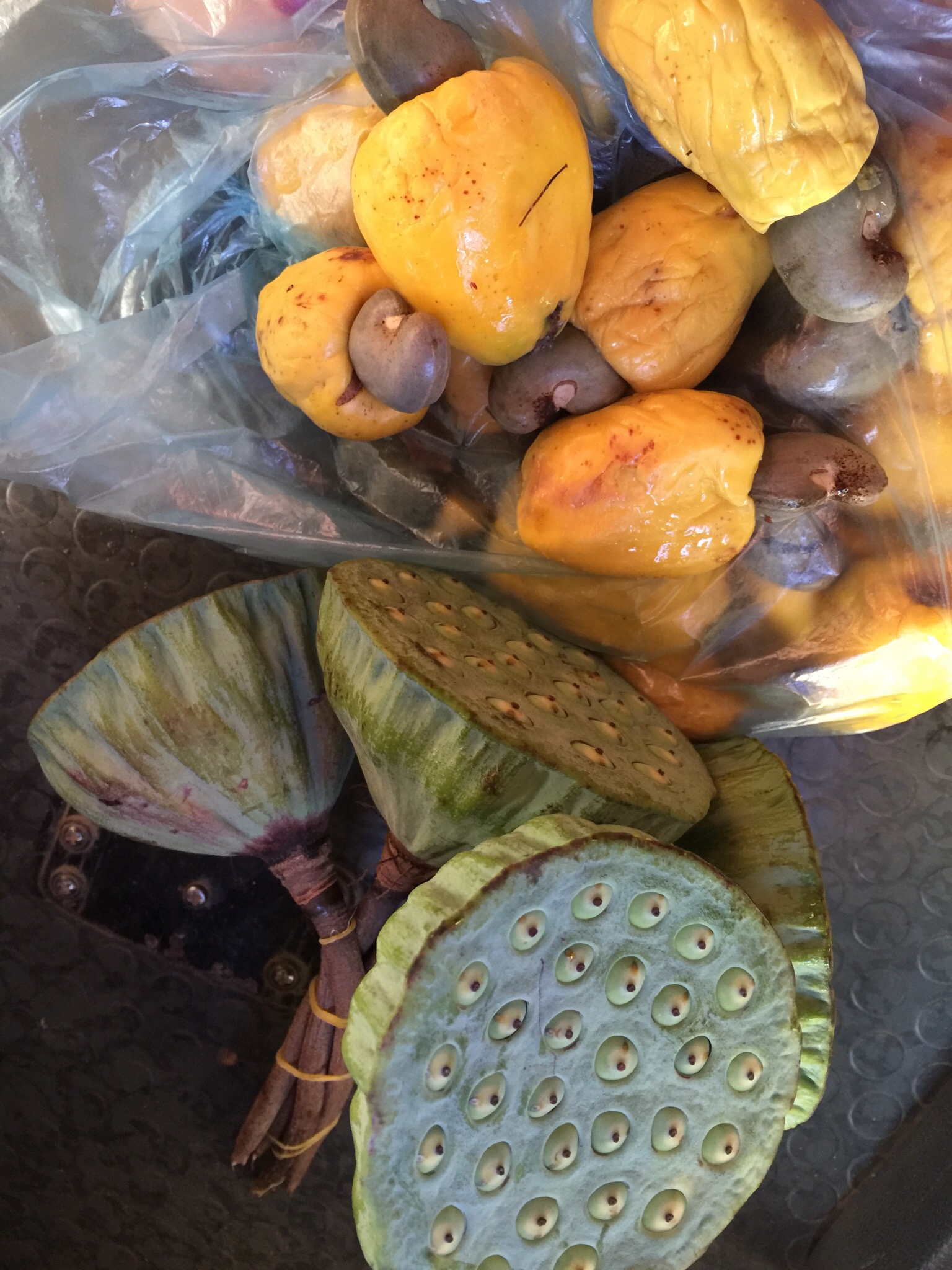
I’ve never met a fruit I didn’t like and cashew fruit was no different (I didn’t even know cashews had fruit). It was stringy, but juicy, and tasted like a bitter mango with a hint of green pepper (I later found out that most people just make jam out of them or a liqueur called feni). It wasn’t until after I had already consumed several that I discovered what the fruit was, and specifically, that the creepy looking kidney-shaped blob on the end was a cashew nut! 

 I love raw cashews so I bit open the surprisingly tough outer shell with my teeth, and swallowed what I could of the nut. Such a bad move! Immediately my lips, tongue and mouth were coated with a thick, bitter, gluey feel that burned like hades. My stomach turned acidic, my head started to spin, and I thought I was going to pass out. I guzzled water – didn’t help. I dug out my toothbrush and brushed my teeth – didn’t help. I didn’t know what was happening! I took the bandana off my head and wiped out the inside of my mouth with it – helped a little, but the bitter stayed. For the rest of the day I felt sick. Later, I did some research. Turns out,  cashews and poison ivy/oak are siblings. Cashews contain an oily substance between the outer shell and the seed called urushiol, a strong irritant for most people and fatal for some (fortunately not for me). Also under the shell is another layer of highly toxic resin. ‘Raw cashews’ are not actually raw – they are steamed at extremely high temperatures so they can be safely removed from the shell and made edible. Who knew? – Or am I the only one who didn’t know this! After reading some horror stories, I feel pretty lucky that my only after effects were blisters inside my mouth, burnt lips, and a few spots of poison oak on my chin. The moral of the story is – sometimes it’s ok to be a little nuts, and sometimes it’s not!  

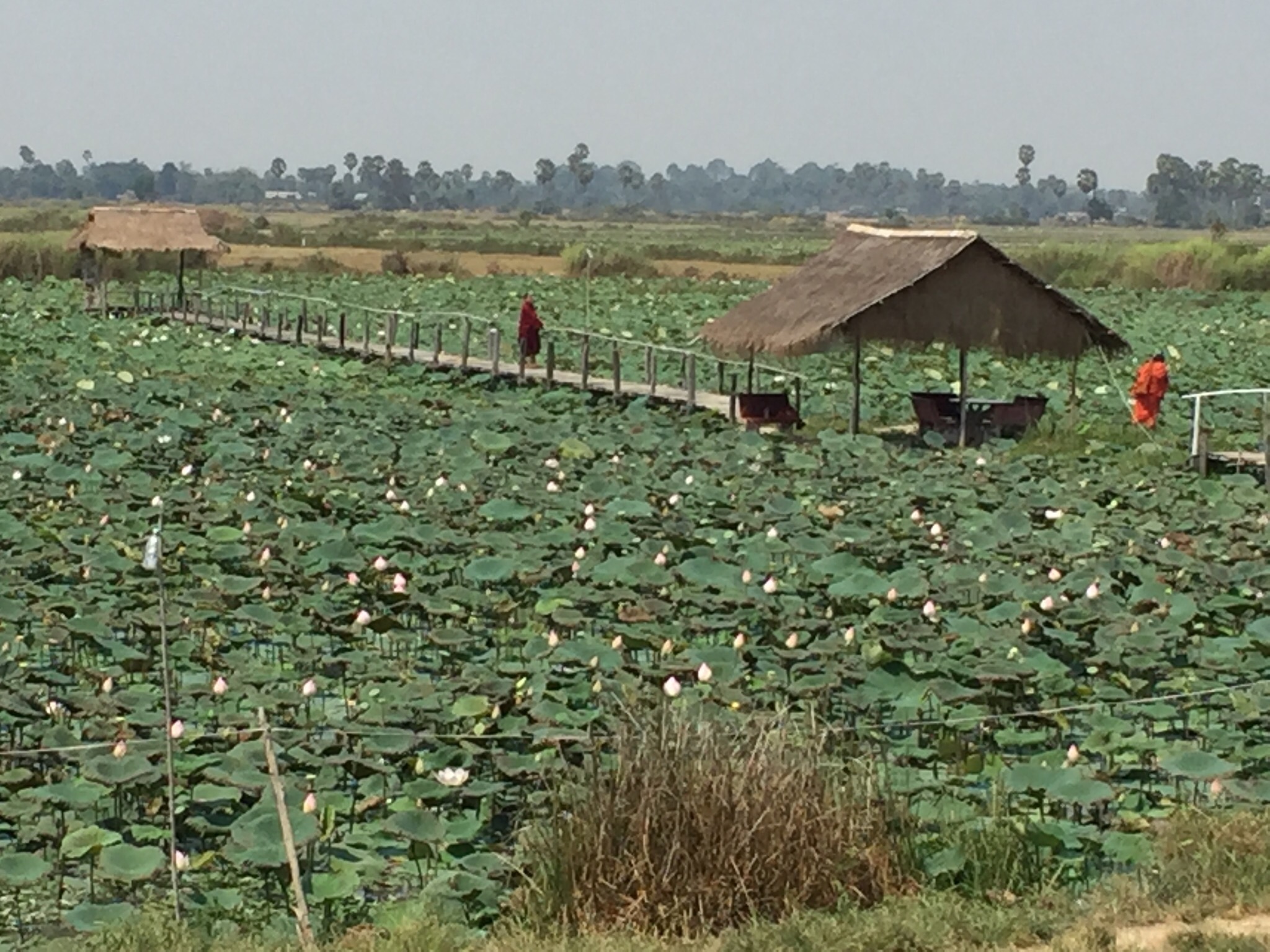
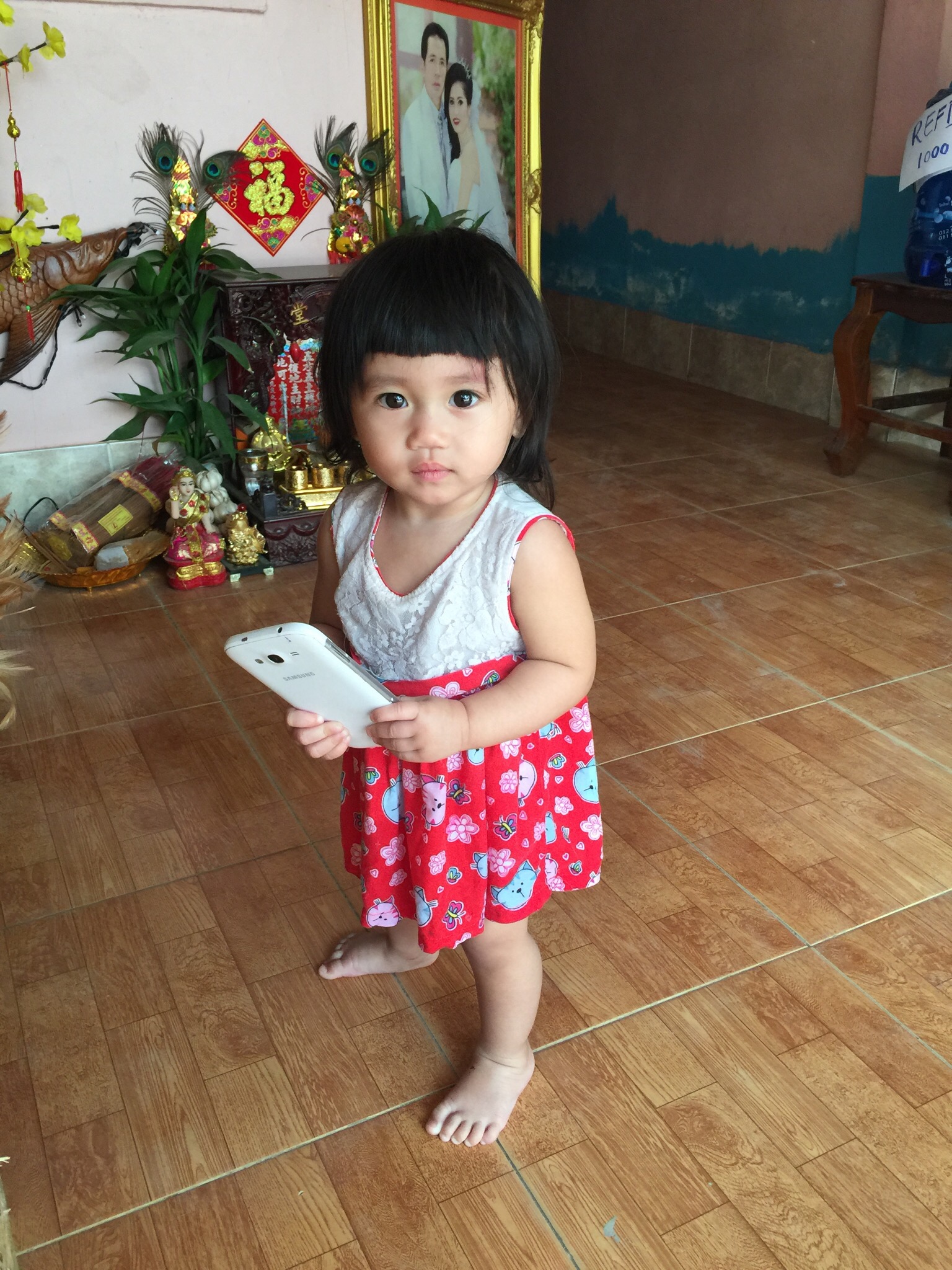
 (The other fruit in the picture is lotus fruit that I bought from a lotus farm. You peel off the outside green to reach the pod, which you crack open and squeeze the edible seed out. It was ok. Luckily I tried it before the cashew. The little girl is from my last guesthouse. She would hold her mothers phone, put on music and dance to it. She was adorable). 


Angkor Wat

Standard

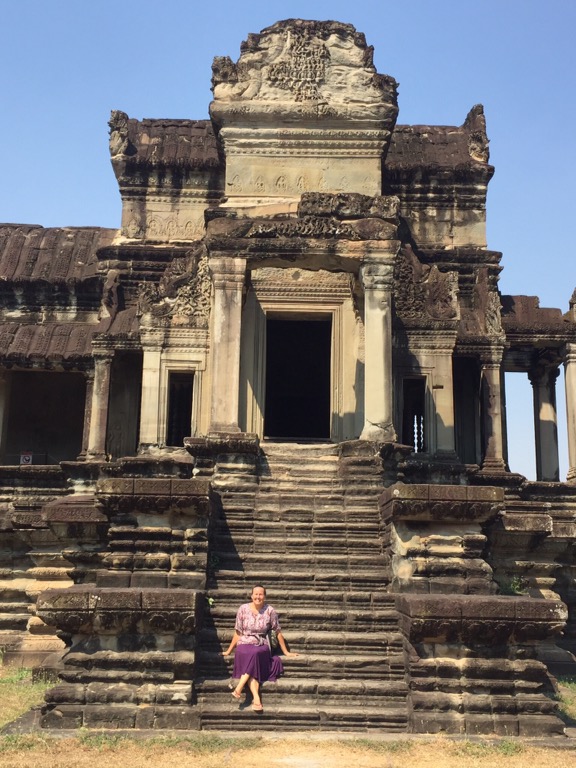
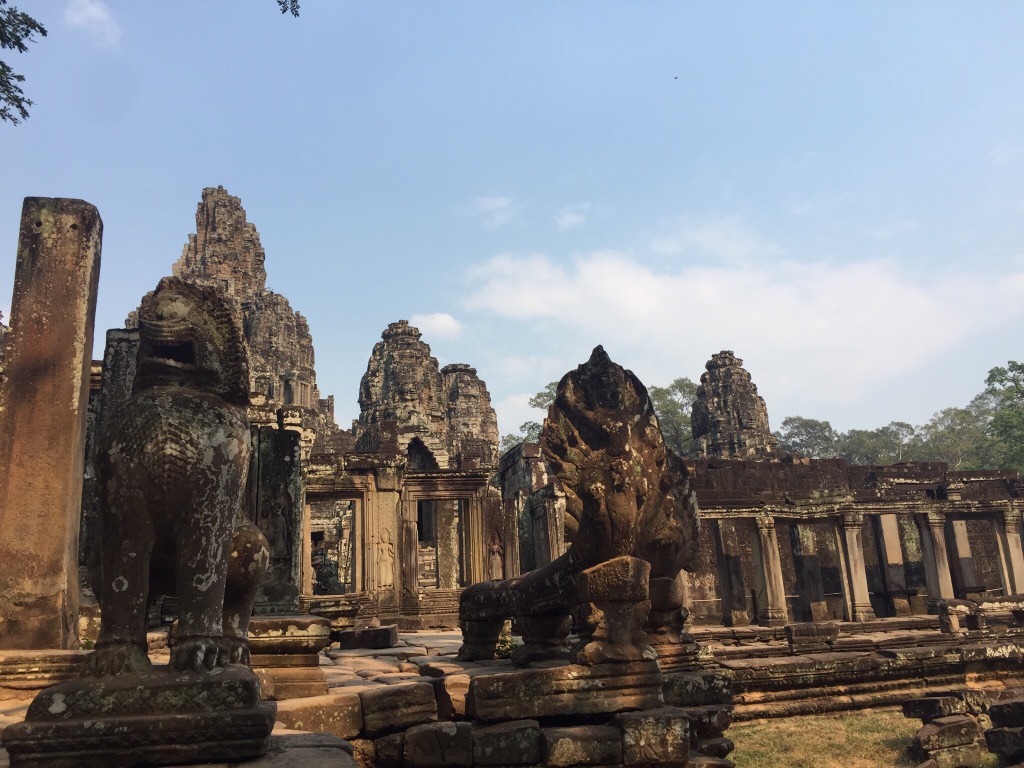
Angkor Wat was built by King Suryavarman ll, a devout but bloodthirsty, teenager who came into power by murdering his great uncle, while riding an elephant. Suryavarman ll revered Vishnu, a deity associated with protection and built the temple in his honour (maybe his uncle should have paid more homage). The literal translation of Angkor Wat is ‘Temple City’. Built in approximately 1113 to 1150, Angkor was the capital of the Khmer empire and the largest city in the world until the industrial revolution, boasting hundreds of temples and over 1,000,000 inhabitants. Imagine, all ruled by a homocidal teenager! 

My first impression of Angkor Wat in Cambodia was its imposing grandeur. A large stone walkway crosses a 190 meter wide moat to the main entrance. 

The five towers recreate the earthly image of Mount Meru, the abode of ancient Gods beyond the Himalayas, as told in Hindu mythology. Inside and up close, 3000 luscious heavenly nymphs, each unique, are carved into the rock  and don’t even begin to represent the fascinating decorative design found throughout the fascinating ruins. 

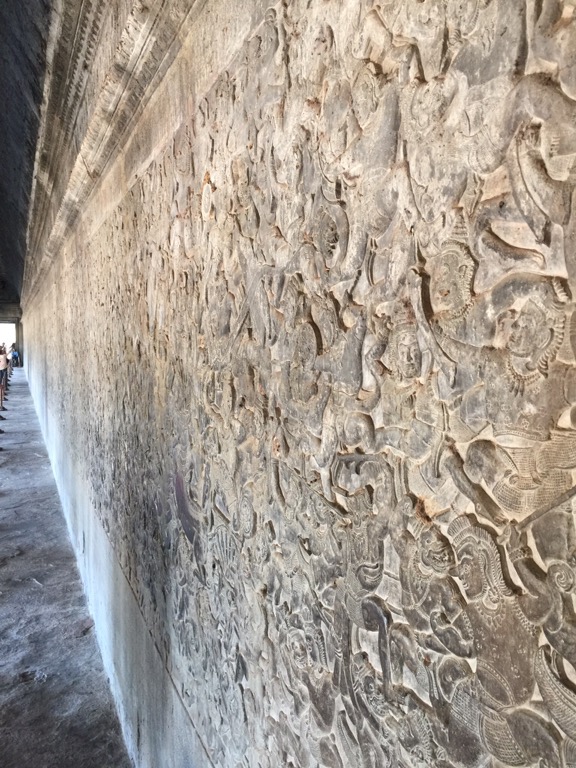
Stretching along the outside walls of the central temple are 800 plus meters of intricate bas-reliefs depicting stories of historical events and ancient mythology with exquisite detail. The most famous is called ‘The Churning of the Milk’ and depicts the Hindu story of creation where the devas (gods) and the asuris (demons) churned the ocean under the head of Vishnu to produce the divine elixir of immortality

.  

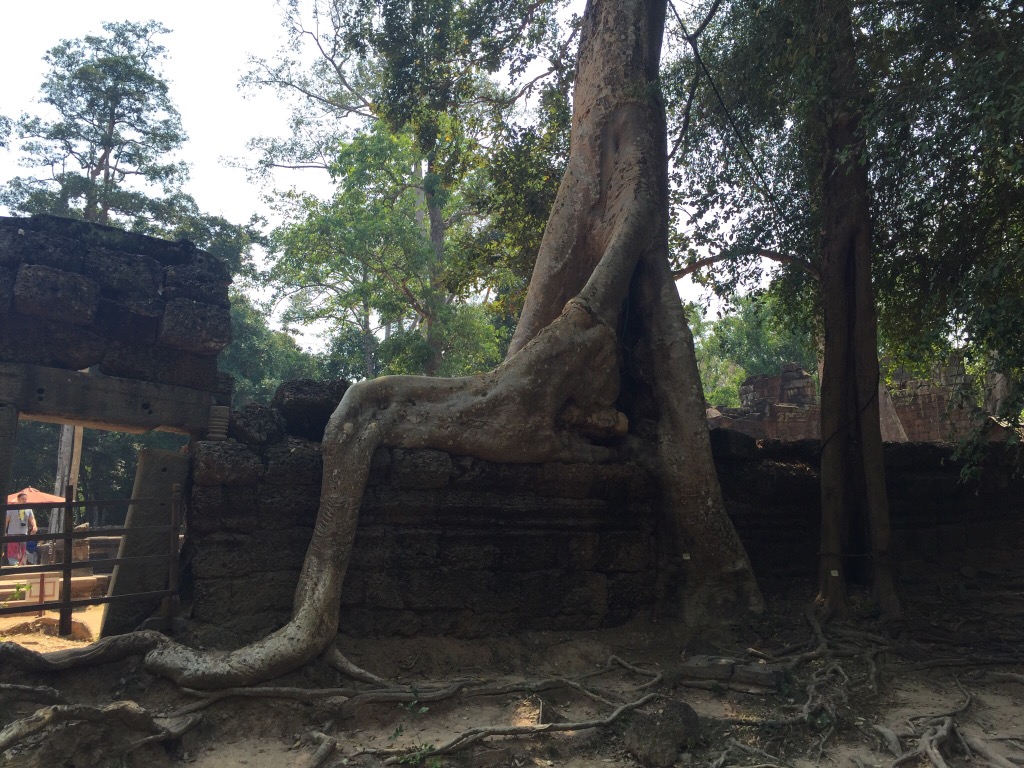
 Taphrum Temple was my favourite. I imagined  what it would be like to make the actual discovery, to just stumble onto a lost temple of such magnitude. I wandered around the enormous roots snaking out of the rock and marvelled how a place can be so completely reclaimed by the jungle. I later found out that Taphrum Temple was the film site of the movie, ‘Tomb Raiders’ with Angelina Jolie. I’m not surprised – what a backdrop! 

The Plain of Jars

Standard

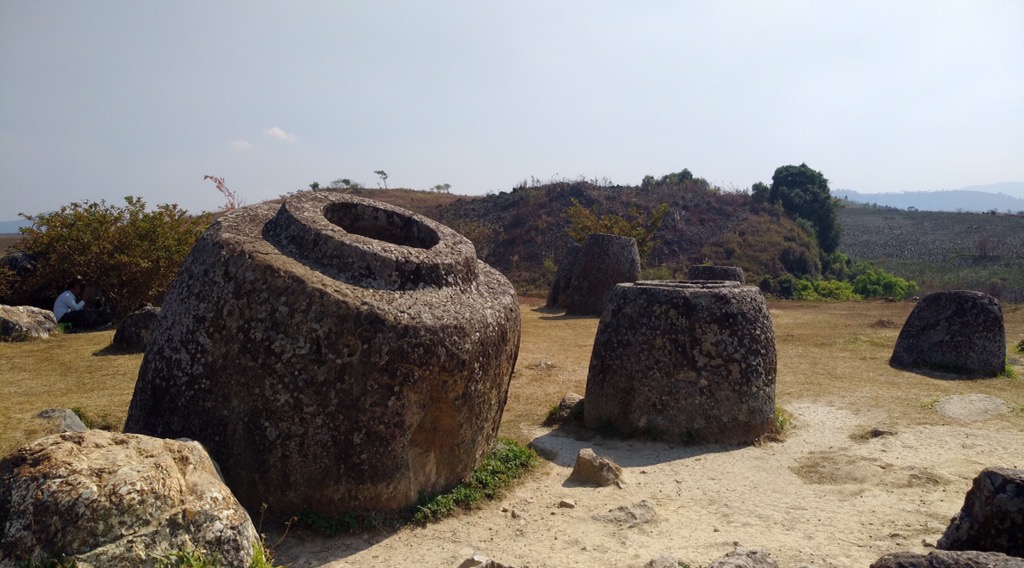
The Plain of Jars is a 15 km stretch of rolling hills and meadows littered with ancient monolithic jars (hewn from solid pieces of rock) from The Iron Age (500 BC – 500 AD) and thought to be associated with prehistoric burial practices. There are over 90 jar sites with 1- 400 jars per site. I took the bus to Phonsavan and rented a mountain bike to visit the large mysterious stone jars.

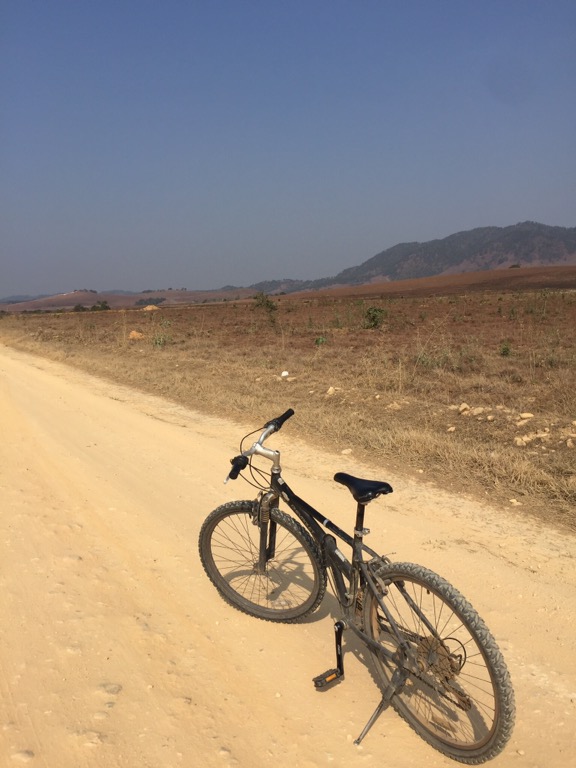
Passing through villages with happy barefoot children running about, I climbed higher and higher into the hills until the road became a dusty track alongside grazing cattle. No jars, no people, no food stalls. I was lost. I pressed on, but didn’t stray off the beaten path on account of all the unexploded bombs.

Between 1964 and 1973 the US Air Force, operating against North Vietnamese forces, dropped 262,000,000 cluster bombs (more than they dropped in World War Two) on the Plain of Jars. 80 million of those did not explode and remain a deadly threat. Today, approximately 300 people a year are killed by exploding ordinance in Laos.

I rummaged through my bag looking for food and found my riverweed. The previous day, a street vendor had thrust a bag of interesting looking seaweed at me, and knowing my love of dulce, I bought it. Rather, it was riverweed; the long strings of algae that hang off rocks in northern Lao rivers. They are gathered, washed, rinsed, and laid out flat and thin on mesh frames, then soaked with an aromatic dressing and topped with sesame seeds, garlic, tomato slices and left to dry in the sun for a day before being flash fried in oil. The end result is a delicacy called Kaipen. I wasn’t crazy about the thought of eating Mekong River algae, but it tasted good.
And I figured it was either really good for me or really bad. 

Still in search of the elusive jars, I was zooming as fast as I dared down a steep dirt track trying to maintain top speed to give myself a fighting chance on the uphill stretch. Out of nowhere, a random chicken ran right out in front of me, almost annihilating us both. Imagine! There is absolutely nothing dignified or glamorous  about being taken out by a chicken! But it was a good reminder of how life can take a sharp left with no warning, and reninforced to me to take good care.

I eventually found an obscure jar site, and explored it until I hit my ‘turn around time’.  When I was only about 10 km from my hostel, I also found one of the main sites that I had missed earlier. It was fascinating to see, but by that time I had been on the bike for over nine hours and all I wanted was a cool, flat place to rest my bones, where the vultures couldn’t get me and a gob of tiger balm to rub on my aching butt. And food – I was hungry enough to eat the business end of a scabby water buffalo.  At the first roadside food stall I came to, I bought whatever they were selling – it turned out to be a handful of ‘sticky rice’ with a glutinous clump of ground wild boar parts steamed in banana leaves. In Lao, people eat with their hands and that suited me just fine; I was too tired to hold a fork.


The Slow Boat to Laos

Standard

The White Temple in Chang Rai is achingly beautiful and pictures do not do it justice. Millions of glittering glass pieces embedded in pure white plaster and stunning mythical carvings create an illusion of an enchanted, frozen castle. I felt like I had slipped through a portal into the kingdom of an ice queen. Created by famous Thai graphic designer, Chalermchai Kositpipat, the white symbolizes the purity of the Buddha and the glass symbolizes the truth and wisdom of his teachings.

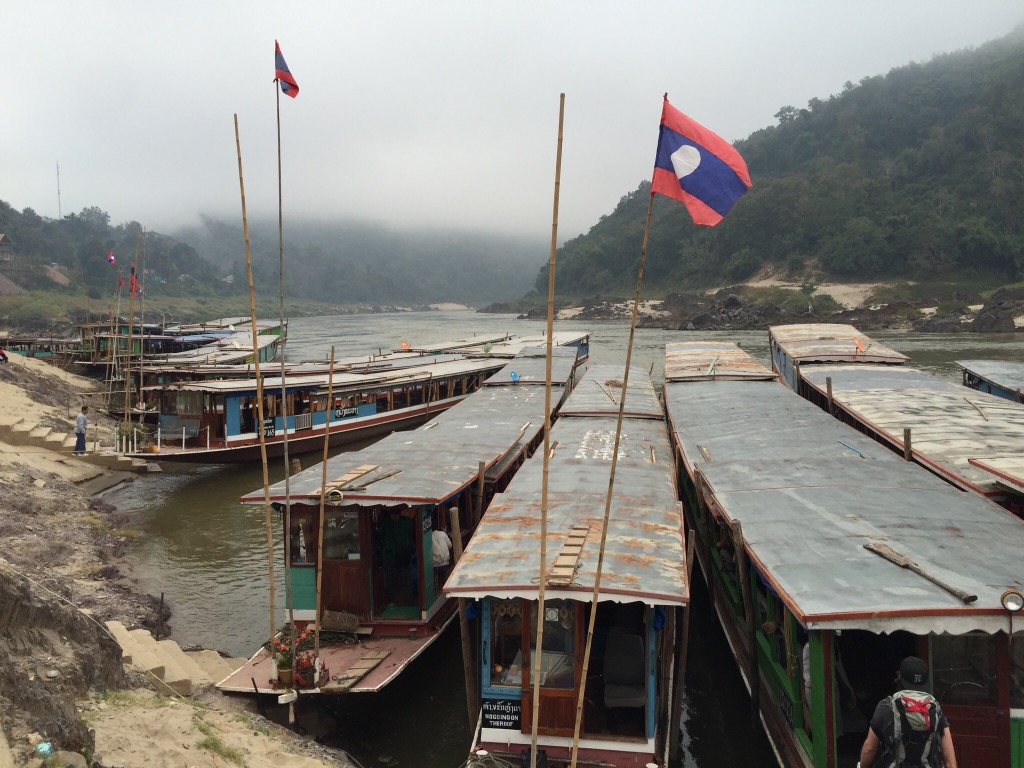
I left Thailand and took the slow boat to Laos; a two-day lazy chug down the Mekong River on a longboat to Luang Prabang. 

Laos has only been open to the outside world since the 1990’s and has been ruled by the same communist regime since 1975. Landlocked, the Mekong River is the life blood of the country and small jungle villages dot the winding shore. People wave a red flag signalling that they want to be picked up. If the longboat can get to shore, it stops; if not, the villagers board mid-river from a fishing skiff. It’s hard not to use cliches when describing the scenery. It was as spectacular as you can imagine; rugged cliffs, jungle mountains, herds of wild water buffalo, and small thatched tribal villages. I soaked up every minute. 

A group of western kids were drinking non-stop at the back of the boat. The party culture here, that so many kids engage in, terrifies me. I eavesdropped on a conversation about a kid who flatlined for 56 seconds in an ambulance after taking acid, opium and meth, but according to the the kid talking, the drugs were fine; it was the energy drinks that rendered the other kid unconscious. And he was laughing about it! We all have our issues, but excessive drinking and drugs frightens me on so many levels (not the least of which is death). Especially in a foreign county where it’s essential to keep the survival instincts sharp. For me, that means constant awareness of where I am, of the people around me, of their customs, and of my personal belongings.  Having said that, most of the young people I have met so far are completely awesome and the generation gap is not noticeable – until it is. 

I was happy to meet Marianne, possibly the only other lone female backpacker of my generation in south east Asia. Marianne is a Finnish woman, who is travelling in more style than I am, but we both live a little off the beaten track, are in bed by nine, suffer temporary muscle mutiny after waking, don’t use apps, need glasses to read our 100 lb. guide books, and forget what we’ve read five minutes later. Funny story – at the Lao immigration office I filled in my visa form without my glasses and it turned out that everything was in the wrong place. The officer wasn’t the happiest corpse in the morgue and wasn’t amused.  Thoughts of my wonky form and his grim response entertained me for hours (clearly, I’ve been alone a long time). 


The Lao currency is the kip and my first Lao meal was som puk, a dish of steamed rice topped with fermented garlic, chilies, lime, and morning glory leaves. It was fiery and fragrant with a healthy dose of sour, but delicious. 

The Spirit Caves 

Standard

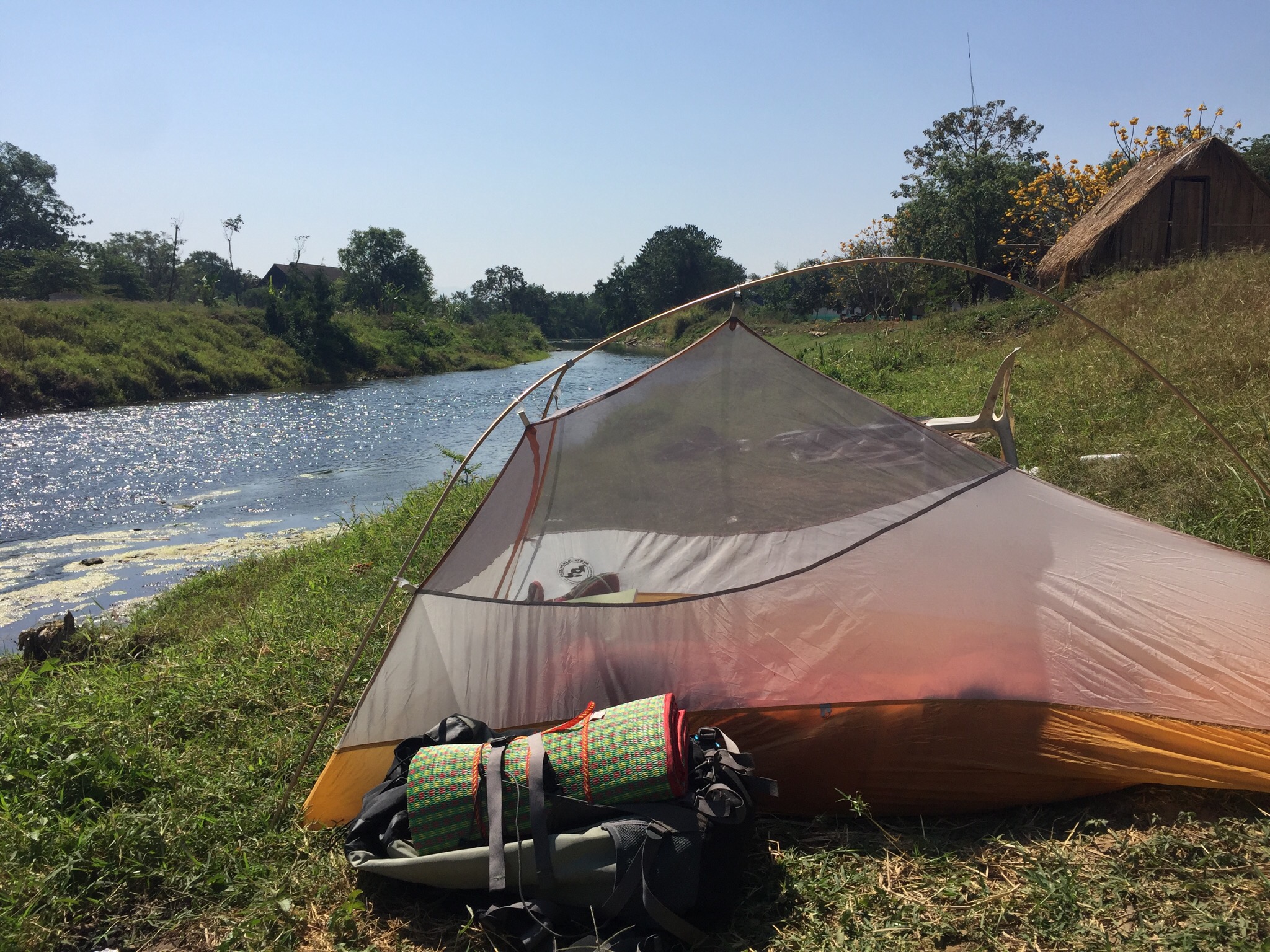
I am finished my massage course and am now camped on the Pai riverbank at the Paizen River Jam Hostel. It has thatched bamboo huts, tent camping, an open air kitchen, and 2 rambunctious puppies. I pitched my tent, went to the night market for green curry soup, and hurried back, eager to snug into my cozy sleeping bag. It was not to be. 

I returned to find my tent netting ripped in several places, my zipper partly opened, and my stuff strewn about the grass, some of it never to be recovered. Grrrrr – the carnage smacked of puppy play! On the upside, if your tent is going to be attacked by animals, puppies are probably your best option. In any case, my beloved wigwam needs repairs before it is spider/mosquito/reptile safe again. So, for now, I am sleeping in a small complimentary River Jam tent. It’s not mine, but it will do.

Motor bikes are the local mode of transport and are available for rent on virtually every corner for as low as $6 a day. Most young travellers rent them whether they know how to ride or not. I wanted to be a bad-ass-mama on a motorbike, and ride to Tham Lod Cave (about 55 km away), but scars of my last riding attempt a few years ago, and seeing the bandages of the walking wounded, dissuaded me. Not to mention, the added complication of driving on the opposite side of the road and general public safety. I splashed out for a tour of the caves instead, and the 500 baht ($20) was money well spent.

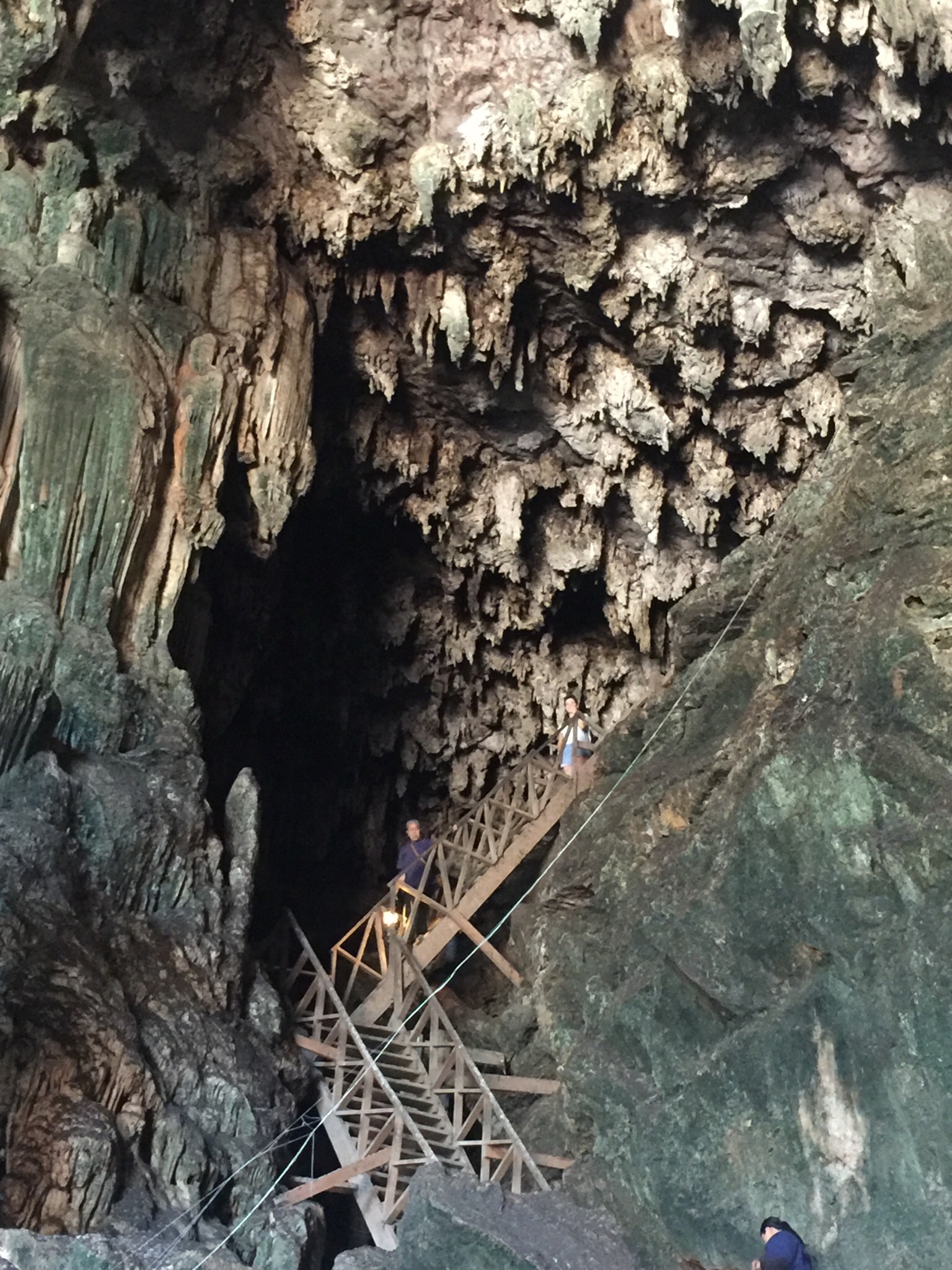
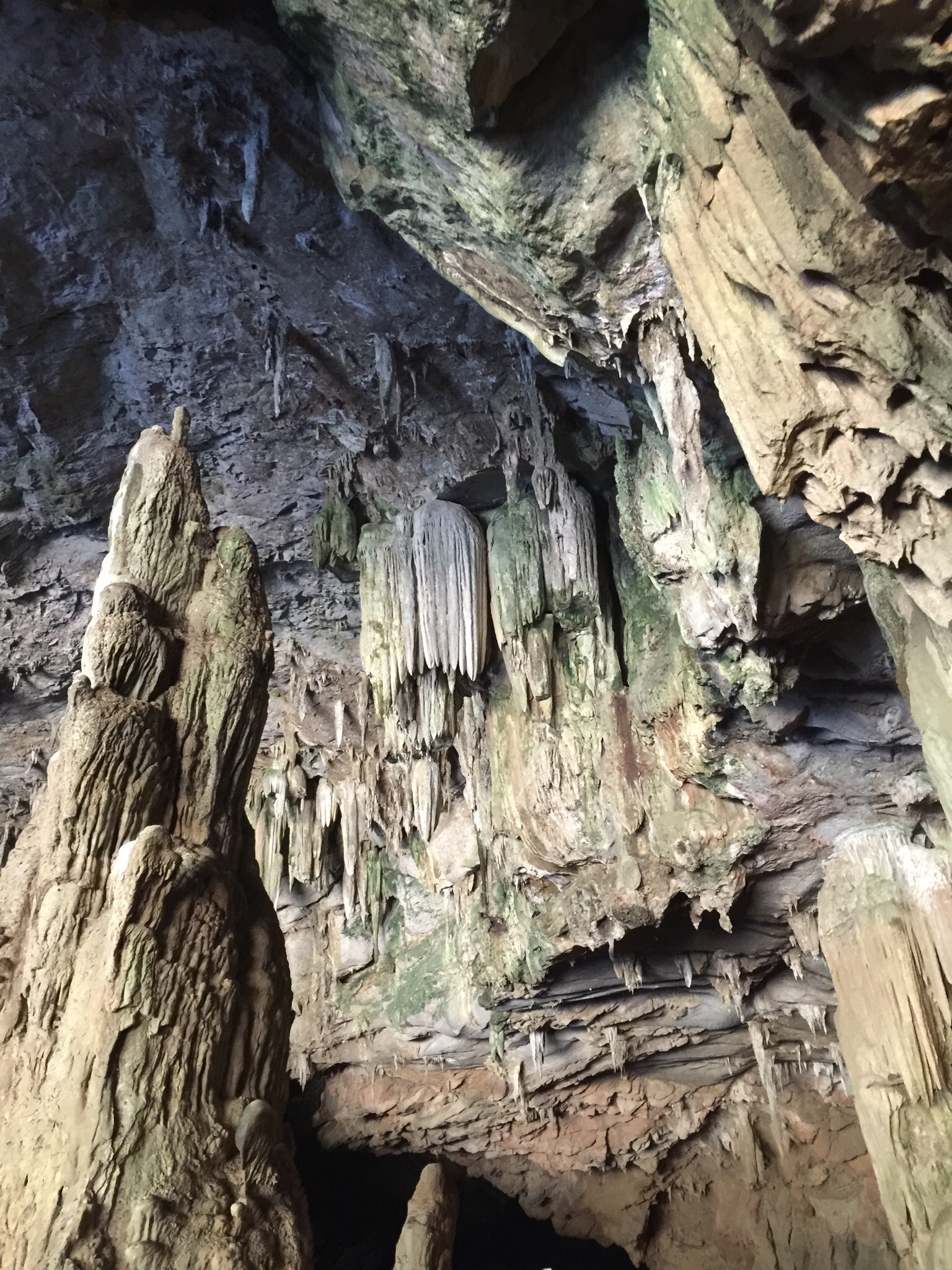
In a predominately limestone region, Tham Lod Cave; the Spirit Caves, as they are locally known, are an impressive series of caverns full of mind-blowing stalactites and stalagmites. I, and two very nice Europeans girls, walked the wooden planks and hard packed dirt trails to the rickety wooden stairs. Clutching guano-coated handrails, we climbed high into the dark depths, guided only by the the propane lantern of our non-English speaking guide. 

The enormous and convoluted cave network is approximately 1½ km long and not one I would want to explore alone. Among the varied contours and colours of the fascinating formations,  we saw a faded prehistoric drawing of a deer. It made me wonder how many other pictographs and valued caches were in close proximity, undiscovered, untouched, and unseen.  

Teakwood log coffins, dating back thousand of years were also nestled along the trail. The extraordinary grottos were occupied from 9000 BC to 5500 BC by a Stone Age community of hunters and gatherers called the Hoabinhian Tribe. 


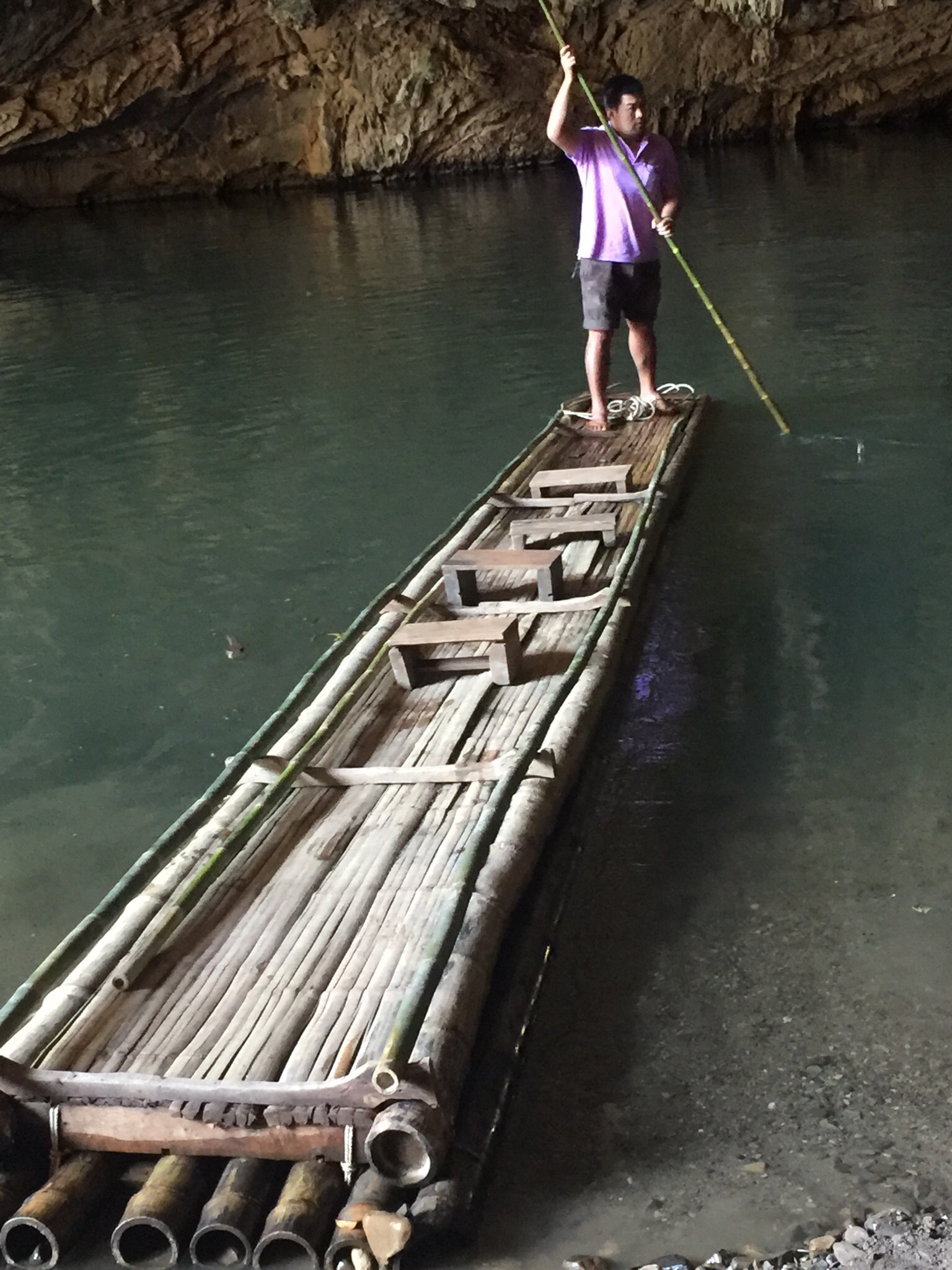
Back at the bottom of the cave, an hour or two later, we poled our way along the Nam Lang River on a narrow bamboo raft, through eerie swarms of large black fish. As we glided in and out of gaping inner sanctums, I tried to tune into some deep, ancient communal memory, and listened for spirit echoes. Alas, I could access no memory, and heard only bats and the swish of water as the bamboo poles slowly powered us along. But in my mind, I imagined scenes from the prehistoric age in clear and vivid colour. 

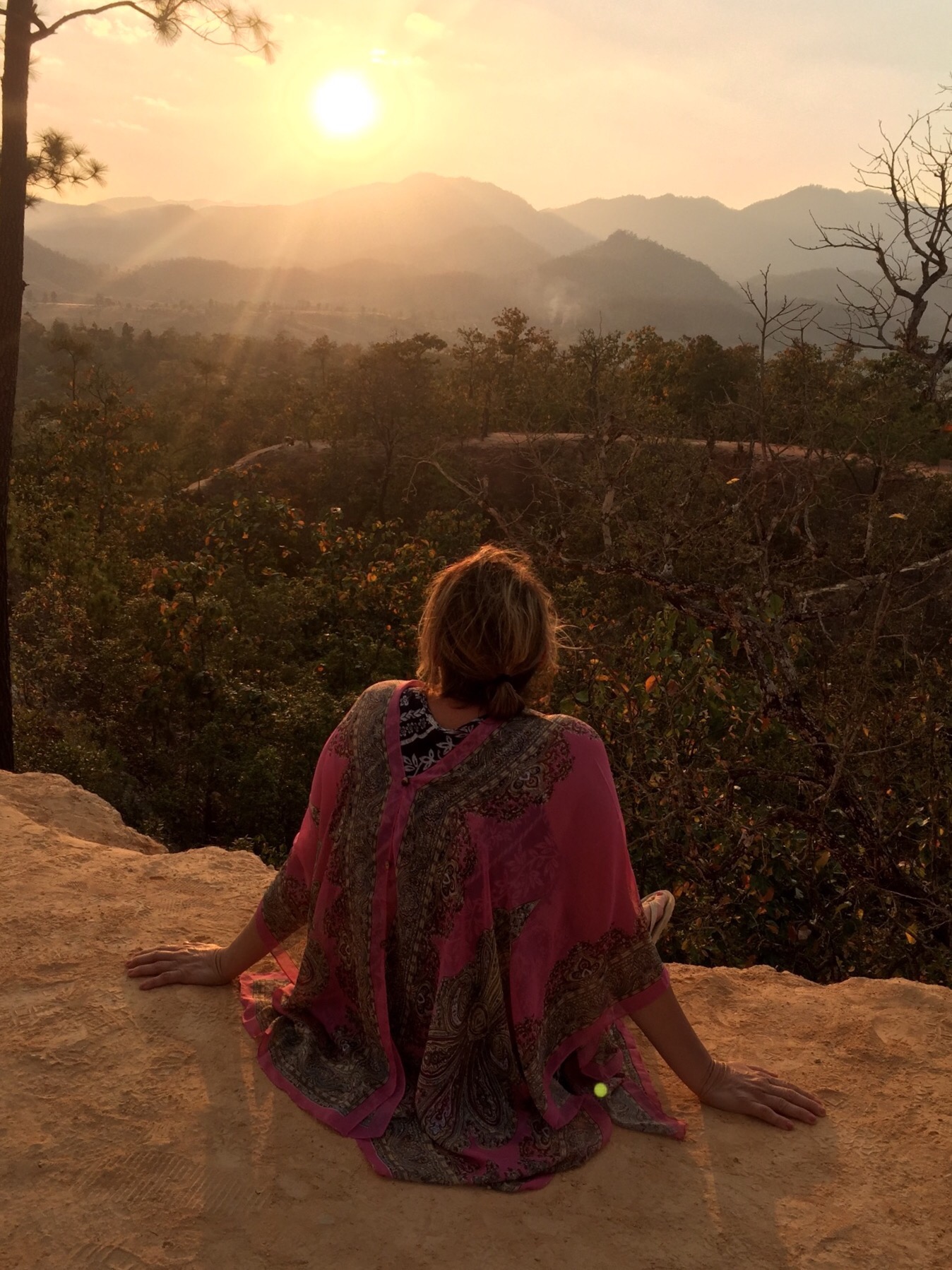
We finished the day at Pai canyon, watching the sunset. A lovely end to an awe-inspiring day. 

Learning the art of Thai Massage and Cooking in Pai

Standard

Set in a lush valley, Pai is a small, rambling hippie town, 135 kilometres north west of Chang Mai. On arriving, I immediately got a massage and almost decided not to learn the legendary manipulations. It was excruciating! But after some humming and hawing, I chose to stay the course – this old dog is going to learn some new tricks.


Mr. Bann, the good-natured 76 year old owner of the “professional school” said that staying healthy was simple and that he knew everything to keep the peacock feathers of his 40 year old wife open and his own snake strong as he waved a packet of mysterious elixir. No doubt, he had a lot to teach me but I wasn’t ready to dish out 30,000 baht ($1200.00) for 10 days. Not to mention, I was already emotionally exhausted by his all-knowing chatter. Off I trundled, leaving Mr Bann and his ‘strong snake’ oil behind. When I got to the other school that I had researched, it had shut down. I asked a rheumy-eyed old Aussie man (who looked like a permanent bench fixture) if he knew of anywhere else that I could learn massage. He pointed next door to where I was standing; she teaches massage, he said.  


Dao is a tough, scary, shrewd business woman with a good heart. I arranged for private lessons  with her (rather, she told me what I needed and I meekly agreed). I have a week of full-time instruction and accomodation in a little bamboo hut sitting on stilts behind the kitchen of her open air restaurant/cooking school/massage school/home. Bizarrely, she is registered as a massage school and I will get a certificate. I am enjoying learning Thai massage with its pulling and stretching and contorting but there is a lot to remember and all new to me. It’s a good challenge for my aging brain. Dao, who knows her stuff, doesn’t spare the verbal rod and after  37 years as an RMT, I need to keep reminding myself, that in my life at home, I am proficient and capable. But now that I know her better, I can see through the verbal lashings to her generous spirit. An added bonus of being here is the food and learning to cook.  

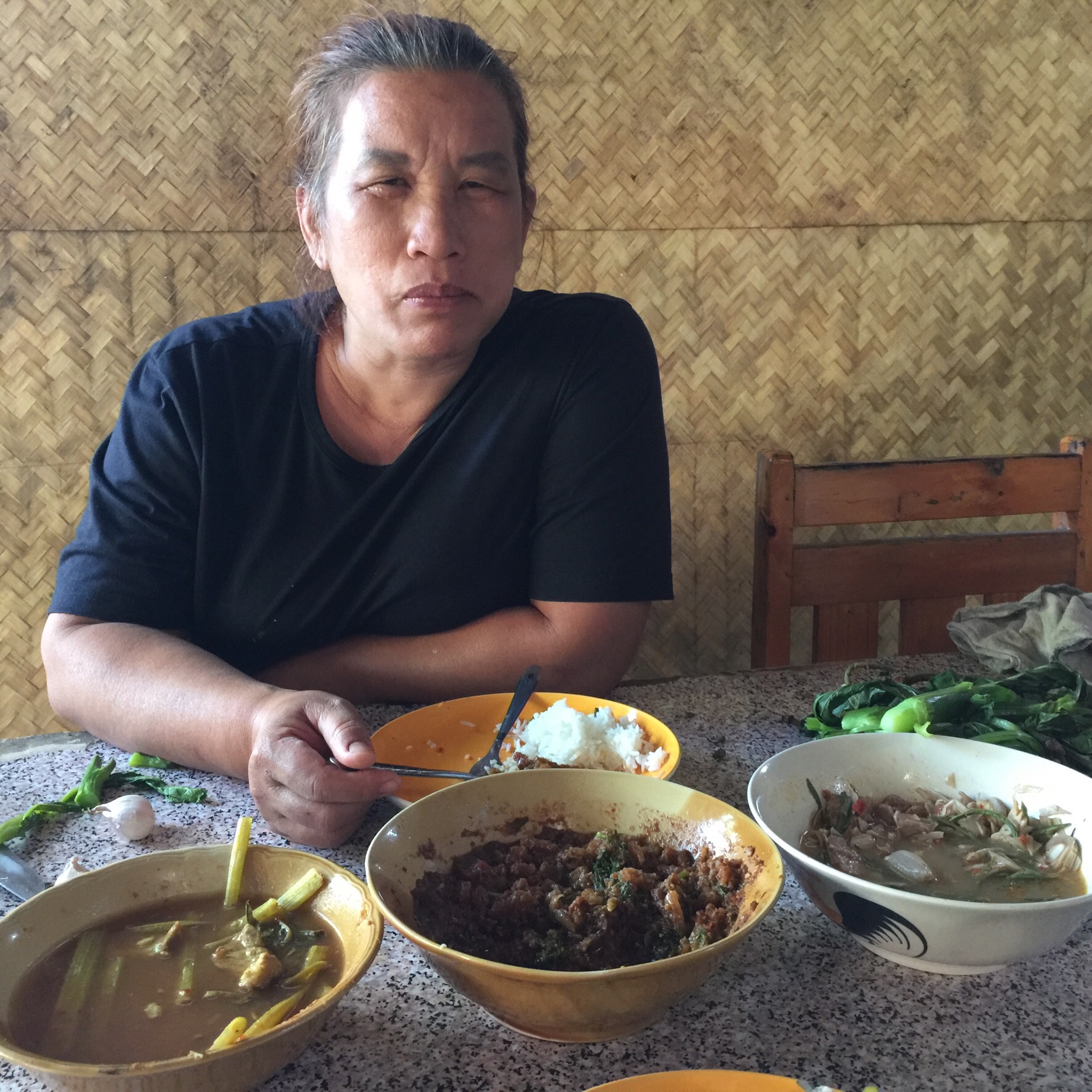
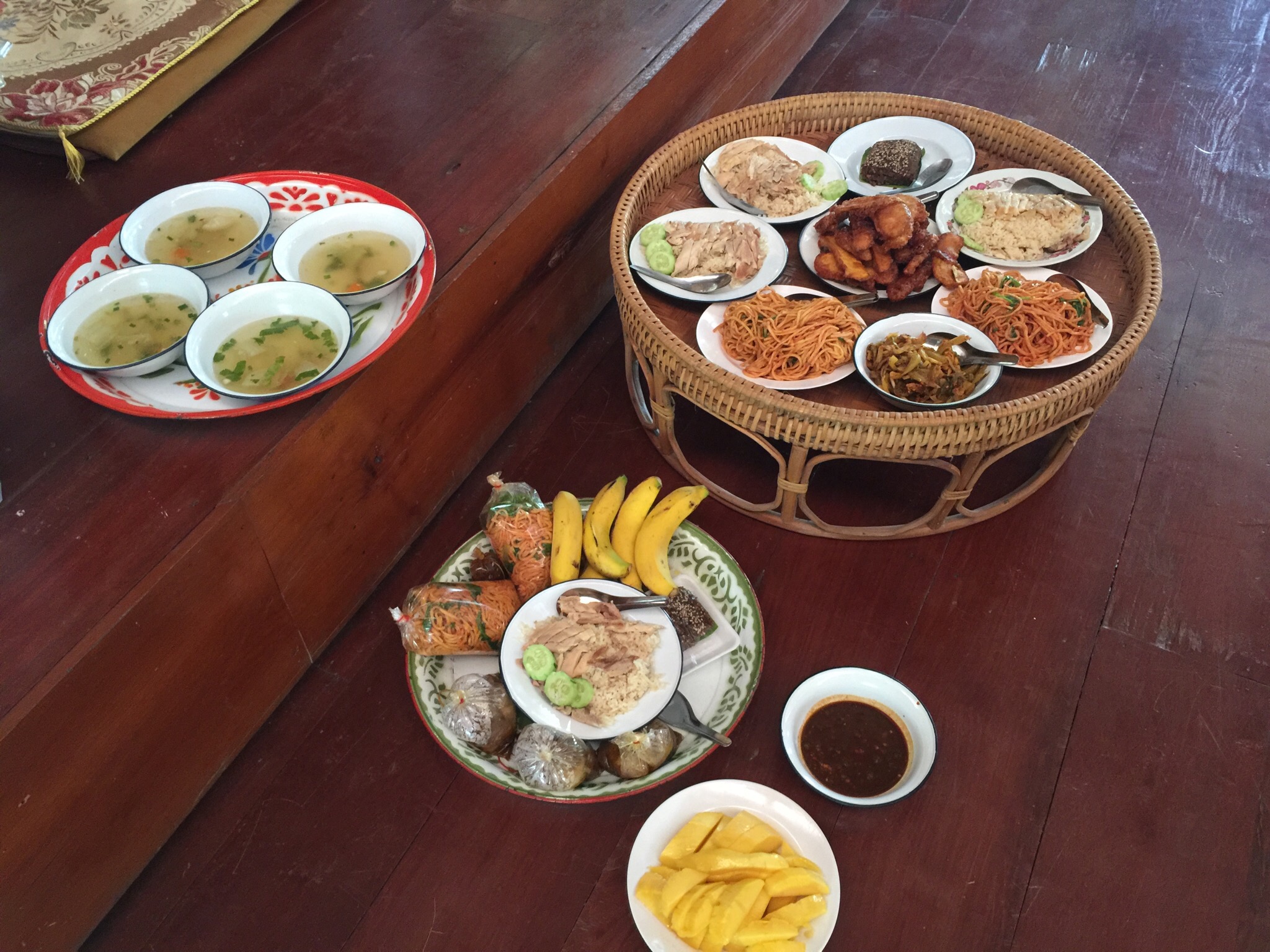
I was invited to join Dao, and her boyfriend Ning, at the temple for his birthday ‘feast offering’ to the monks,  where he received a special blessing from them. At the end, we were each given a cup of water to pour on a tree outside. I figure that the symbolic gesture of sustaining and respecting all life invites good karma. That night for his birthday dinner, Dao served an array of fruit, baked fish, roasted pork pieces with a spicy chili/garlic/lime sauce, and a traditional birthday dish of raw water buffalo salad. I didn’t partake of that particular delicacy on account of the fear of intestinal worms. But I’m pretty sure I ate my weight in mango and papaya.   

The last couple of nights, I have been assimilated into Dao’s cooking class and am learning the delicate balance of blending sweet, spicy and sour. We made curry paste with a mortar and pestle, khao soy (a northern Thailand coconut milk and curry dish), pad thai, papaya salad, thai noodle soup, spring rolls, and deep fried banana. And then we ate it all. My ‘mindful eating’ resolution has taken a crushing blow the last couple of days. I also fell off the rails with a sugar cane, coconut milk, roasted peanut fudge that, once I had a small taste, progressed into a train wreck of astounding proportion.  I am now fighting my way back to sugar sobriety. And for this mut, that’s the toughest trick of all.  

Meditation Retreat in Chang Mai

Standard

The soft voice of the monk filters through my concentration – “You must control yourself. Go to your breath. Observe it. Breath in, breath out. Discipline your mind. Don’t think about the past, don’t think about the future, stay in the present. Breath in, breath out”.
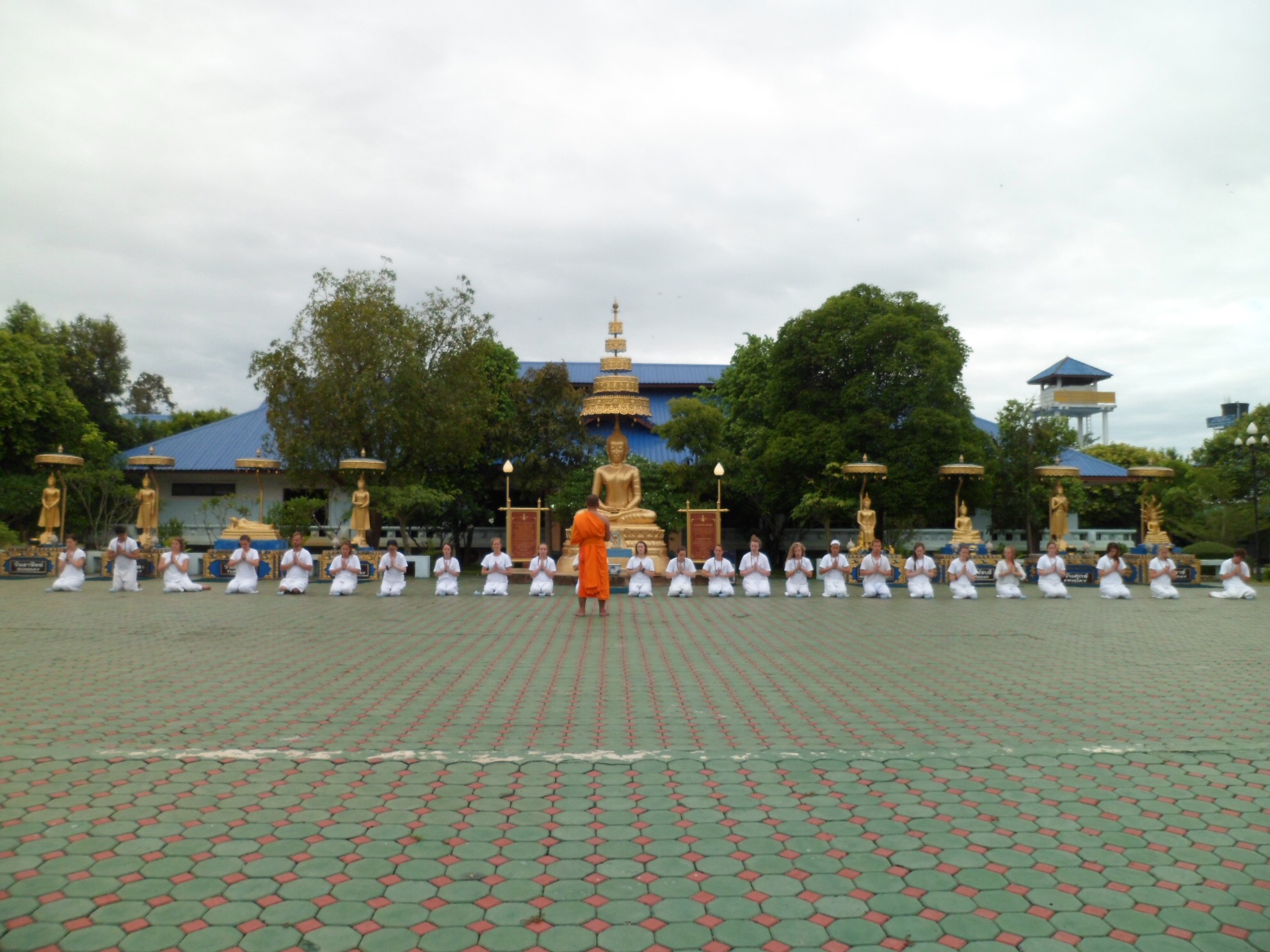
I am at the Meditation Centre of the Buddhist University Chang Mai campus, at the Wat Suan Dork temple for an intensive 2-day Meditation Retreat. Our teacher, a Monk named Phra Simlapachai instructs us that we must be silent – to speak only if absolutely necessary.

 He tells us that Buddhism is not a religion; it’s a philosophy. Buddha was not a god, he was a man. The word Buddha means “Awakened One” or “Enlightened One”. They believe that there have been many Buddhas in the past and there will be many in the future. The present Buddha was born into a royal family in Nepal, near the border of India in 623 BC. Raised in luxury, he found that wealth did not guarantee happiness. He was deeply moved by the suffering of his people and resolved to find the key to human peace and happiness. He left the palace when he was 29 years old for a simple life of meditation and moderation. When he was 35 years old, on a moonlit night, sitting under a Bodhi-tree in deep meditation, all delusion and ignorance fell away and he understood the true nature of things, and became “Enlightened”. He spent the rest of his life (until he died at 80 years old), living simply, teaching about finding peace and happiness through mindful development, self-understanding, and spreading kindness and compassion; the basic premise of Buddhism.

We begin each session by kneeling, hands in the  the wai position (palms together at chest level, fingers facing up). We bow our head to the floor three times in succession; in respect to the Buddha, to the Dharma (means truth), and to the Sangha (means followers of the Buddha). Between bows, our novice voices chant soothing unfamiliar words. Legs crossed, palms resting easy, we start to meditate. I concentrate on my breath but my monkey mind jumps from branch to branch. I bring it back to my breath, again and again. Before long, my side iches and my back hurts. “Let it happen and then try to detach”, Phra Simlapachai says. I observe the sensations, acknowledge them, and let them go. After hours of practice, many sensations have come and gone and I feel like I am floating a foot above my cushion.

We are released from practice at 9:30 pm. Disciplining the mind is hard work and I sleep like a zombie until the 5:00 am gong. We have 15 minutes before we meet in the meditation room at 5:15. By breakfast at 8am (rice soup), we have already been practicing for almost 3 hours. We also practice walking meditation and laying meditation (during which I am shamed to admit, I fell asleep). We do alms – giving rice to the monk, and in turn, are blessed by him. Lunch is curried potato soup and rice.

At the end of the second day, I am both exhausted and peaceful as I stuff my new white clothes into my pack. Regardless of belief, one unalterable truth has been hammered home – everything is impermanent and being able to let go with grace is an absolute necessity  – and, in some aspects, that is a tough one for me to make peace with.  But over my 2-day retreat, serenity and acceptance come. With patience and practice, I hope to hold onto it for awhile. The words of Phra Simlapachai echo in my mind, “Don’t think about the past, don’t think about the future. Stay in the present.  Breath in, breath out”.