With some extra time back in Egypt we decided to see a few sites that were too far flung to visit before leaving for Jordan. The Abu Simbel temple was first on the list. To get there we crossed the Sinai again, back up to Cairo, back down to Aswan and another four hours further south almost to the Sudan border. It was a long haul but worth it!
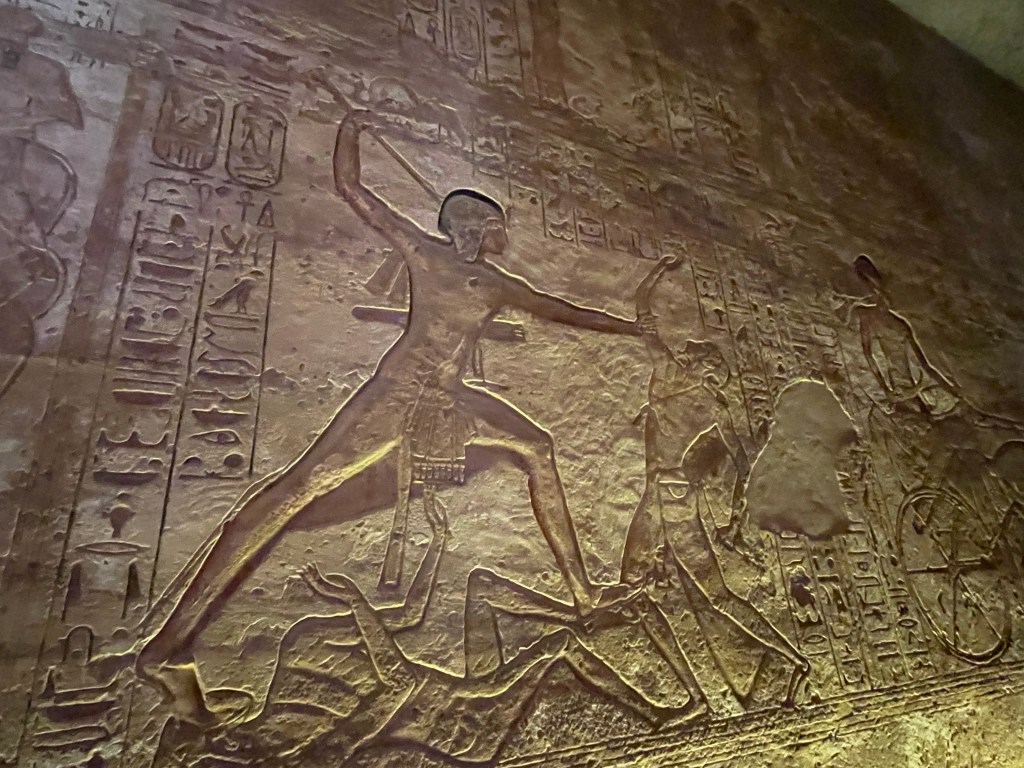
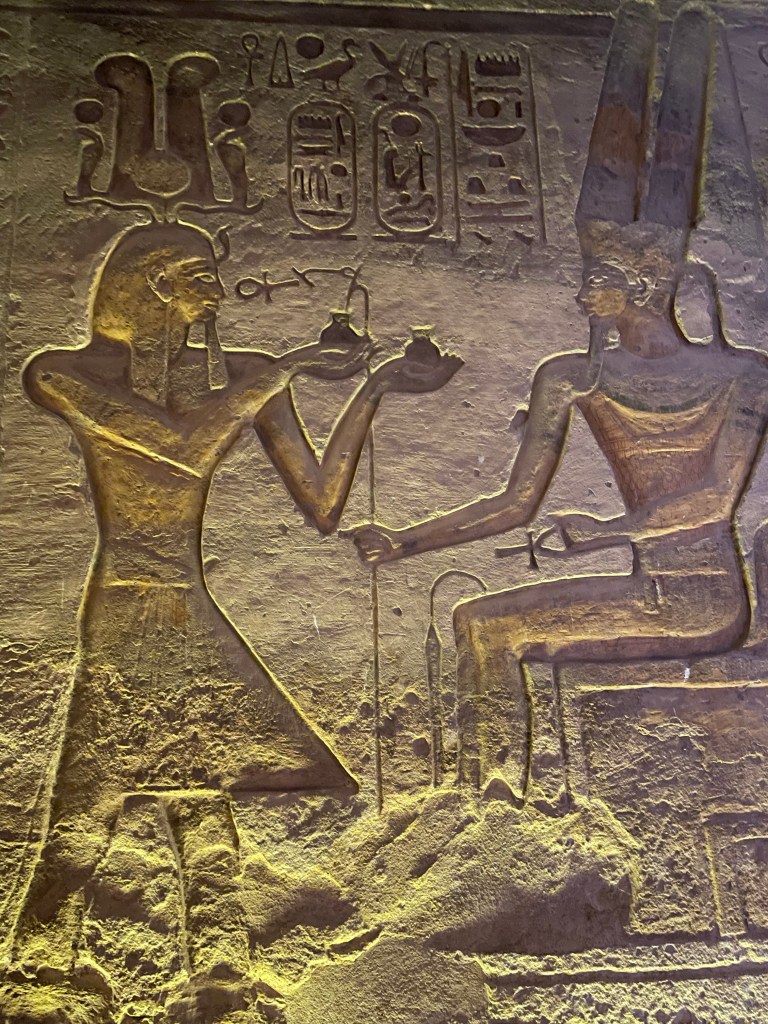
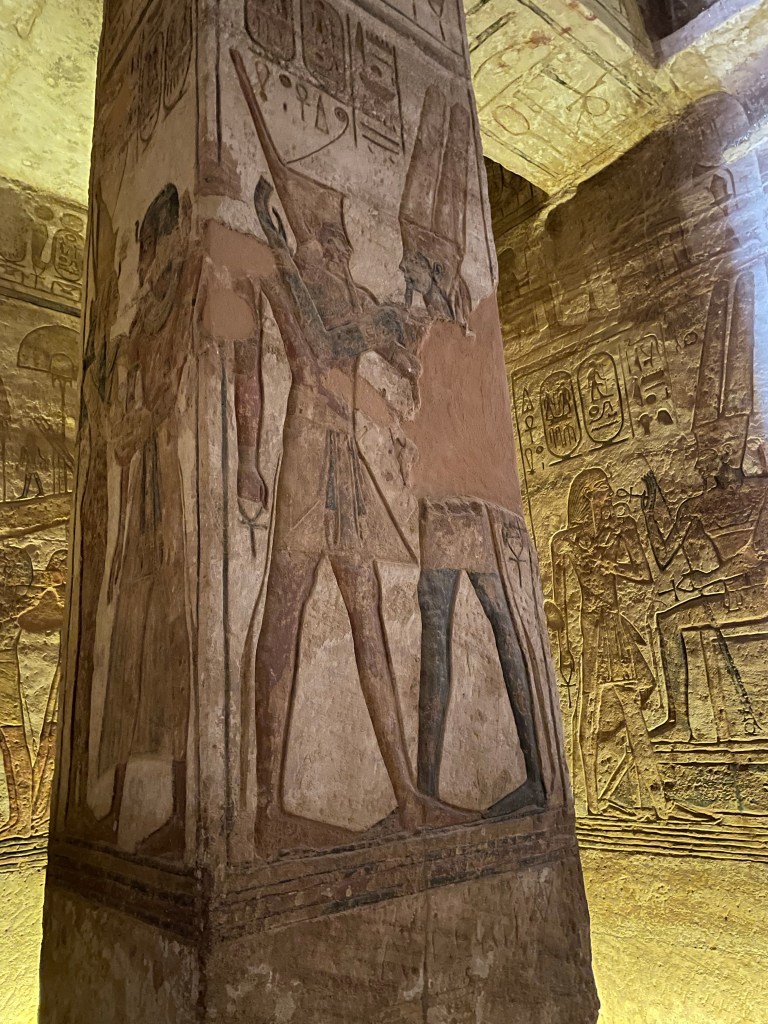
Dedicated to Ramesses II, this temple greets you with four 20-metre tall seated colossal statues of the great king carved into the rockPositioned around him are various members of his very large familyThe first room inside the temple is a great hall with another eight colossal statues. Exquisite carvings of scenes of Ramses II’s victorious military campaigns covered the wallsAdjacent is the temple dedicated to Queen Nefertiti, Rameses II’s favourite wife. She is portrayed almost as tall as her husband which is a rare honour and an indication of his regard and love for her A number of side rooms are decorated with scenes of rituals of the king, queen, and various gods. Being in this place and seeing these things is surreal! It’s still hard to wrap my head around the fact that these are not reproductions – that they are the real deal. The actual 3000+ year old Egyptian carvings in temples of the pharaohs. We were able to pitch our tent right outside the temple grounds on lake Nasser for a few nights (which was very cool) but it was too windy to cook any food. So it was back to cliff bars and bread for a few days. Back in Aswan we enjoyed more street food of chicken and lamb shish-kabob with tomato zucchini soup and salad. I am getting very spoiled on this trip.
Our next destination is deep into the Western desert at the Bahariya Oasis. From there we hope to do some hiking in the black and the white deserts. We won’t overdo it as my Achilles have finally settled down and I don’t want to anger them again. Especially so close to when we are heading home.
The Karak desert castle is a famous ‘crusader castle’ but the occupation of the Franks (the crusaders) was only 46 years (1142 – 1188 AD); a short time in the castles long history. Inscriptions found inside the fortress, combined with historical sources indicate that it was originally built by Mesha, king of the Moabites as a temple to the Moabite God, Chemosh during the Iron Age in 850 BC. It has been conquered, occupied and added on to many times since, by many civilizations. The huge multi-layered castle is a maze of corridors and rooms and if only rocks could talk, the stories it could tell! I leaned into the stone walls trying to absorb the history and let my imagination run loose. It was fun at the time but might have contributed to the horrific nightmares of violent death and destruction that I had for the next four nights. Just a wild guess!
The granary One of the grand halls where meals where visiting dignitaries were entertained and meals were held A corridor with officers rooms leading off
We have done some great hiking, met wonderful people, ate delicious food, seen incredible sights but we are ready for warmer nights. And both my Achilles’ continue to be stubbornly uncooperative. So we returned south to Aqaba to cool our heels for a few days on the coast of the Red Sea before taking the ferry back to Egypt.
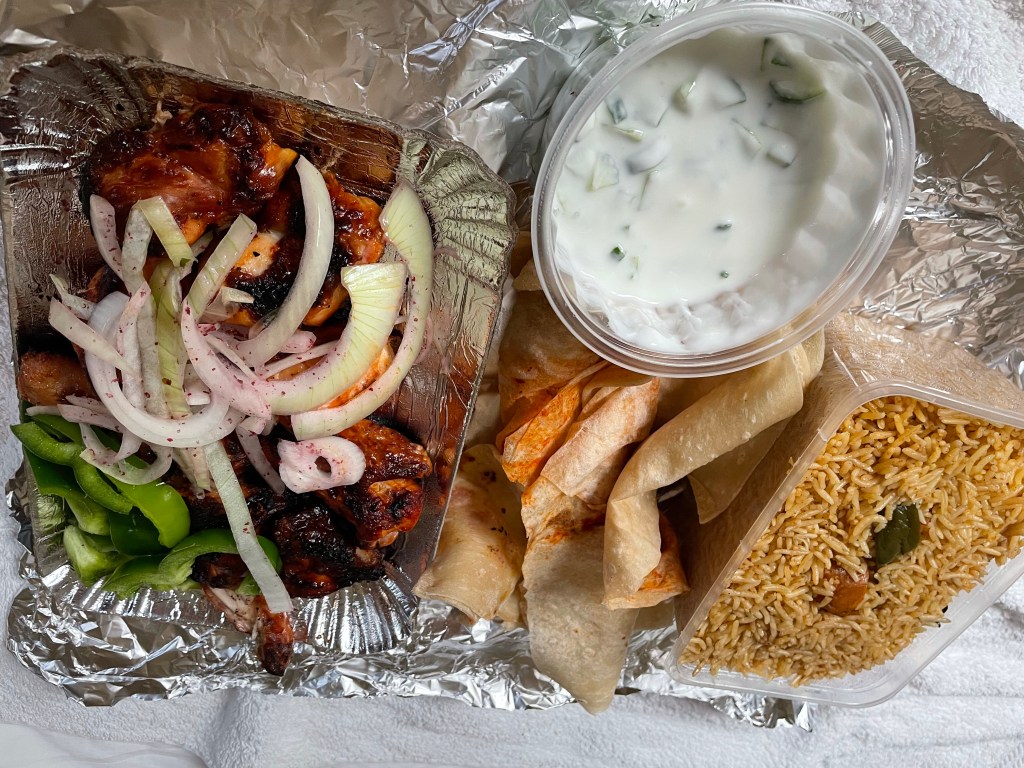
A Street food treat of BBQ chicken and onion, seasoned rice, thin bread and yogurt with cucumber
The evening we planned to leave Jordan, the wind turned ferocious and the ferry was cancelled. We sheltered ourselves and all our belongings back inside our own castle walls to wait out the siege. The waves were roaring like a thousand foot soldiers on a rampage and the attacking wind sounded like it was ripping our little orange dome apart by the seams. But we successfully held down the Fort and our small, strong keep survived the onslaught intact. The morning dawned bright and blue, we raised the drawbridge (and by that I mean the tent fly), packed up and set out again to catch the ferry. (I may have seen too many castles!)
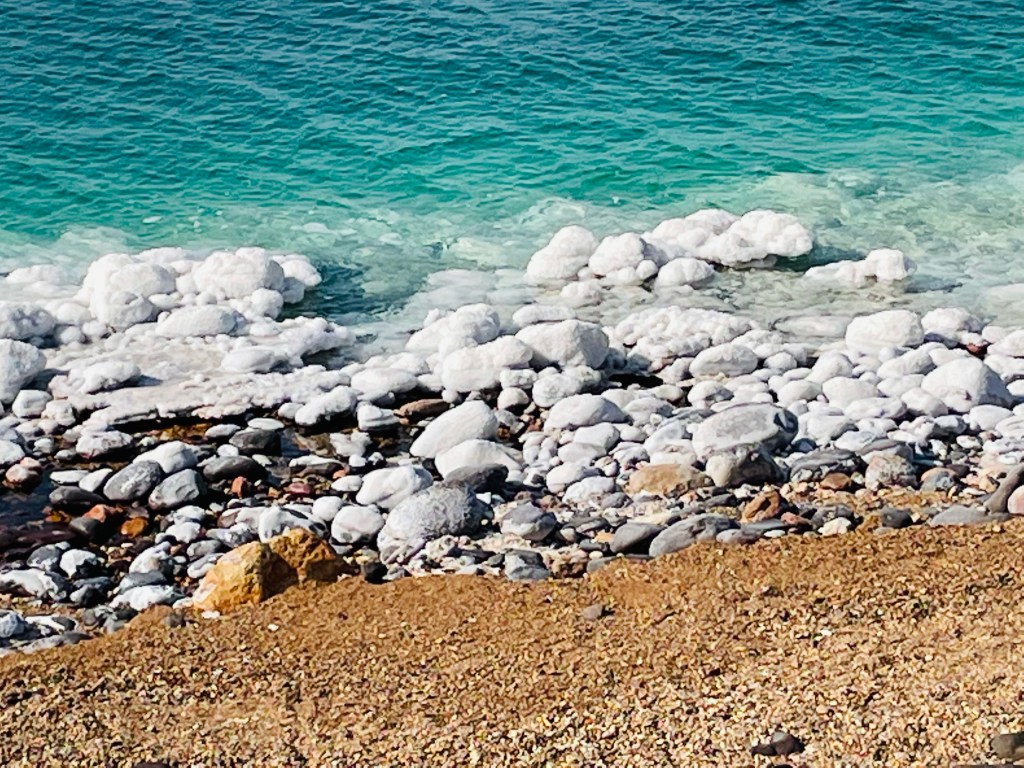
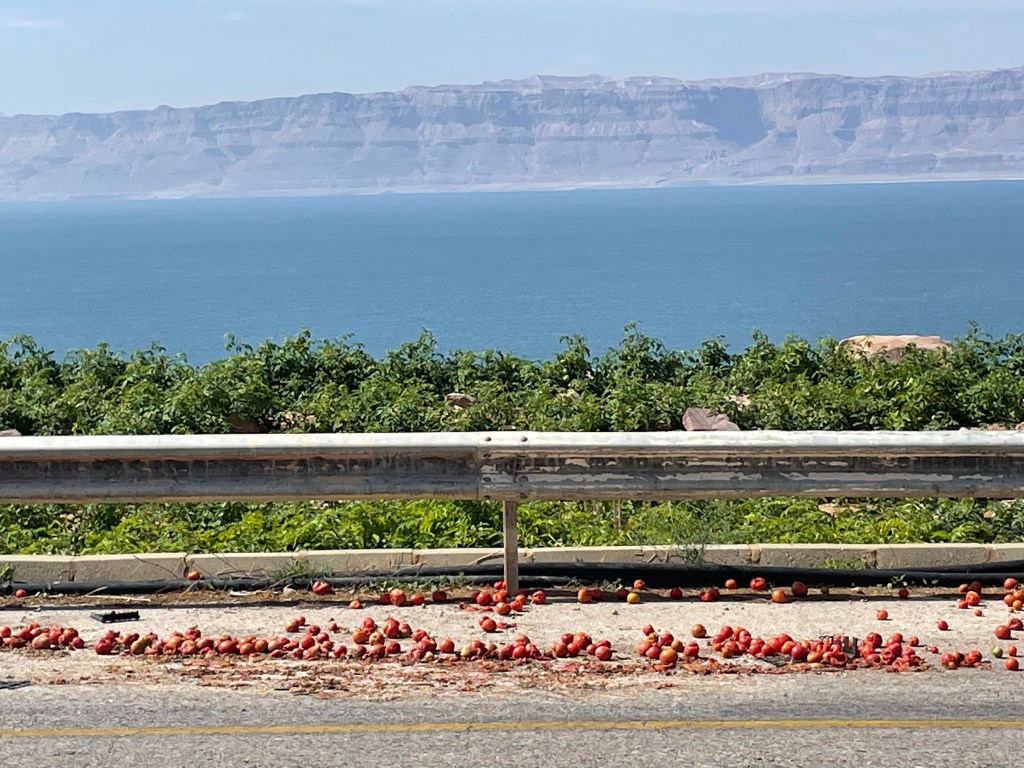
At 423 meters below sea level, the Dead Sea is the lowest land based place on earth. Salt crusted rocks lining the shoreline . The buoyancy while ‘swimming’ is super fun. You just float. And there is no need to worry about anything nibbling your toes. The 35% salinity does not support marine lifeWe camped on the shores each night as we walked the 50 kilometre length. Along the way there were natural hot springs which I had been looking forward to. They did not disappoint and we settled in for a couple of nights. But I had to get up super early in the morning before anyone arrived to wear my bathing suit. Otherwise, I went in fully dressed as there were many men soaking but no women. Given the place, a bathing suit would not have been appropriate. Gord is not generally a fan of full immersion but the warm waterfalls were agreeable, even for him. I was literally craving tomatoes one day and rounded a corner to see this! Needless to say we feasted, but felt bad for the poor farmer who lost his tomatoes. The previous day there was a wind storm with winds so strong it was hard to walk against. The blowing sand felt like needles on our face and we figure it blew racks of tomatoes right off the truck. Even the road scenery was breathtaking and it was a treat to walk along the sea. But the pavement has wreaked further havoc with my troublesome Achilles’ tendons and so we will be taking the bus for the next section.
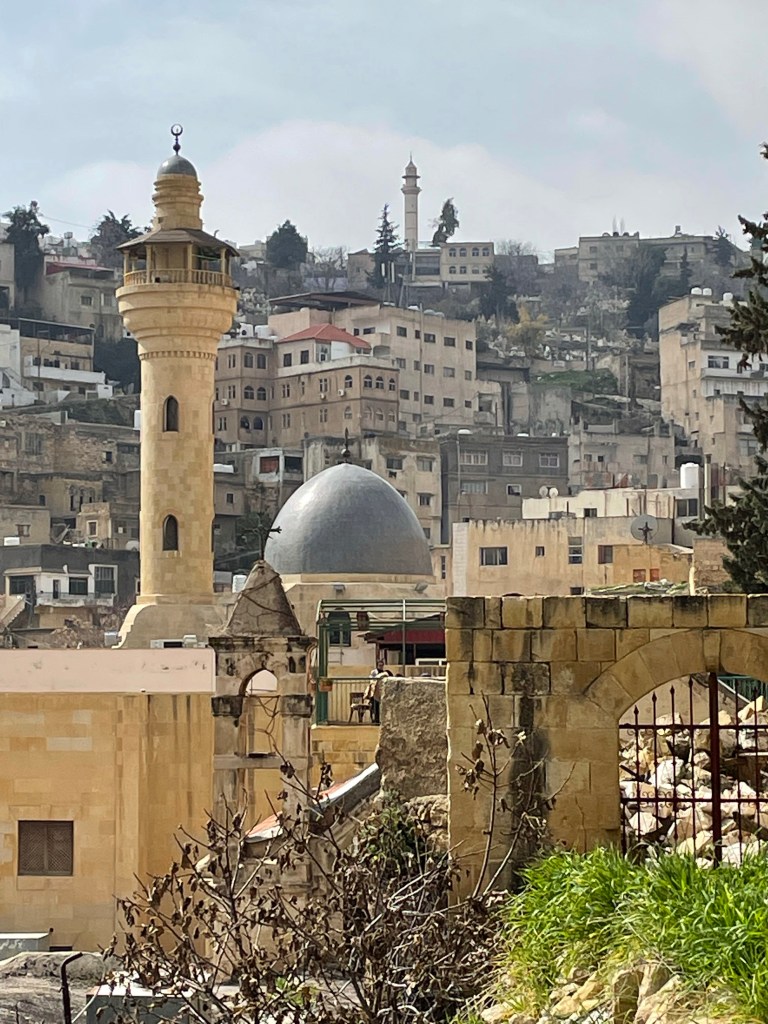
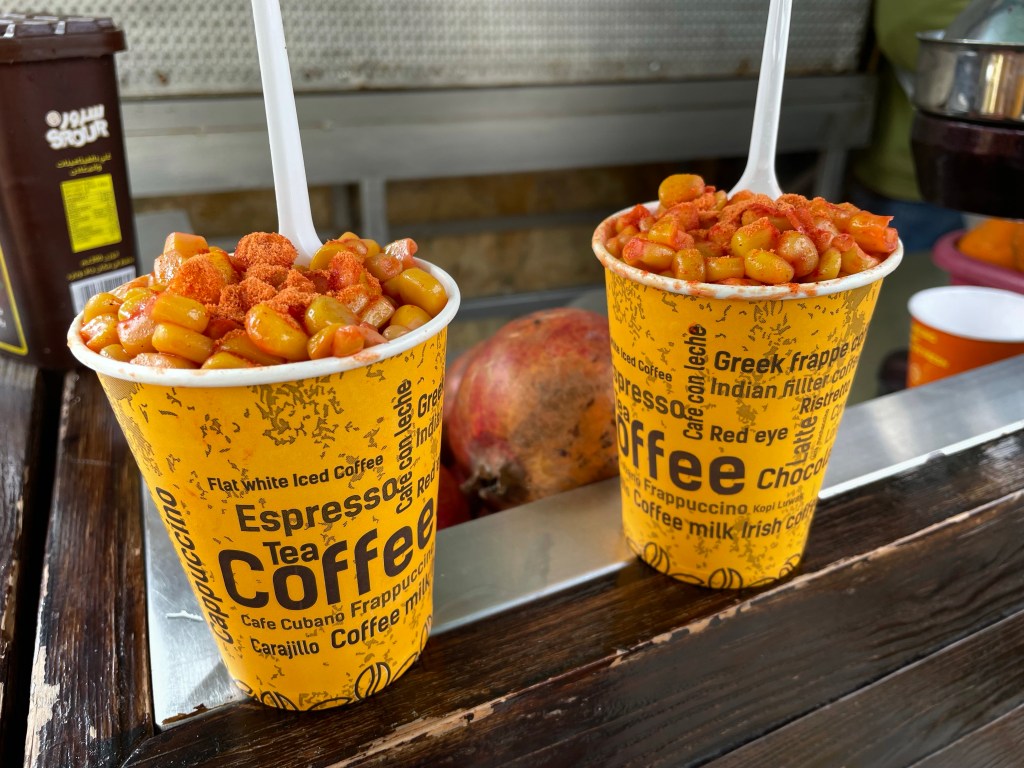
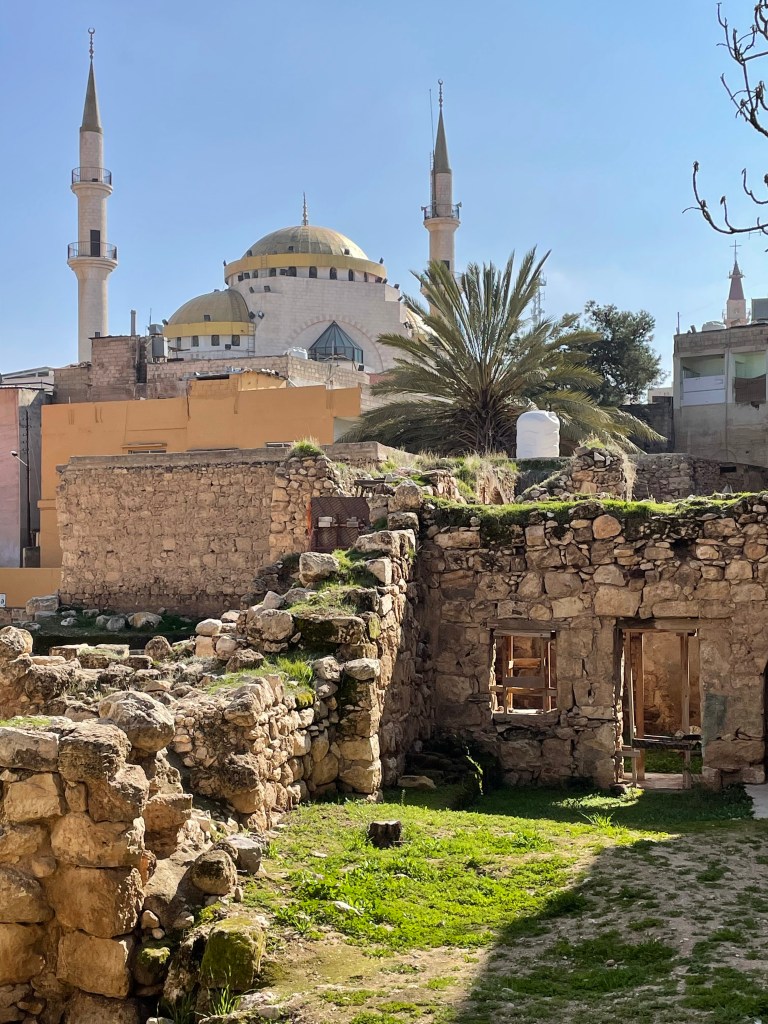
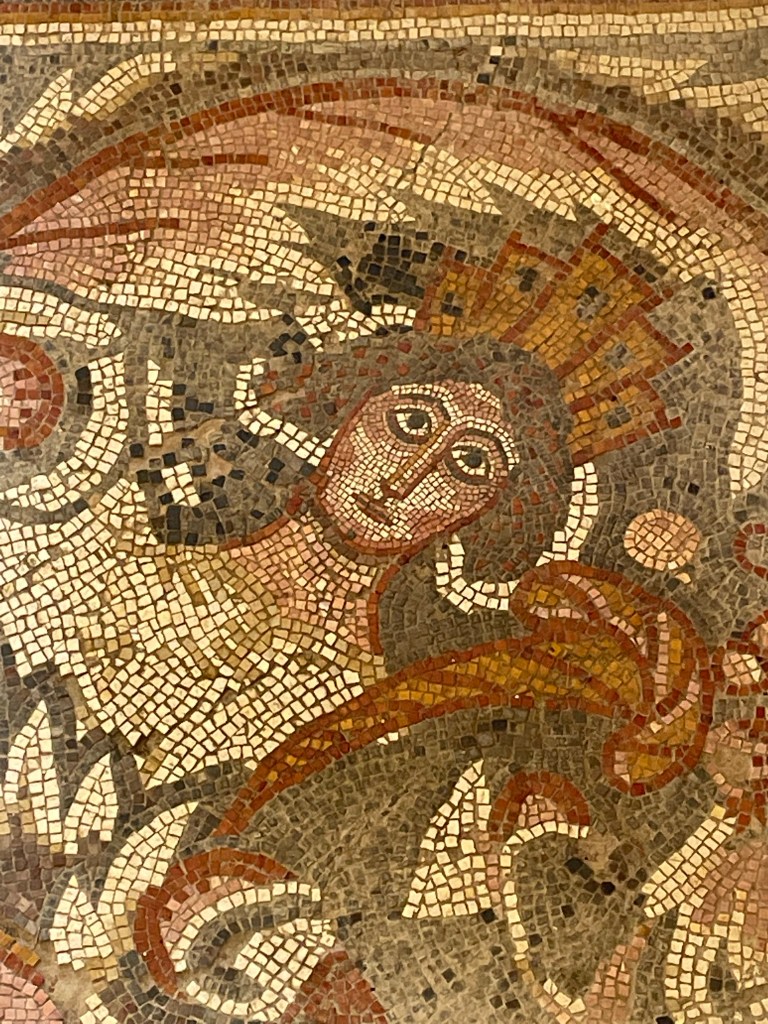
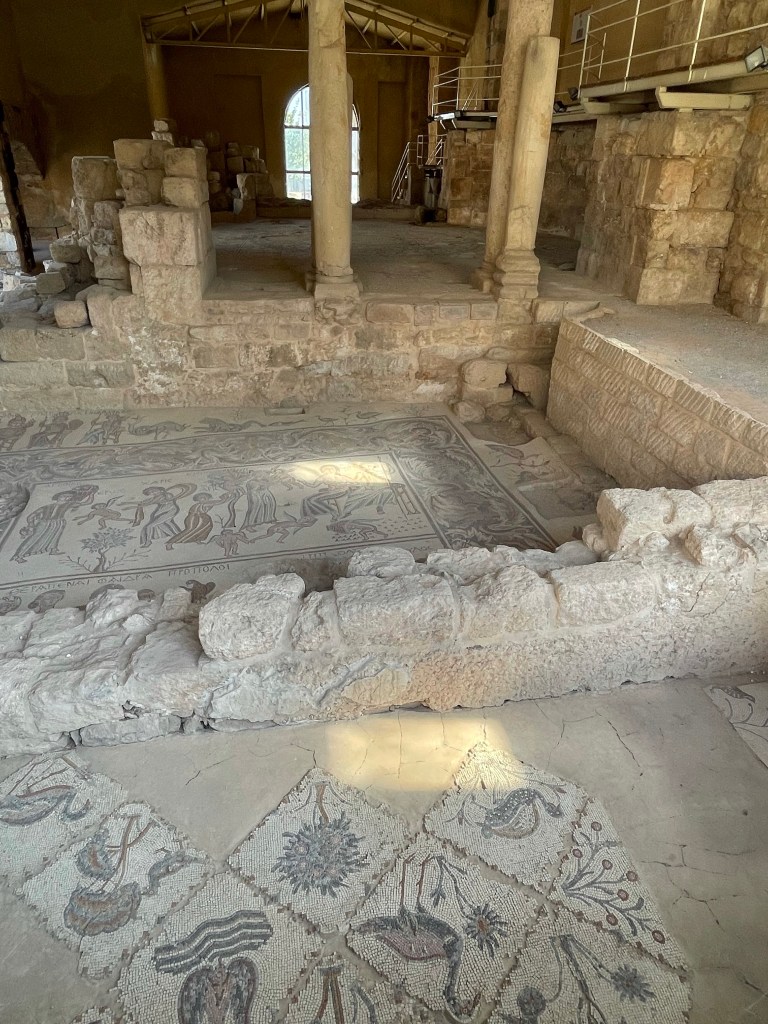
The city of As Salt was recently designated a world heritage site. It is a place where people of all backgrounds and faiths have lived peaceably together for hundreds of years and is a model of social and religious harmony. Golden coloured houses made out of limestone are clustered on the slopes of three mountains The city is rich with exceptionally kind, tolerant people and crazy steep hills. The city of As SaltDuring our wanderings we stopped for street food. The seasoned kernel corn in a cup was more delicious than it had any right to be! Just before arriving to El Salt we were invited to share a picnic of grilled pita sandwiches with seasoned ground lamb inside and then sprinkled with lemon juice. A side of yogurt, cucumber and garlic salad, and fermented pickles completed the tasty dinner. The city of Mataba Towards the end of the 19th century many Christian families who settled in Madaba used the blocks of the ruined ancient structures already there to build their houses. As a result, floor mosaics were unearthed and can still be found in some family homes today.Madaba, known for its exquisite mosaics is often referred to as The Mosaic capital of the Levantine. Stunning mosaics were found in churches and mansions alike, dating to the reign of the Byzantines from 332 – 635 AD. This tree of life was found in the crypt of Saint Elianus Several historic periods can be found from Roman to Byzantine to Islamic Umayyad. Each period built on what was previously there, giving a glimpse of the continuous occupation of Madaba. A mosaic of the holy land on the floor of the Byzantine church of St. George is only one of Madaba’s shining stars. I couldn’t fit the whole map in the picture.
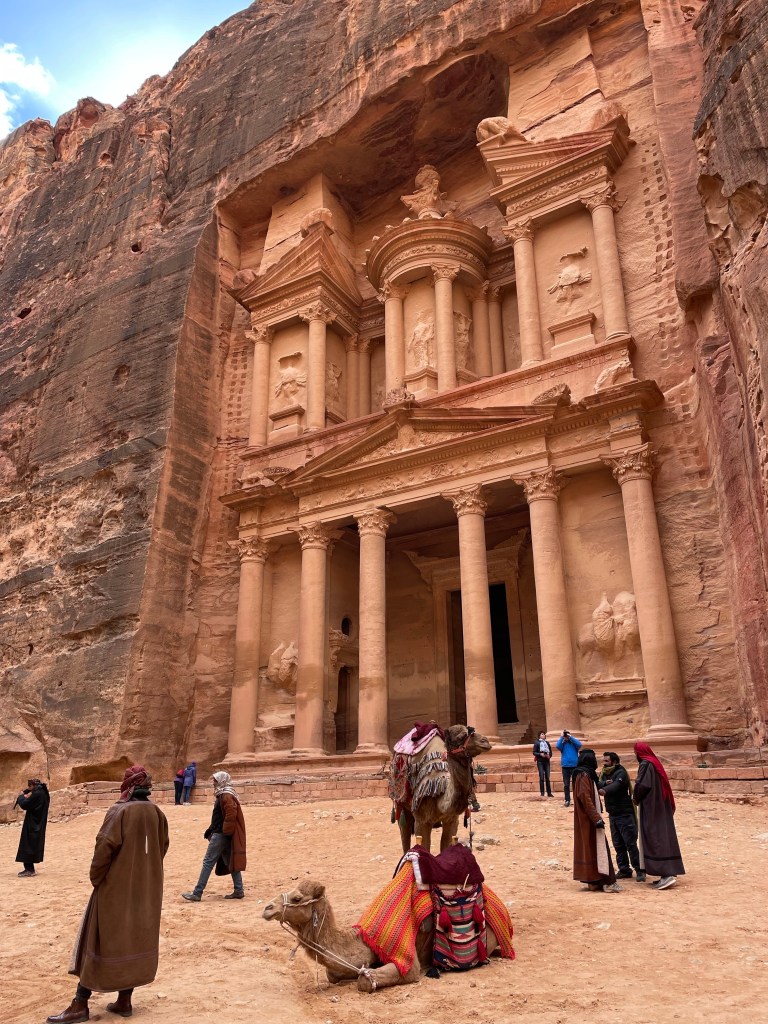
People have lived in caves in the area around Petra for last 7000 years, but it was the Nabateans who built the stunning city of rock between 50 BC and 50 AD. Positioned along the ancient spice route, it flourished and prospered in the first and second century AD. But then it was hit with a drought, a flood, and a big earthquake in 363 AD, which destroyed much of the city. By 500 AD it was almost abandoned. We spent three days exploring the caves, churches, trails and tombs of ancient Petra until our stone cup was full.
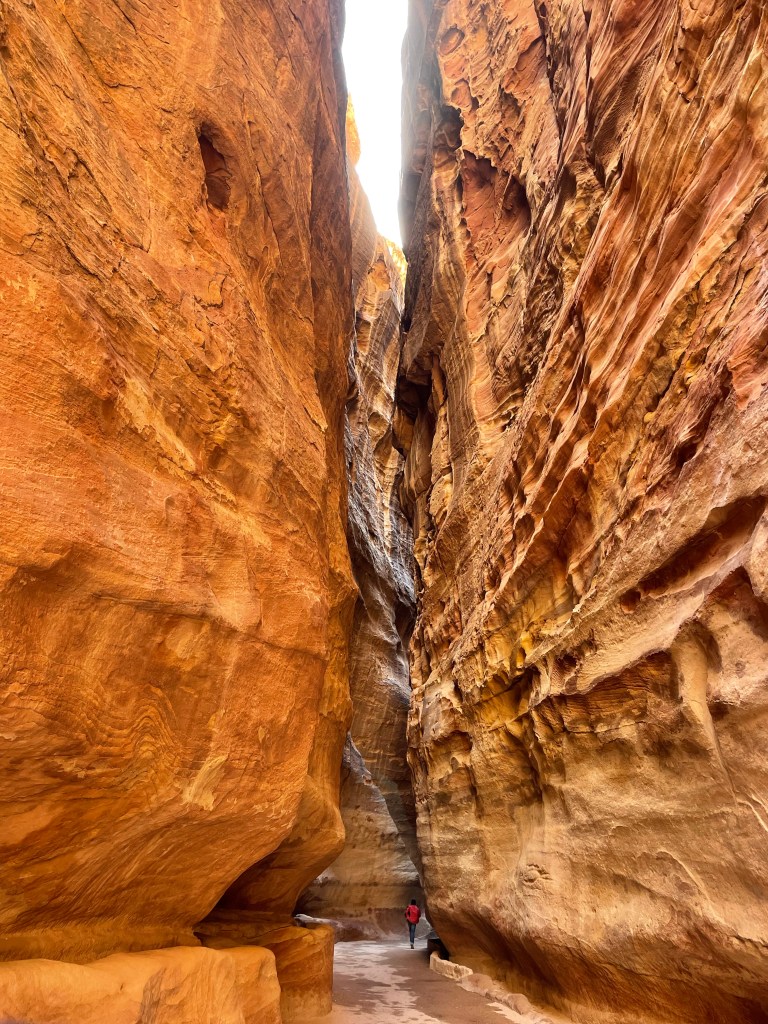
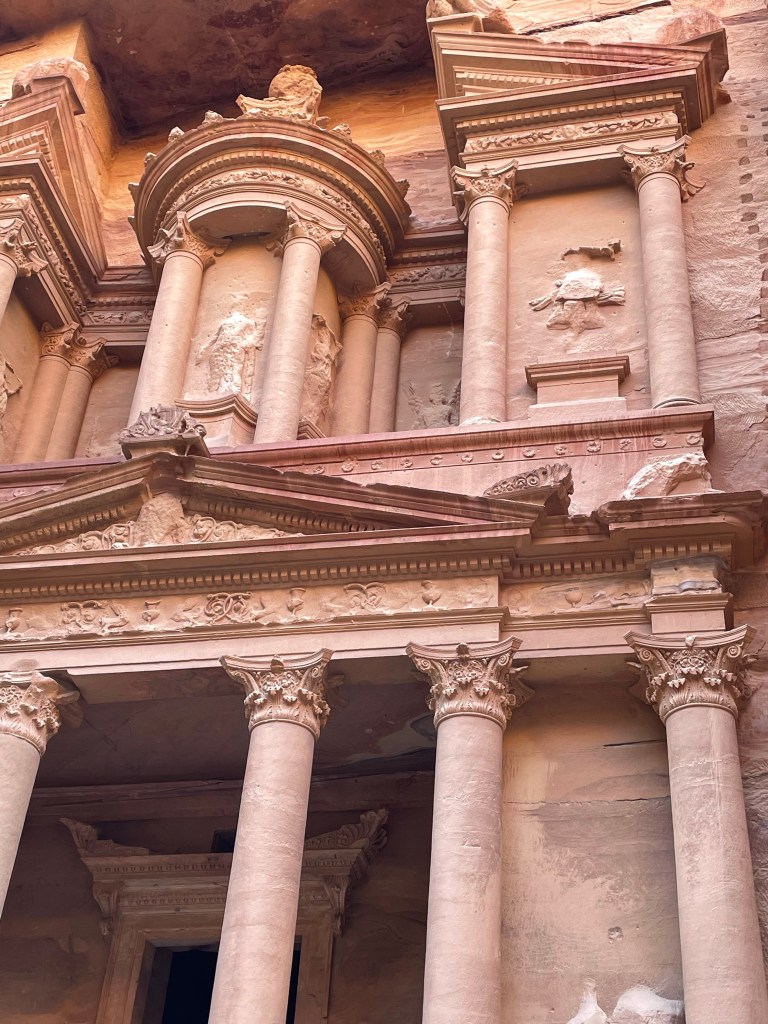
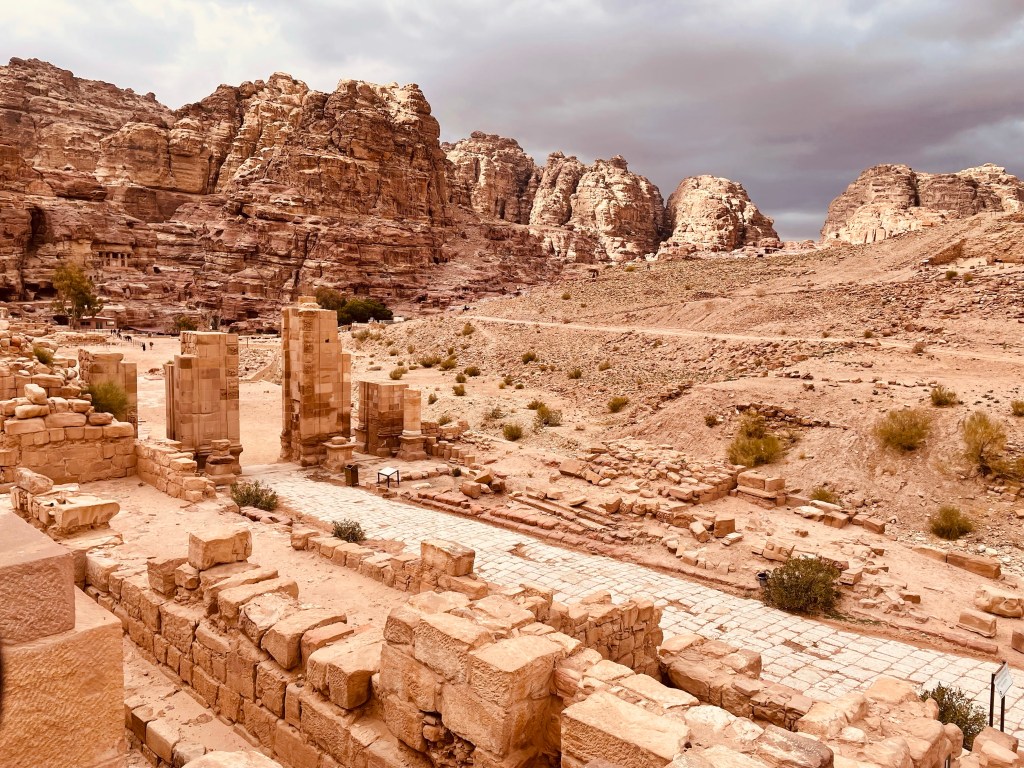
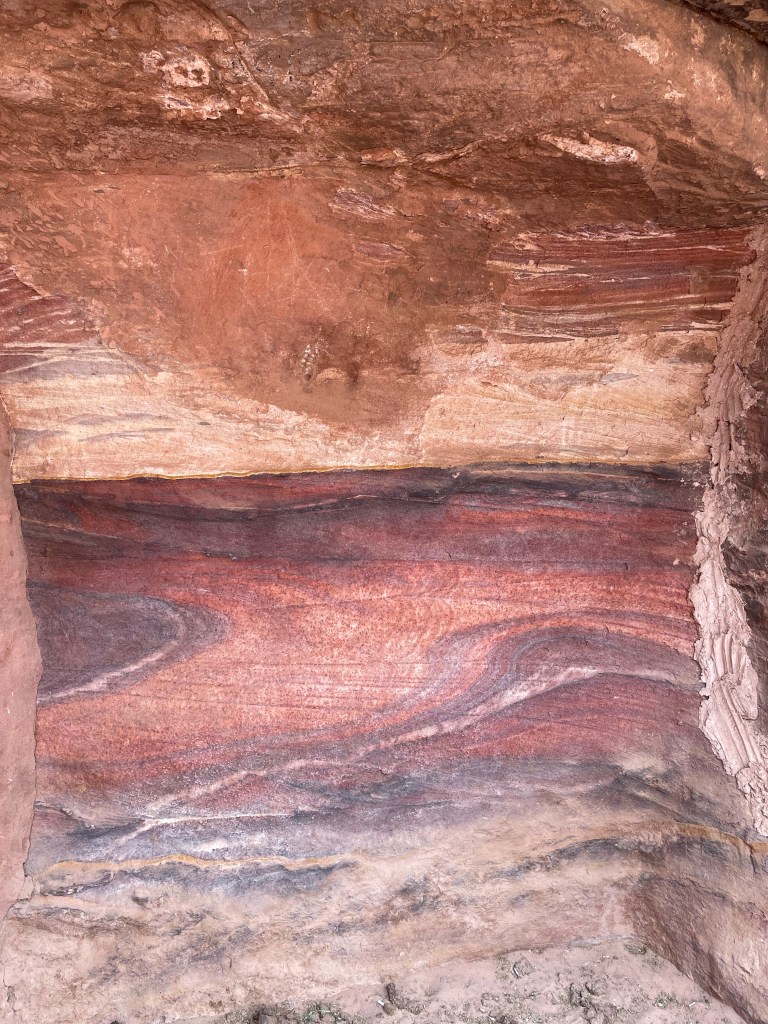
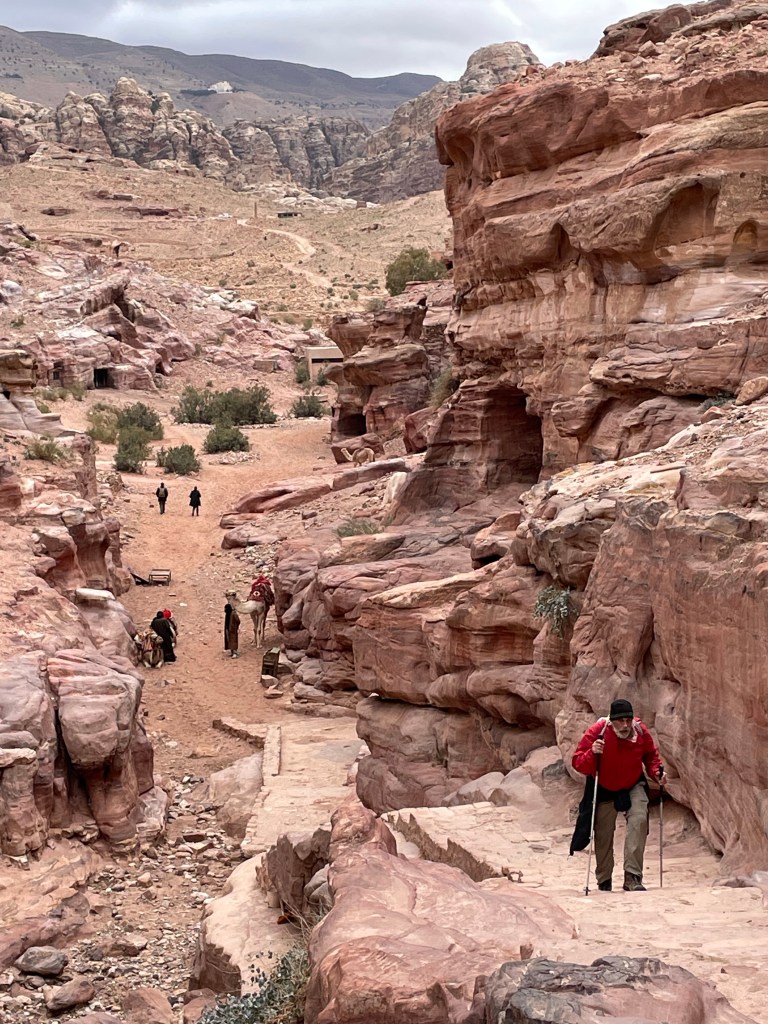
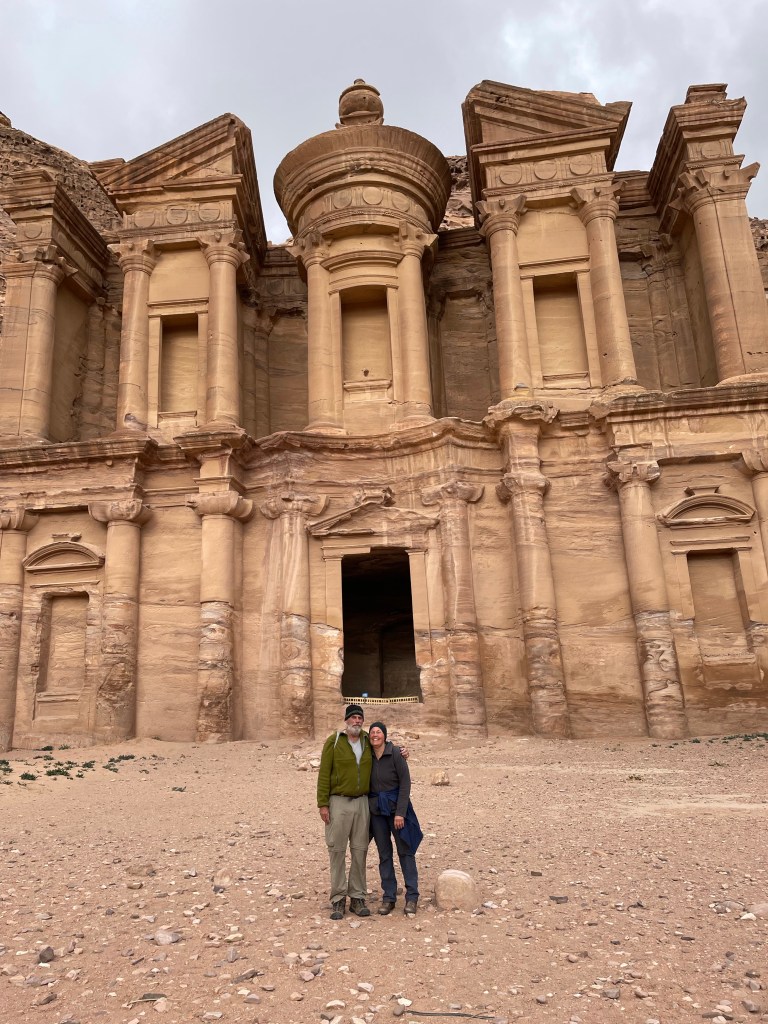
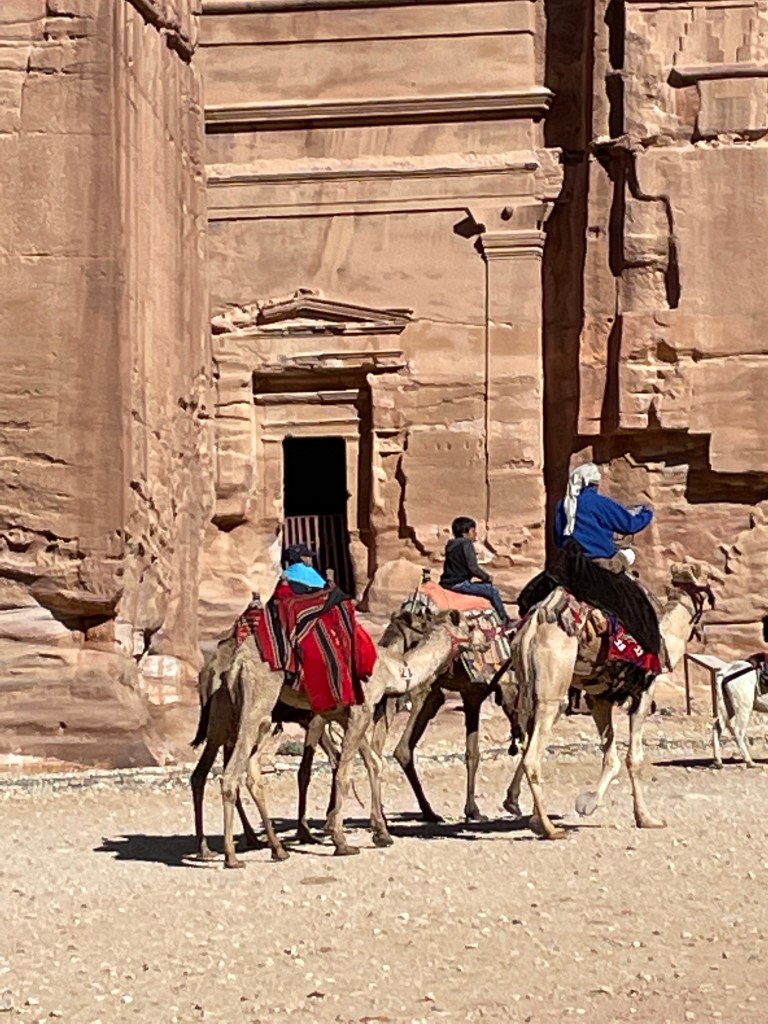
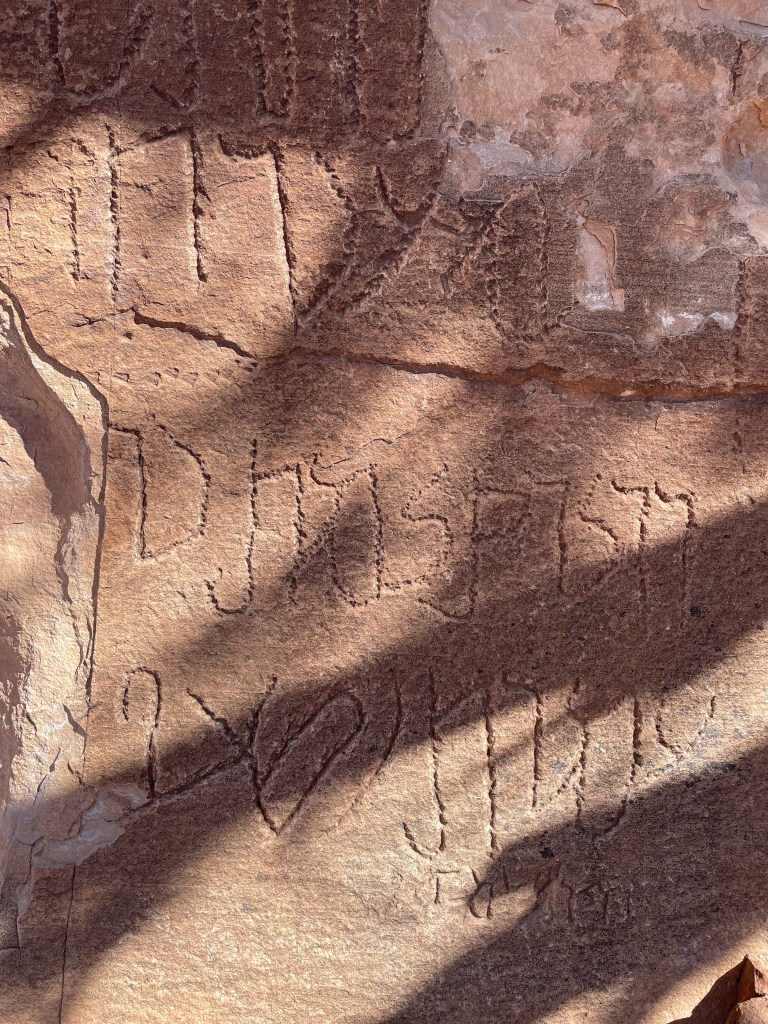
El Sig is a natural 1.2 kilometre sandstone gorge that gently winds toward the ancient city. Carved out channels on each side held clay pipes that carried fresh water to the bustling metropolis. Petra was rediscovered in 1812 by 27 year old Johann Ludwig Butckhardt (who was searching for the lost city). Imagine walking out of the Sig and coming upon the magnificent treasury for the first time. The Treasury was actually a Nabatean mausoleum and was carved out of a single block. Many archeologists believe it is the mausoleum of King Aretas IV (9 BC – 40 AD)Amazing how much detail was still so preserved after 2000 years There were approximately 20,000 people living in Petra during its peak. The main colonnaded street that ran through Petra’s centre was built by the Romans in 100 AD. It replaced an earlier Nabatean dirt and gravel road and was the main market where frankincense, myrrh, spices and textiles were sold and traded. Incredible colours on very old rocksThere are still approximately 30 extended families living in the caves in Petra. (Many people in Jordan still live in caves.) On the walk up the 1000 steps to the monastery. The Monastery was another huge building carved out of the cliff side. There was no shortage of donkeys and camels. Caves and ancient carved out dwellings dotted the entire landscape. We took a break at what was a garden and a bath house along the ancient trade route on our hike up to ‘the place of high sacrifice’ Random (ancient?) writing in the cliff wall along the trail. The colours of Petra The ‘Place of the high sacrifice’ and it was indeed high. People would gather for ritual animal sacrifices. All I can say is the Nabateans must have been very fit. We start the day with an included breakfast (what we would consider supper food) at the hostel. We have had hail, snow and freezing temperatures and so decided to de-thaw in a hostel for a few nights while exploring Petra without our packs.Sunset over Petra. A Salaam
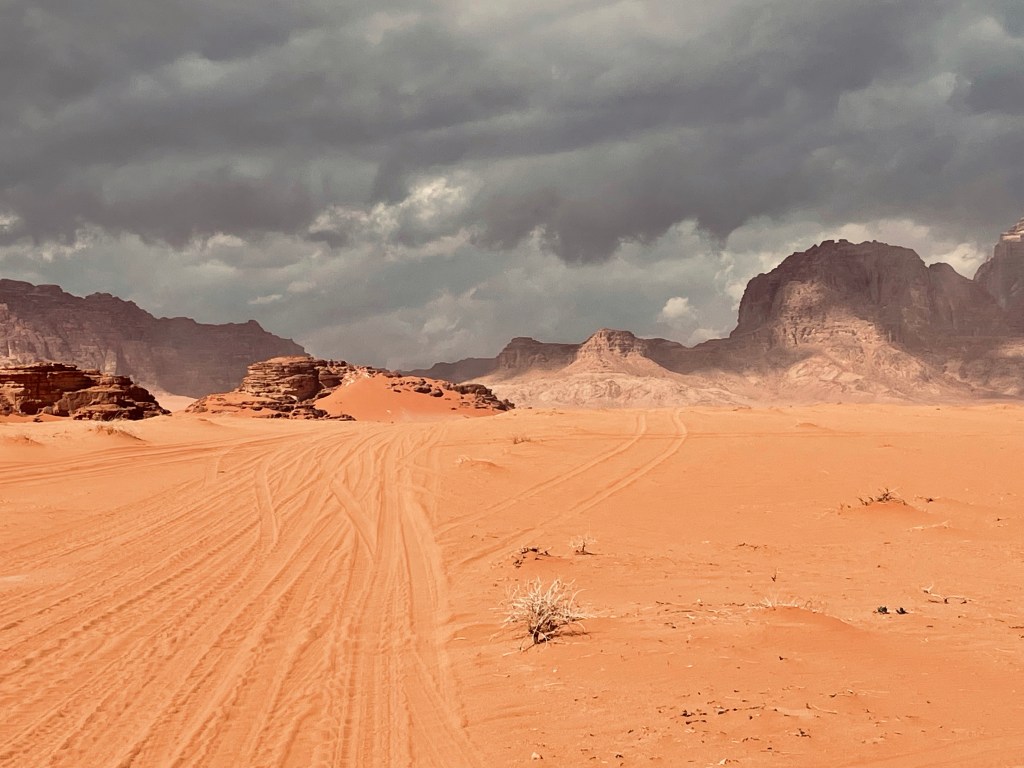
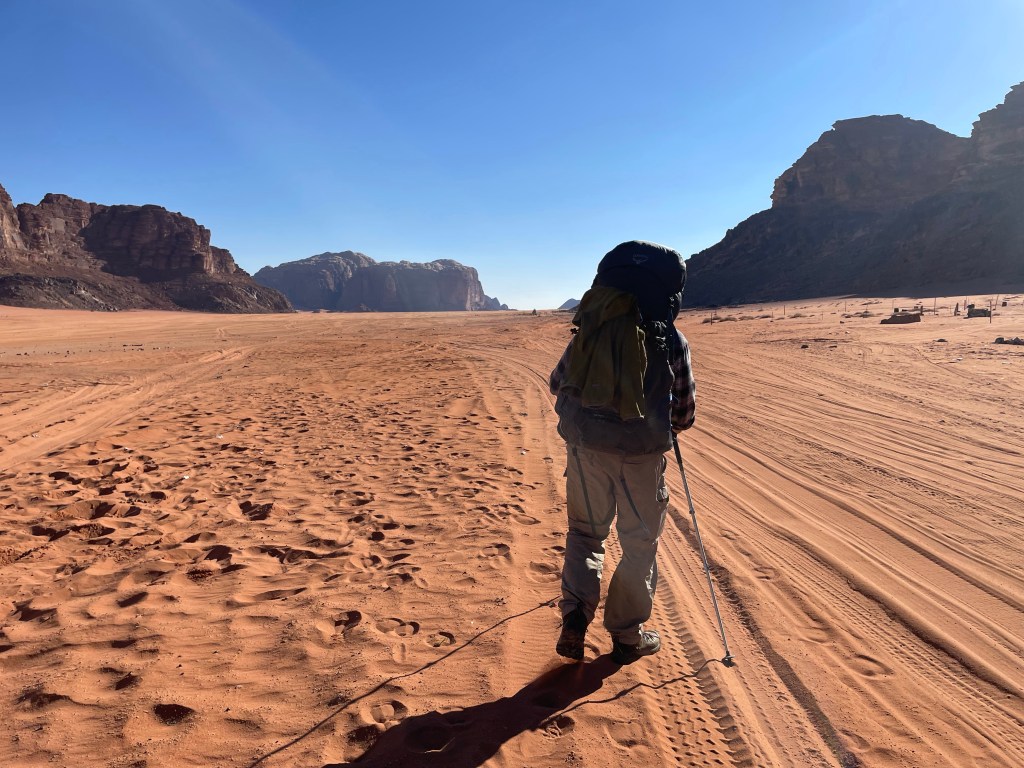
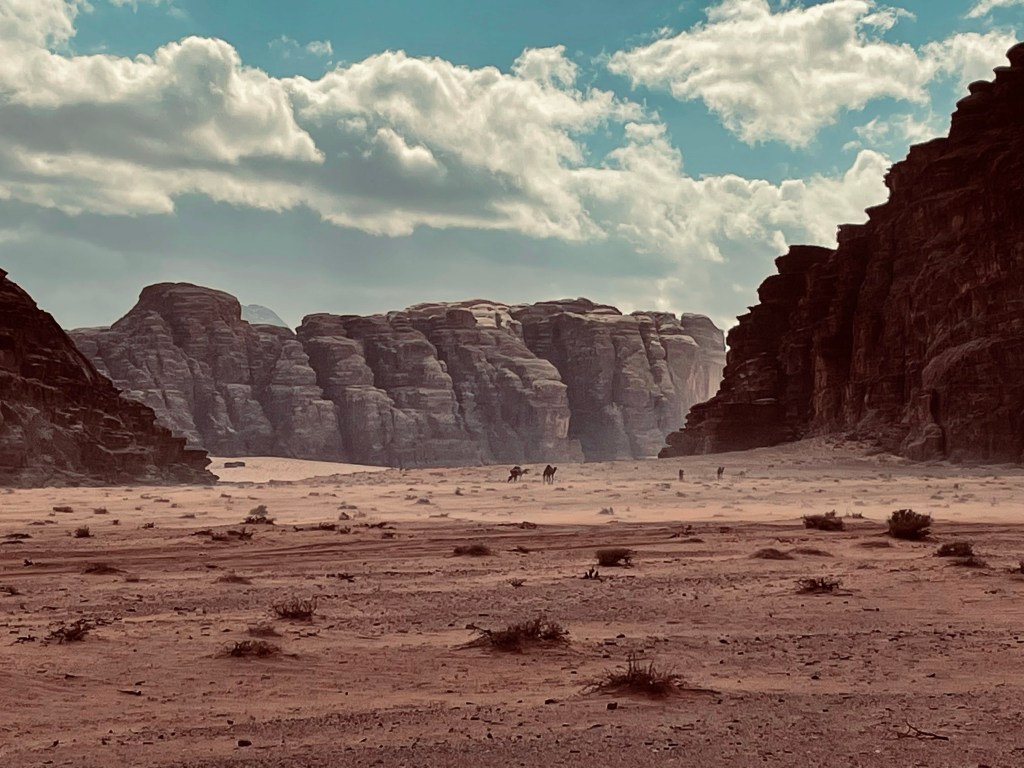
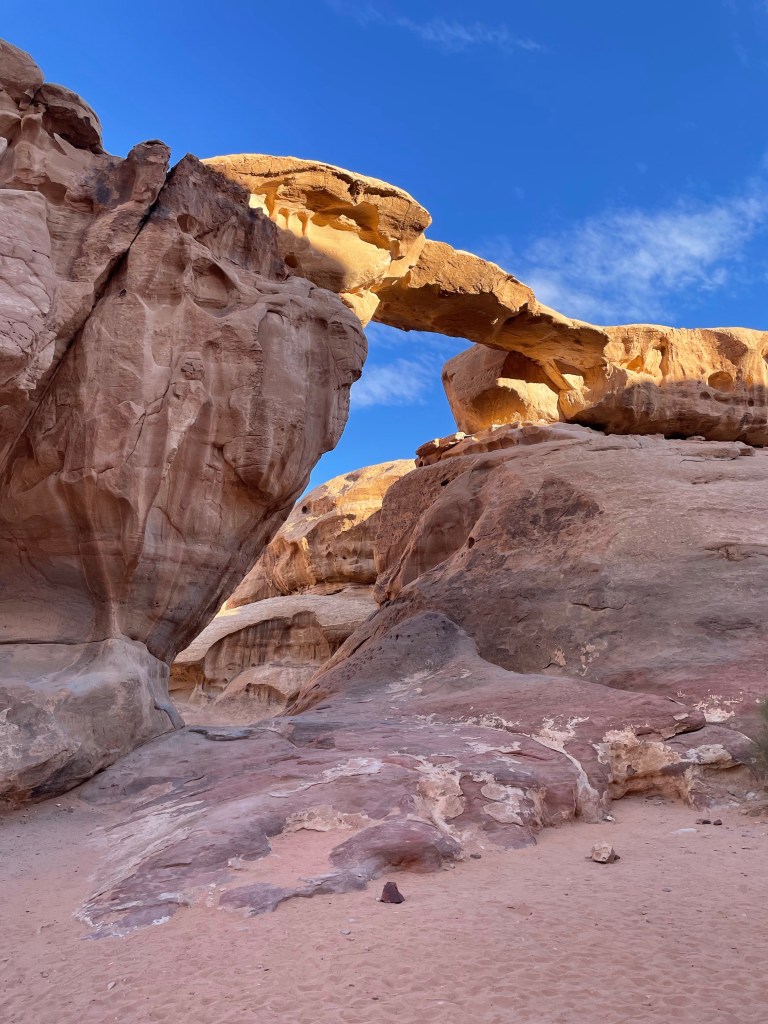
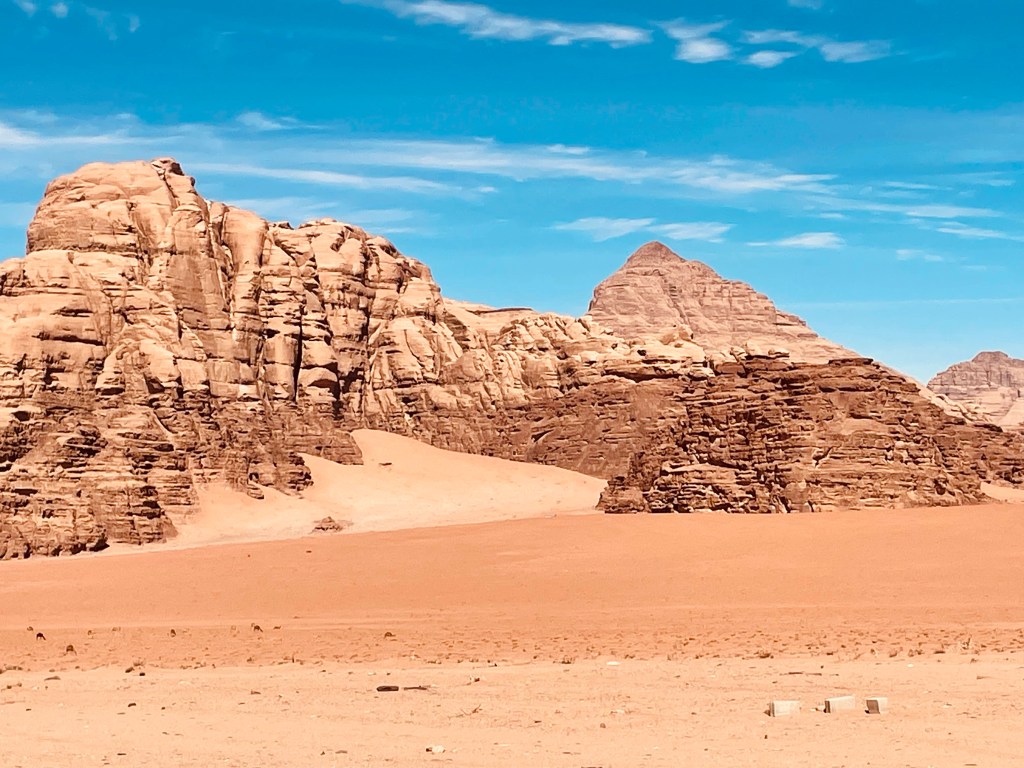
We have spent the last few days hiking in the desert around Wadi Rum. What a place! Unique, colourful, towering cliffs with astounding formations, coupled with vast expanses of soft, red sand unlike anything I have experienced. The sand was tough to hike through with our heavy packs but I can feel my body resetting to a better place and that makes me happy. As does the silence and solitude.
Starting outDesert boot camp A warm fire on a cold nightA caravan of camels
Our first morning I was sorting out breakfast when I saw Gord running across the sand with the tent bouncing along in front of him just out of reach. When the wind blows in the desert there is nothing to stop it and when a lightweight tent has nothing in it, it blows away fast. Happily he rescued it with both of them none the worse for wear. He returned out of breath and looking forward to his coffee. Our water drops did not work out as it was too cost prohibitive. We can each carry three days worth so we will do three day stints and then move on. All this to say that he allocates a portion of his precious water to his morning caffeine hit. So when he accidentally spilled it before his first sip it was a Greek tragedy doubled. “Son of a bitch” he muttered sadly.
beautiful little desert flower
T.E. Lawrence, better known as Lawerence of Arabia, spent a lot of time here during the Second World War. It’s also where Dune, The Martian and Aladdin, Star Wars, among other movies, were filmed. It’s no wonder. The landscape feels otherworldly!
As expected, getting to the Hashemite Kingdom of Jordan was quite a ride. Figuratively and literally! The ferry from Hurghada to Sharm el Sheihk was canceled, so we booked a flight instead from Luxor to Sharm el Sheikh. When that was also cancelled we settled in for a 24 hour bus ride (with about 4 inches of leg room) across the Sinai Peninsula. There were checkpoints every couple of hours, day and night; sometimes just to check everybody’s ID, sometimes for the full drill when everybody had to get off the bus, drag our luggage from the storage area below, stand in a row with our open bags in front of us while a stern official with a very big gun walked down the line checking IDs and rummaging through luggage. The guys sitting in front of us were detained and the bus carried on without them. Yep – quite a ride!
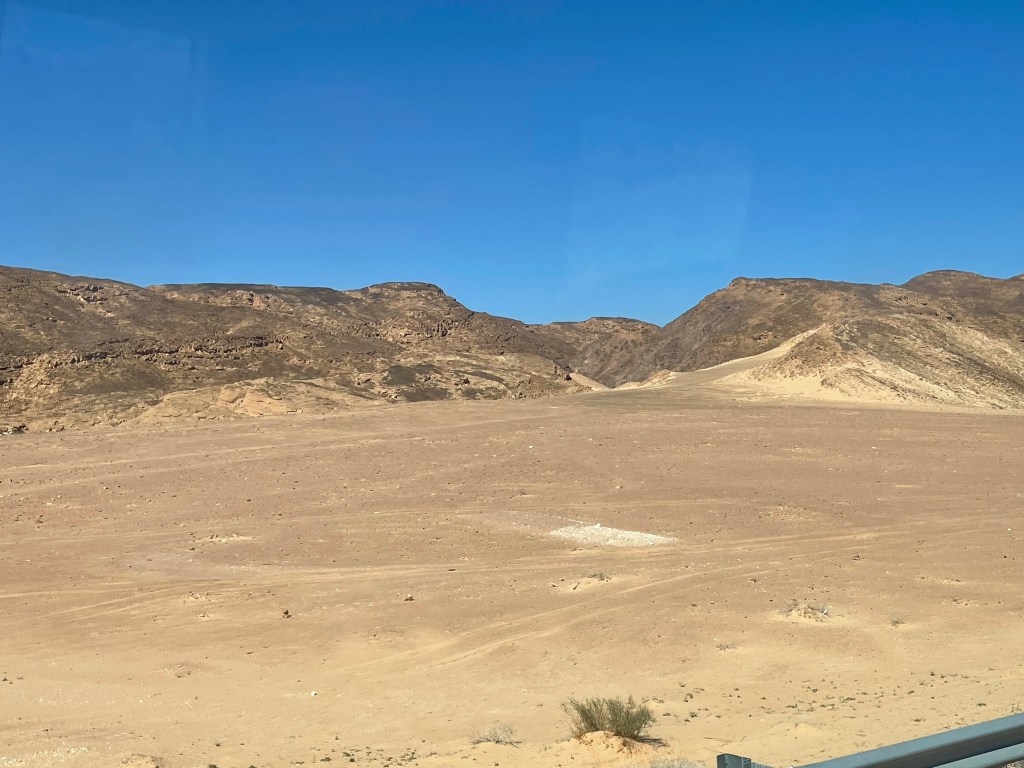
The Sinai peninsula You can see the colours of the hieroglyphs in the colours of the stone in the Sinai. Sinai peninsula
To get our PCR test before leaving Egypt, we were given a phone number of a man named Waleed and told to communicate with him by WhatsApp. He said he would come to our hostel in Dehab. We waited for him on the street corner (which seemed suspect) and in due time he arrived, we led him to our room, he did the swab, and we gave him our cash. It felt like a drug deal! But he assured us that he was with the government and sure enough the next morning he WhatsApp’d us with our negative results and our government issued QR code..
We also needed to fill out and submit an online application before being issued a QR entry code for Jordan. On the form the only way to enter our date of birth was to scroll back from January 2022. That’s 60 years of scrolling, month by month! Who does that – the Hashemite Kingdom of Jordan, that’s who! I was almost there (more than once) when the glitchy form kicked me back to 2022. The young men at the front desk of our poshy hotel helped us upload, download and reload until the wretched form was finally submitted! Sometimes it takes a village..
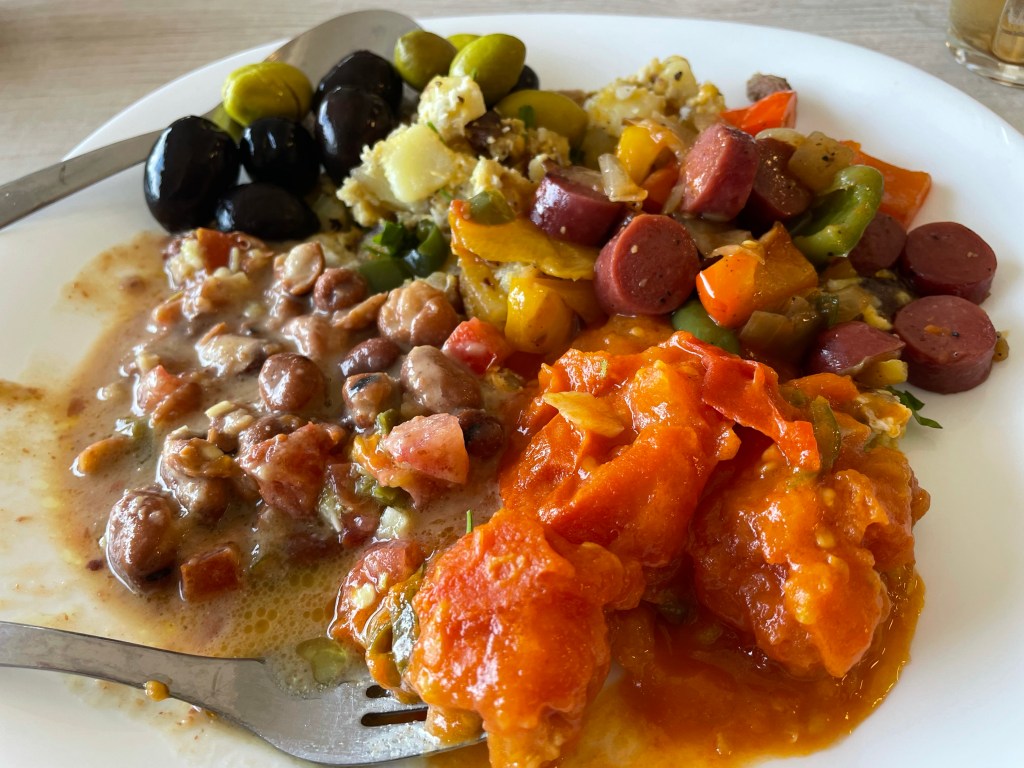
We needed a place with a proper copier and reliable internet so we enjoyed our last night in Egypt hereI love middle eastern food. Grilled veggies with tahini sauce and falafels
Armed with printed out documents and QR codes coming out the wazoo, we bought our ferry tickets. Our papers were checked approximately 11 different times, we received another PCR test on board the boat, we said goodbye to Egypt and set sail for Aqaba.
On the Red Sea heading for Jordan
The Arabian desert is one of the driest deserts in the world. What people do is prearrange to have a load of water dropped at a gps coordinate. We are trying to get some water drops organized as there is no water source for the first two sections of the trail (which represents approximately 200 kilometres). Tomorrow we are finally leaving souvenir stalls, tourist attractions, civilization, and all creature comforts behind. I am so ready! And I’m super excited to sleep in my new tent!
The 650 km Jordan Trail is unmarked and we will be following Gord‘s electronic trail app to find our way. The trail is divided into eight sections with each section taking us approximately a week of hiking. We will be slow and that’s OK. I doubt we will get it finished and that’s ok too. The terrain is challenging. We will take one step at a time for as long as we can and add our humble footprints along the paths where travellers and traders have wandered as far back as the Old Testament. I wonder how Moses got his water!
Looking at Eilat, Israel across an inlet of the Red Sea from Aqaba. Eilat is where Jen and I began our hike across Israel in 2015. Such treasured memories!
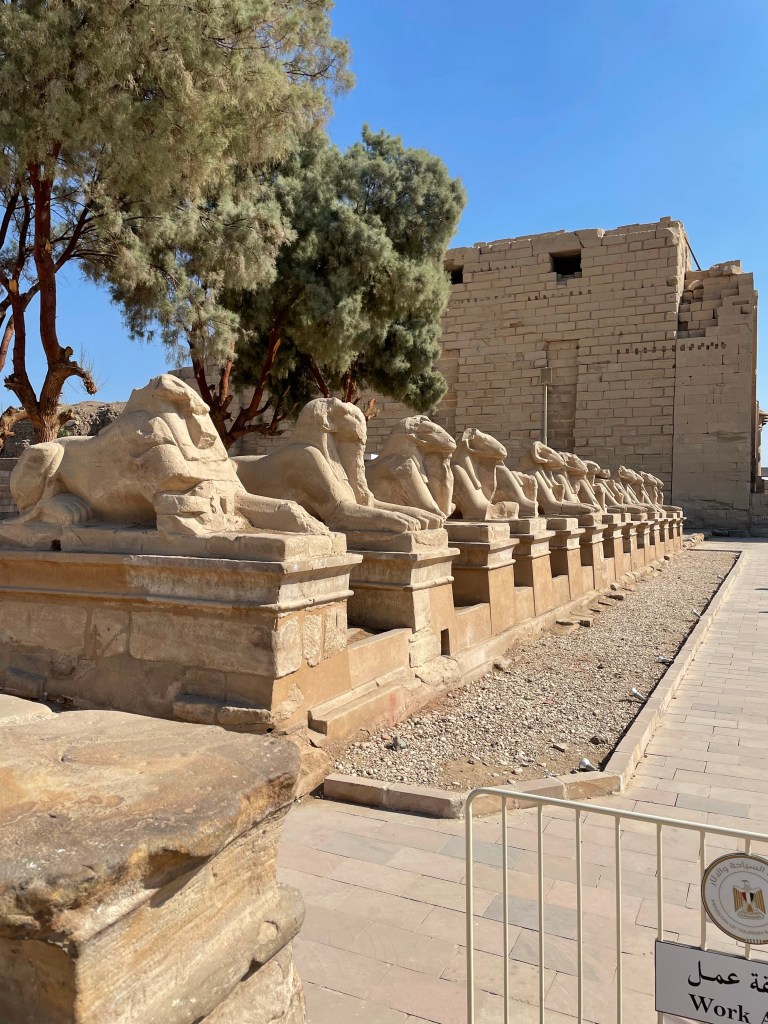
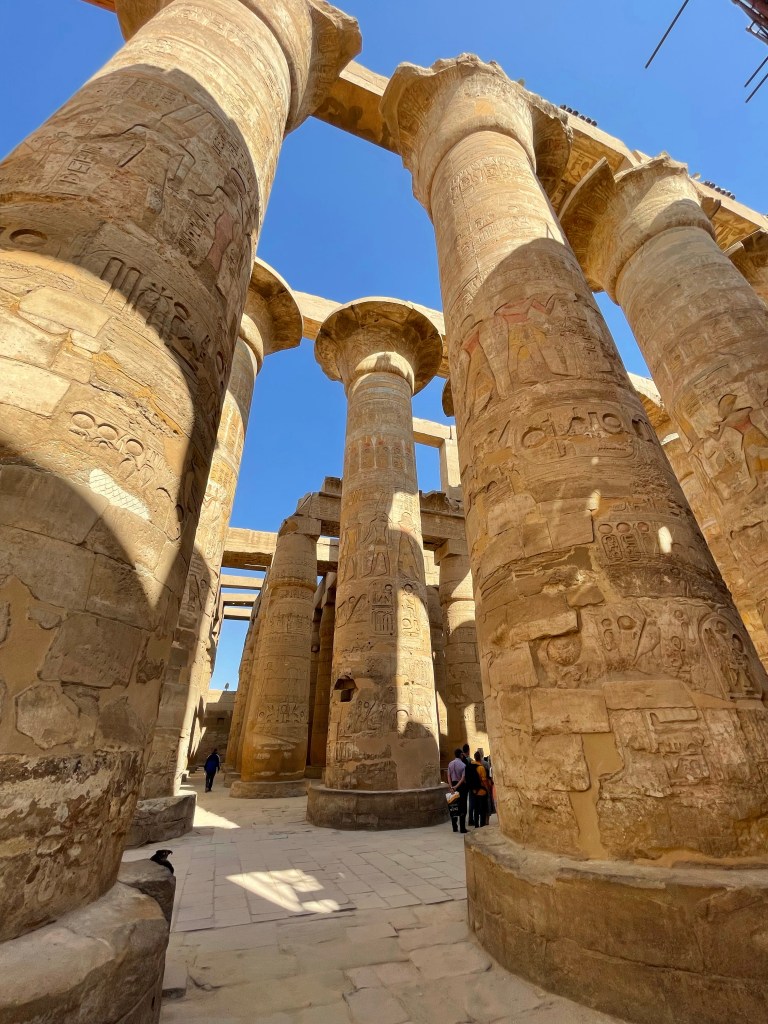
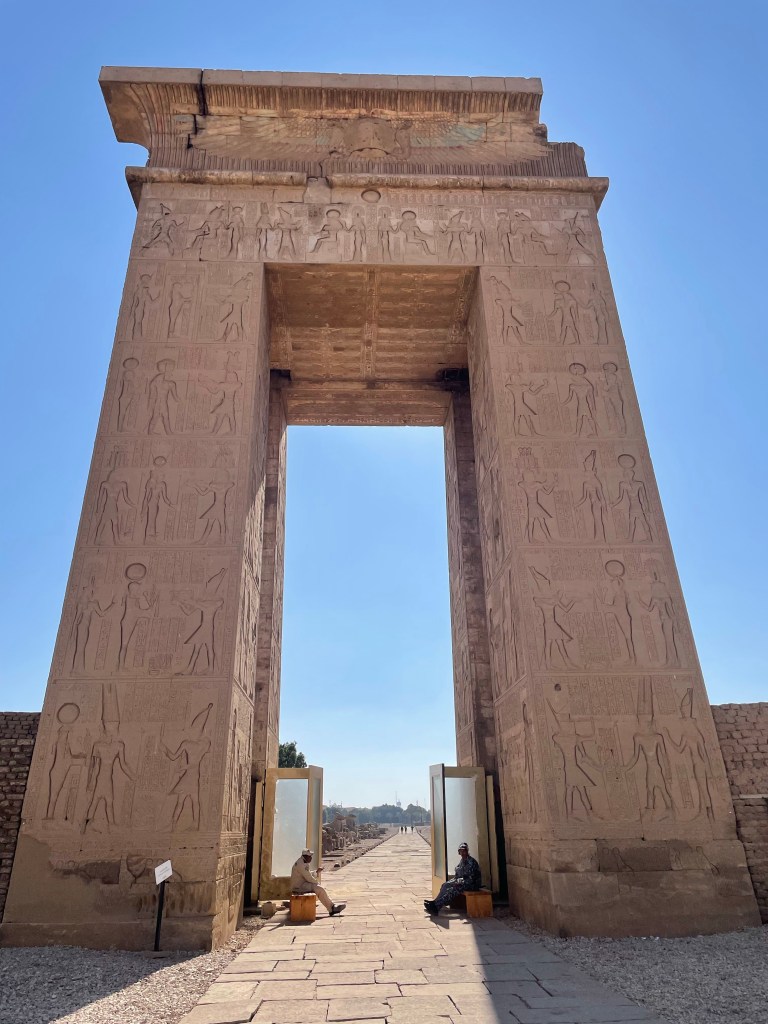
At 247 acres the Karnak temple is one of the largest religious complexes in the world. It was built over a span of 2000 years through the Middle Kingdom (c 2034 – 1650 BC) to the Roman period (c 30 BC – 306 AD) by multiple kings.
I am sitting in our hostel in Luxor listening to the evening prayers being broadcast far and wide. I have grown accustomed to it and find the voices soothing. I hear dogs barking and children playing. I smell wood smoke and hear the crackling of a fire in the street below where neighbours have gathered for warmth as they smoke, sip tea and visit for the evening. The sounds of fast speaking Arabic punctuated with laughter drifts up through the open window slats of our room. People in general seem happy here, in what ancient times was called, Thebes. We often hear smiling children shouting “welcome to Luxor” as we pass by. We have been awed by its sights and I feel incredibly grateful to be here.
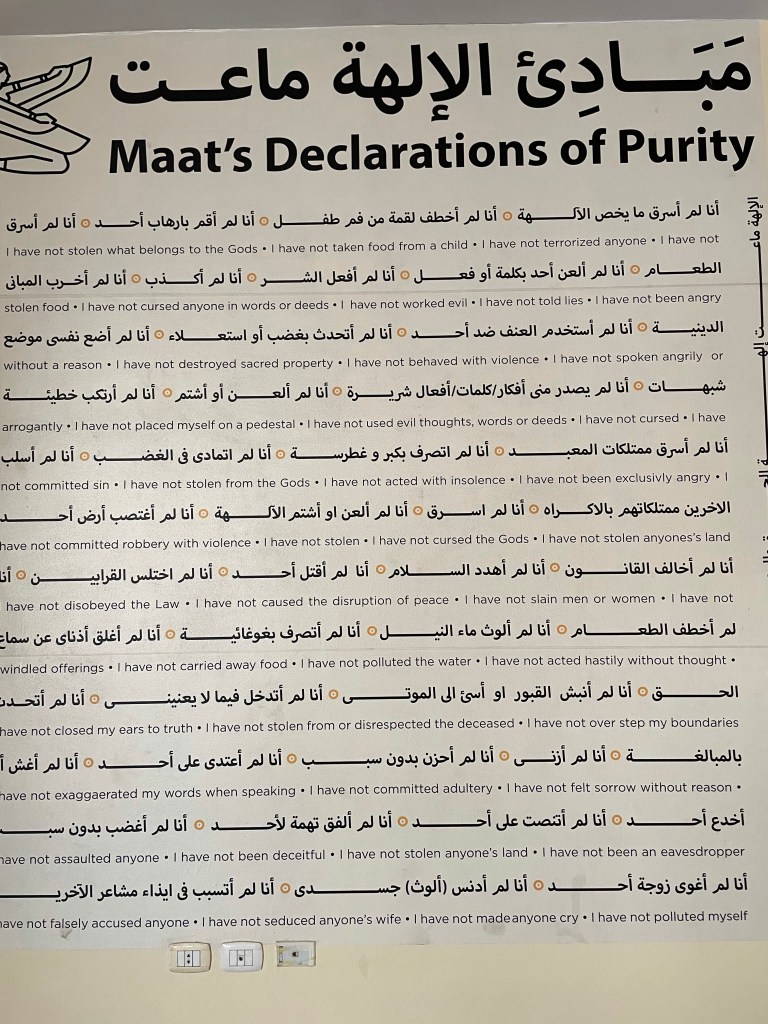
The forecourt of the temple was a privileged place of contact between the god and the population who had limited access to the temple. The rams heads represent power,strength and fertility. The Great Hypostyle hall has 134 columns reaching a height of 15 – 24 metres. It was impossible to get the scope of it in pictures. The Goddess Maat represents the ethical and moral principle that every Egyptian was expected to follow throughout their daily lives. They were expected to act with honour and truth in matters that involve family, the community, the nation, the environment, and the gods. Riding to the Valley of the Kings
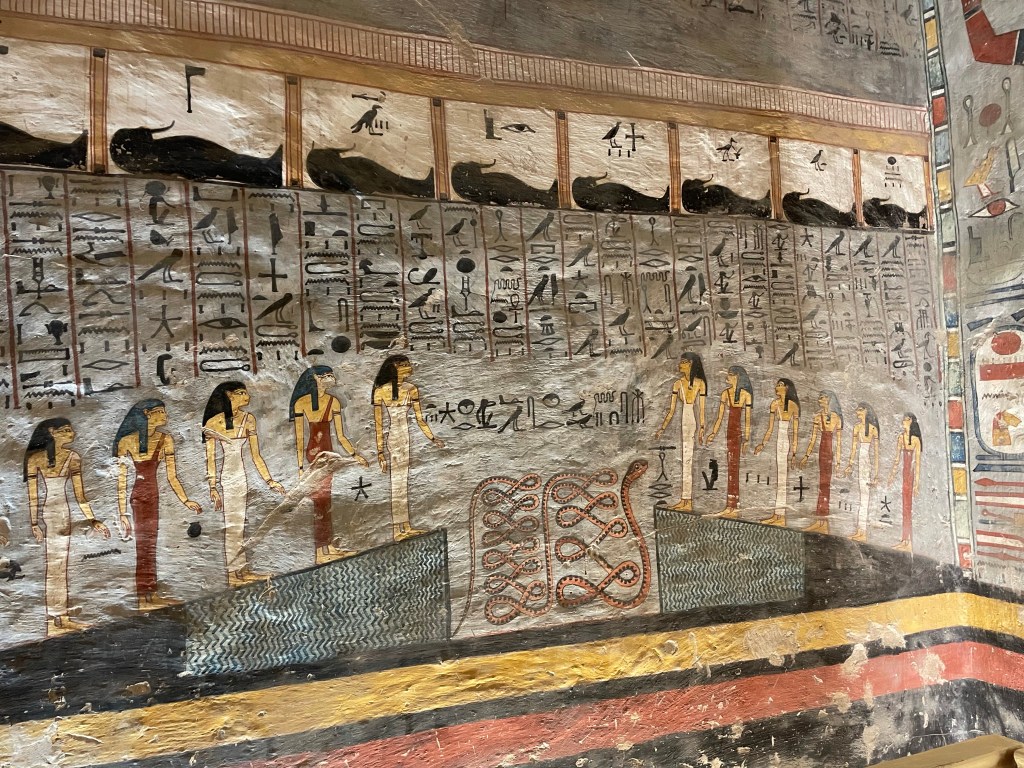
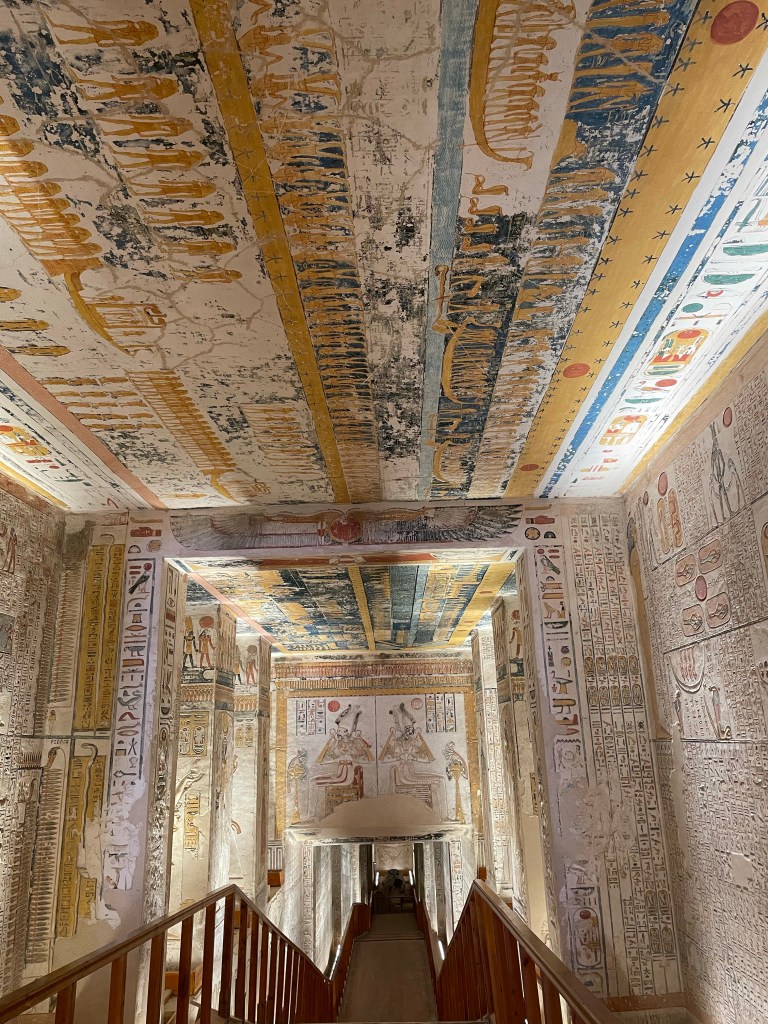
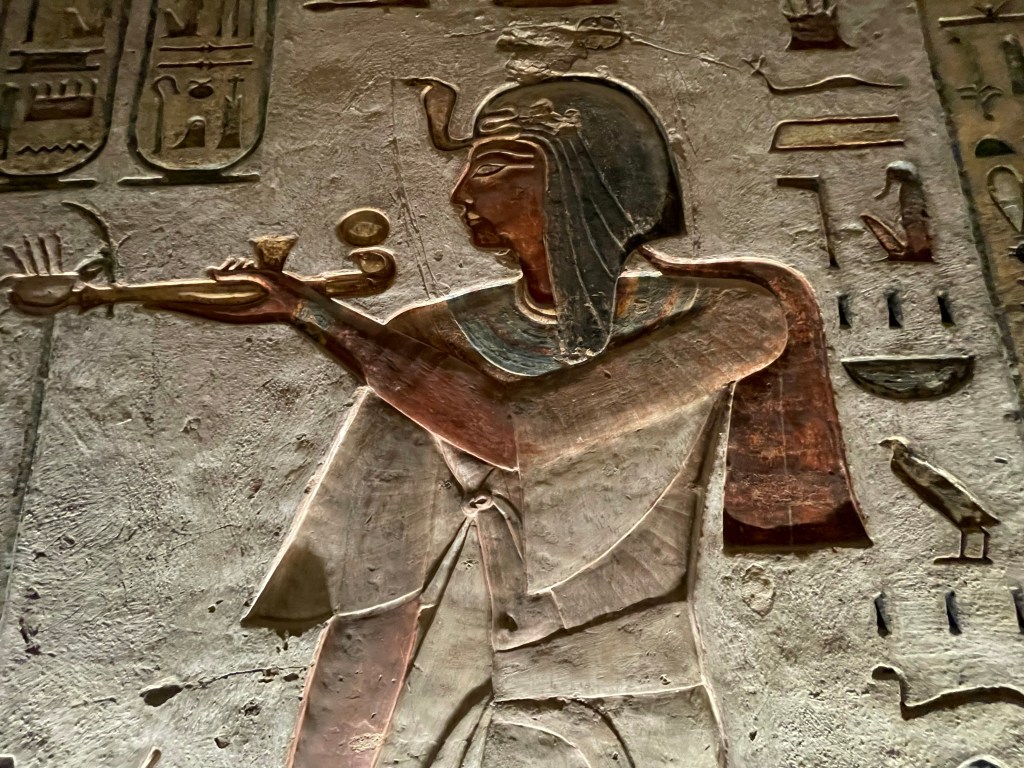
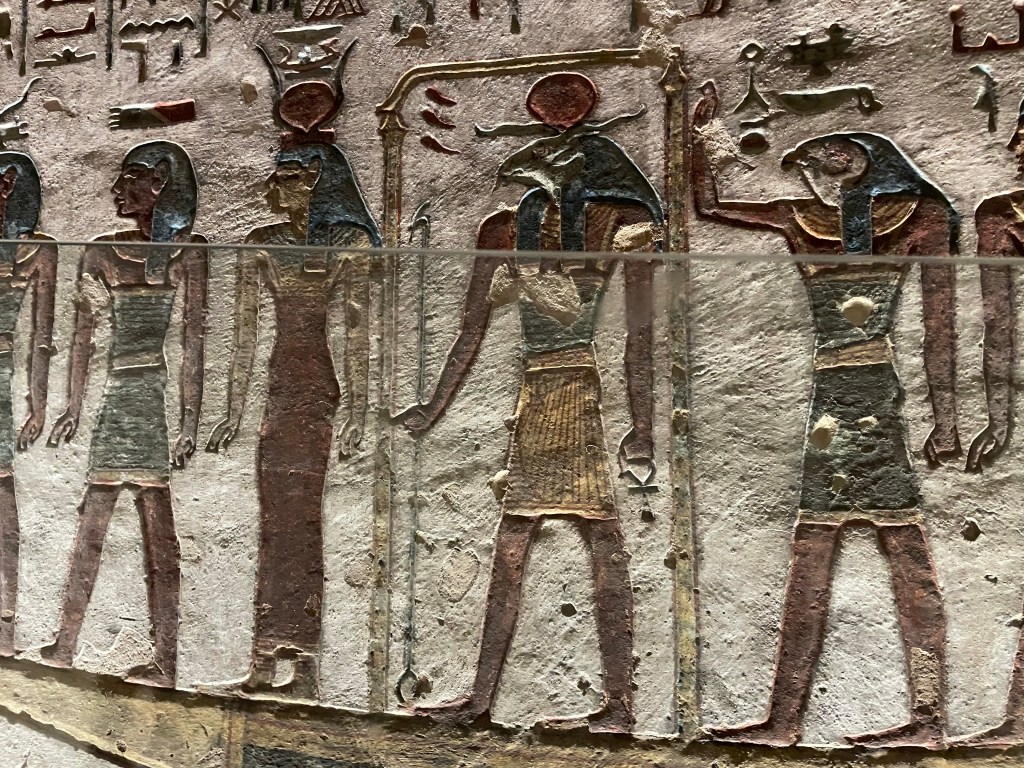
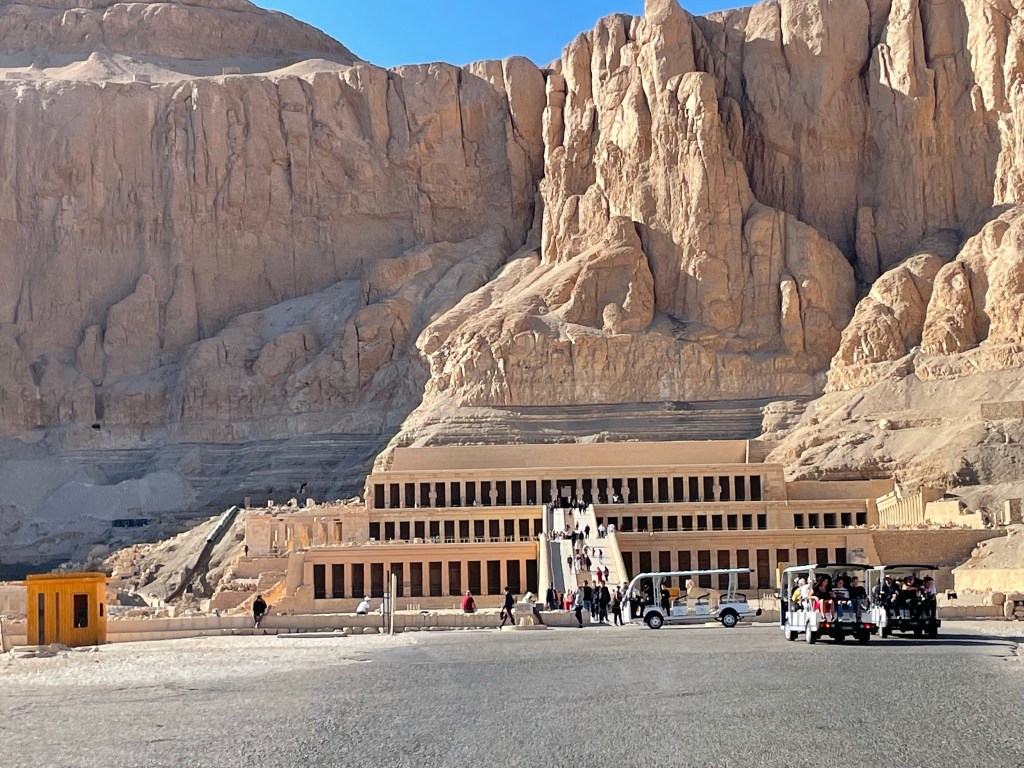
The west side of the Nile was called the city of death (because the sun sets in the west) and is where all the ancient tombs are. We took the ferry across, rented bicycles for the day and rode a 25 kilometre round trip to the Hatshepsut Temple, the Valley of the Queens, and the Valley of the Kings, which is a grouping of 62 royal tombs (our tickets allowed us into 4 of them). As soon as a Pharaoh came into power he started building the tunnel into what would be his burial chamber where he would be entombed with all of his riches. The belief was that it helped them on their journey to the afterlife. We hired an Egyptologist to guide us through and didn’t regret it. Learning what some of the symbols meant and how to piece together bits of the stories, ceremonies and gods depicted was fascinating. We were blown away by all of it!
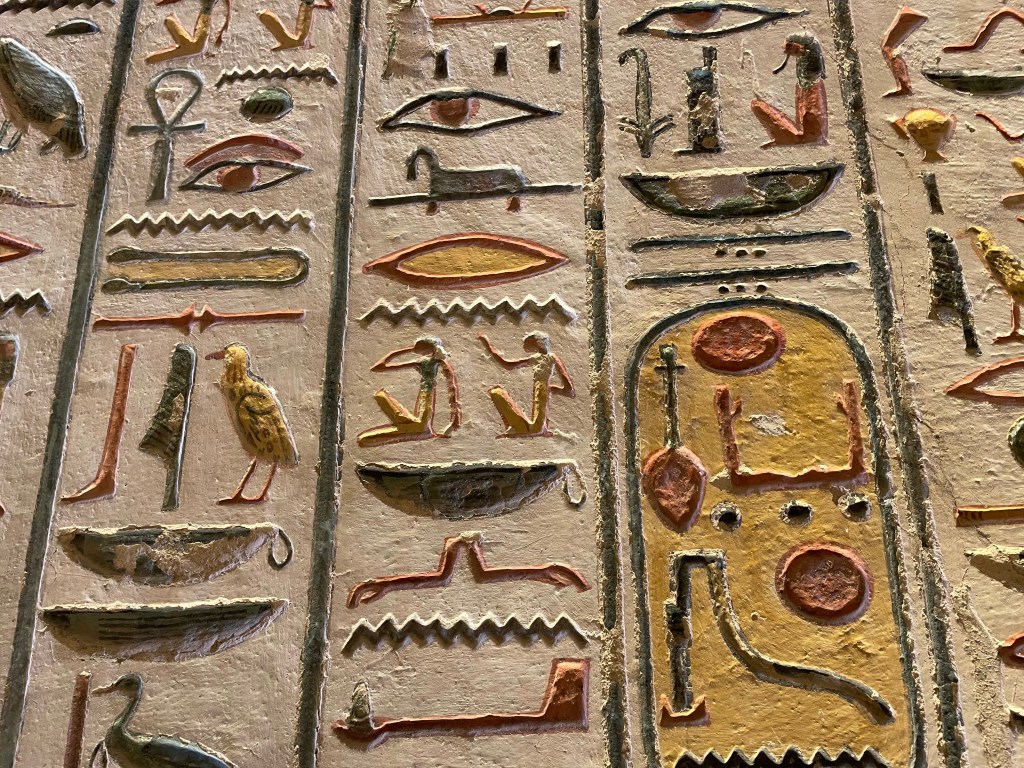
A closed tomb entrance in the valley of the kings. The first tomb we saw was Ramses IX. It was 72 meters long and had recently reopened after being closed for ten years. A close up of what the walls were chock full of. The colours were made from crushed coloured stone and mixed with egg. None have been repaired or touched in any way. The walls all along the corridor/tunnel leading down into the tombs were covered in exquisite hieroglyphs and artwork of rituals, gods and ceremony’s. Even the ceilings were covered. Walking down into the tomb of Ramses III. He had a 33 year reign, 8 wives (one of whom killed him) and 40 children.The hieroglyphs and depictions weren’t just painted. Many were carved right into the stone. Hatshepsut TempleStreet Falafels are a staple
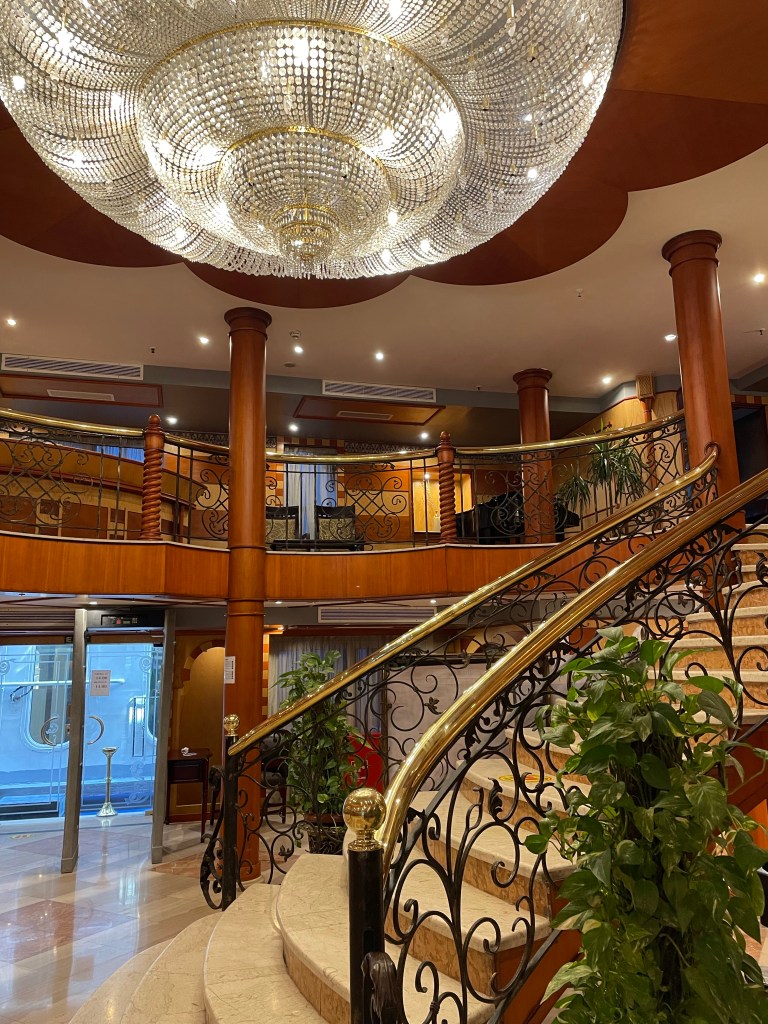
When David, of David’s hostel, where we stayed in Aswan booked us a three-day, two-night Nile cruise for $100 each I was expecting that we would be sleeping under a tarp and rowing during the day. And that was still OK with me! But when we boarded the ship I found a five-star all inclusive! Food galore and a fancy room to boot. It was too chilly to swim in the pool but we savoured our time doing nothing more strenuous than watching banana plantations drift by from comfortable loungers on the sundeck and going back and forth to the sumptuous buffet!
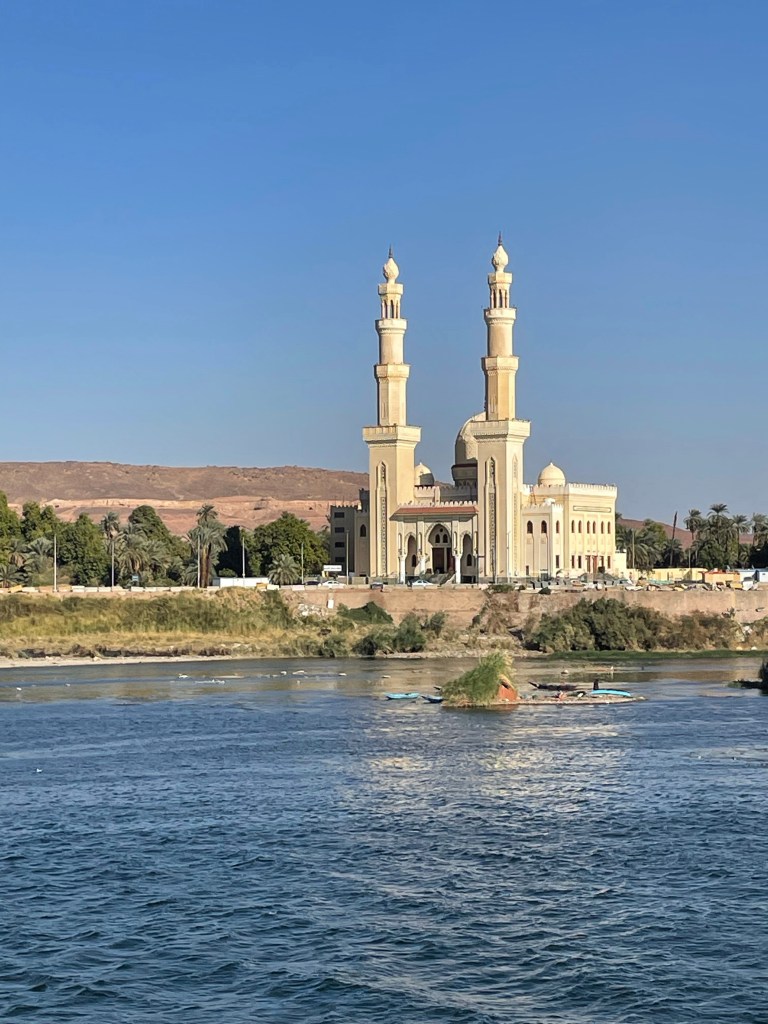
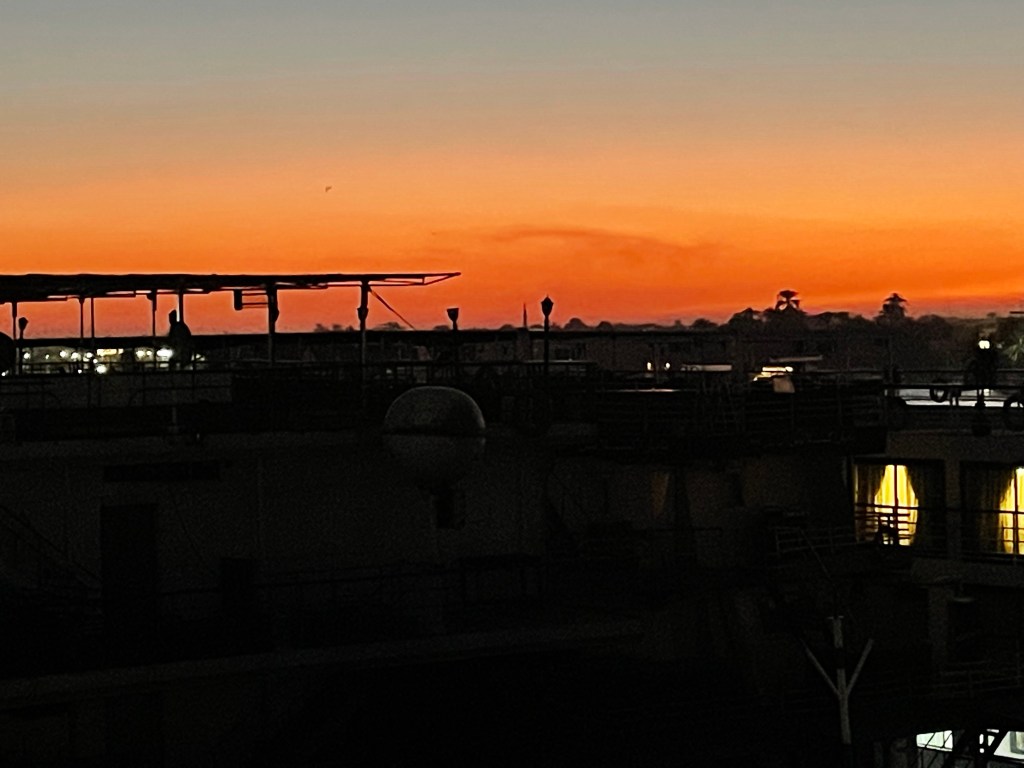
from our room Trail food rations are going to be a shock once we get to Jordan. 😥scenery along the Nile. When we went through some locks, vendors rowed fast to keep up while trying to sell their wares. They would throw up packages four decks above. Their aim was perfect! Sunset over the Nile from the ship
At 247 acres the Karnak temple is one of the largest religious complexes in the world. It was built over a span of 2000 years through the Middle Kingdom (c 2034 – 1650 BC) to the Roman period (c 30 BC – 306 AD) by multiple kings.
I am sitting in our hostel in Luxor listening to the evening prayers being broadcast far and wide. I have grown accustomed to it and find the voices soothing. I hear dogs barking and children playing. I smell wood smoke and hear the crackling of a fire in the street below where neighbours have gathered for warmth as they smoke, sip tea and visit for the evening. The sounds of fast speaking Arabic punctuated with laughter drifts up through the open window slats of our room. People in general seem happy here, in what ancient times was called, Thebes. We often hear smiling children shouting “welcome to Luxor” as we pass by. We have been awed by its sights and I feel incredibly grateful to be here.
The forecourt of the temple was a privileged place of contact between the god and the population who had limited access to the temple. The rams heads represent power,strength and fertility. The Great Hypostyle hall has 134 columns reaching a height of 15 – 24 metres. It was impossible to get the scope of it in pictures. The Goddess Maat represents the ethical and moral principle that every Egyptian was expected to follow throughout their daily lives. They were expected to act with honour and truth in matters that involve family, the community, the nation, the environment, and the gods. Riding to the Valley of the Kings
The west side of the Nile was called the city of death (because the sun sets in the west) and is where all the ancient tombs are. We took the ferry across, rented bicycles for the day and rode a 25 kilometre round trip to the Hatshepsut Temple, the Valley of the Queens, and the Valley of the Kings, which is a grouping of 62 royal tombs (our tickets allowed us into 4 of them). As soon as a Pharaoh came into power he started building the tunnel into what would be his burial chamber where he would be entombed with all of his riches. The belief was that it helped them on their journey to the afterlife. We hired an Egyptologist to guide us through and didn’t regret it. Learning what some of the symbols meant and how to piece together bits of the stories, ceremonies and gods depicted was fascinating. We were blown away by all of it!
A closed tomb entrance in the valley of the kings. The first tomb we saw was Ramses IX. It was 72 meters long and had recently reopened after being closed for ten years. A close up of what the walls were chock full of. The colours were made from crushed coloured stone and mixed with egg. None have been repaired or touched in any way. The walls all along the corridor/tunnel leading down into the tombs were covered in exquisite hieroglyphs and artwork of rituals, gods and ceremony’s. Even the ceilings were covered. Walking down into the tomb of Ramses III. He had a 33 year reign, 8 wives (one of whom killed him) and 40 children.The hieroglyphs and depictions weren’t just painted. Many were carved right into the stone. Hatshepsut TempleStreet Falafels are a staple












































 The Flip Side of Fifty