Primed for Adventure

Standard

Here we are with Christmas and 2024 nipping at our heels! The blueberry season, our best ever, was a whirlwind of people, picking, baking and bounty. For the first time I had enough blueberries for the roadside stand and everybody who came to the farm. It was awesome! Now the blueberries are settled in for the winter, the Christmas markets are finished and I am surely ready for some downtime. Fortunately my winter adventure is only a few weeks away.

This year I’m sticking close to home and dividing the trip into two legs. On January 7th I leave to hike the Florida trail, a 1500 mile through-hike that meanders through grassland, swamp, city and forest from the Everglades in the south to the Gulf Islands National Seashore in the north. I land in Fort Lauderdale, will hook up to the trail from there and hike as far as I can in the time that I have. It may be a little more urban than I’d rather but Florida certainly has a lot of wildlife. Between the alligators, snakes, panthers, bobcats and bears some of my friends are concerned, but I will be vigilant and careful. Especially since I’m flying solo again (Gord and I split up last spring but remain friends). Rest assured my story will not end with me being mauled by a bear or with my legs sticking out of a crocs mouth. At least I hope it won’t.

I’m looking forward to being fit again, but the thought of clawing my way back to fitness and detoxing from the cocaine of sugar is literally giving me hives. Even though I know I’ll feel so much better at the other end, getting there is going to be tough. I just keep reminding myself that it will get better every day as my body adjusts, I’ve done it before and I can do it again. Living outside, sleeping only in my tent, combined with the rhythm of walking all day, every day has always rebalanced my mind and body. I am counting on that reset! I’m looking forward to the simplicity of just putting one foot in front of the other and walking.

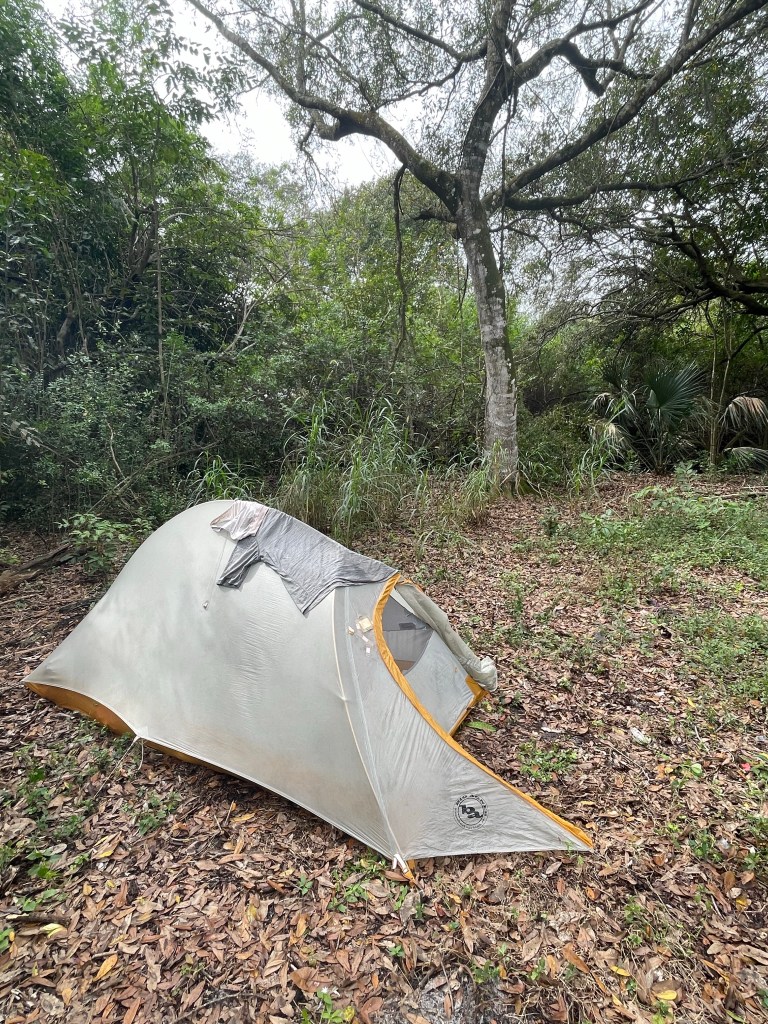
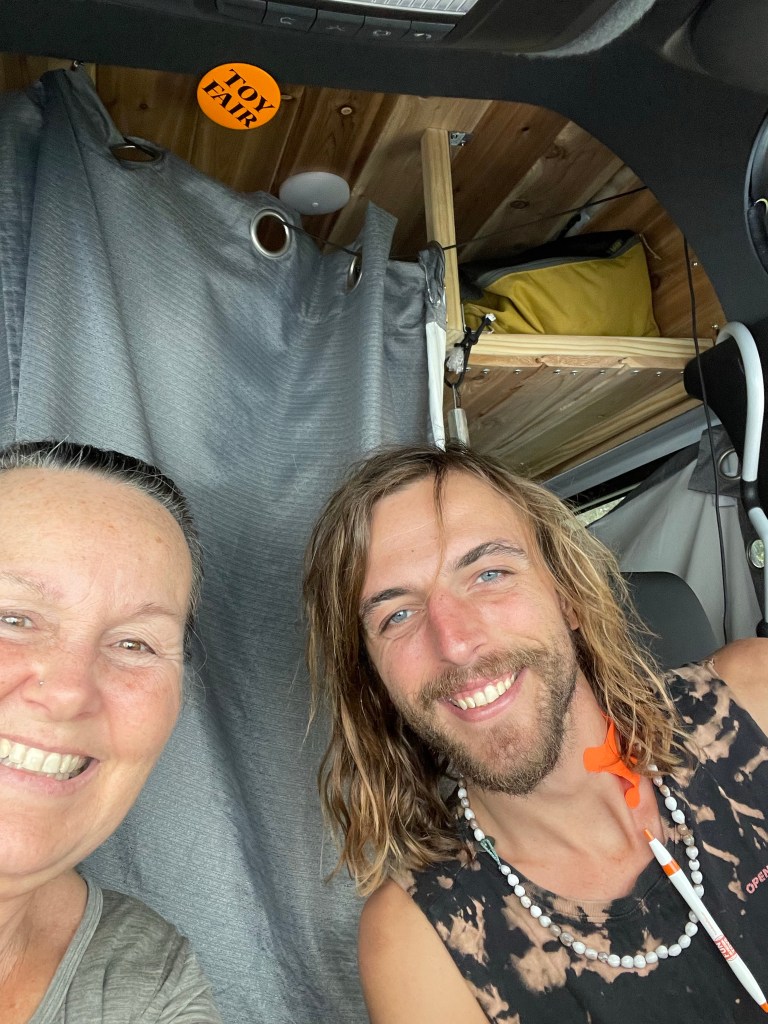
I will return home mid-February to see my granddaughter, Cadia, and work for a week or two. Then I will either return to hiking the Florida trail, start hiking the Arizona trail, or try out the van life. My son Colin built the infrastructure to transform my van into a cool camper so I may just drive south until the sun warms my toes and take it from there. Whichever way my travel legs shake out, I am packed and primed for the adventure.

Next post from the Florida trail!

Introducing Equinox

Standard

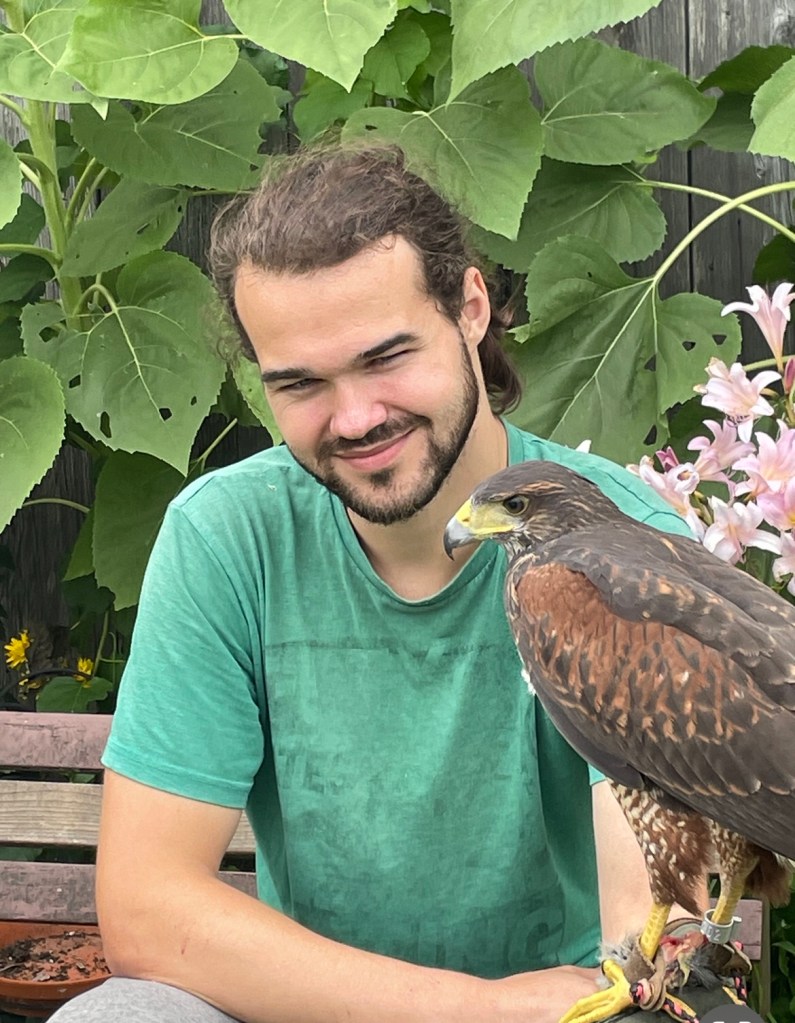
After finishing university my son Max moved home and decided to become a registered Falconer. In September, after three years of slowly and steadily learning the craft and taking courses, he got his first bird – a Harris Hawk he has named Equinox. But we call her Quin.

Waiting with anticipation for his sponsor, Amy, to take Quin out of the car. He was sooo excited to meet her!
They already have an amazing trust bond

Quin was ‘chamber raised’ with her parents and had never seen a human when Max got her at four months old from Amy, a master Falconer who also raises birds of prey. After 3 1/2 months of training, Quin flys free when they go on hunts following along with Max, comes to his arm when he calls her, and sleeps on a perch in his tiny home on our property.

There are three ways falconers make money 1. Bird abatement – Falconers are hired by airports, farmers, whoever has a bird problem that needs to be sorted. 2. Events – giving demonstrations at fairs, parties, fancy hotels etc. 3. Personal experiences – people who want a one on one experience or to go on a hunt with a bird of prey.

For me here at Balderson Blueberries, I am thrilled to be Max’s first customer for bird abatement in our Blueberry field. Quin will start working in the spring and we will have no more bird pecked berries. Hallelujah!

Being a Falconer is a great fit for Max. Quin is everything he hoped she would be. It’s quite a learning curve to read the body language of a raptor and navigating the training when you are just starting out. It’s sometimes painful (as Max has experienced), sometimes a little nerve racking, but always exciting. Congrats to Max as he embarks on this new journey.

That’s a wrap!

Standard

Between Mexico, Guatemala, El Salvador, and a tiny taste of Honduras, it has been a good adventure. It was interesting to hear from many El Salvadorans how much happier people are now, and how much safer their county is after last years massive cartel roundup (thousands of bad guys were put behind bars). We saw wondrous ruins, stunning scenery, ate tasty food, met kind people, and travelled many miles. We did not seek out enough solitude, hiking, or rough camping to suit me but the chicken buses have certainly been an adventure. As we careened around corners on steep mountain passes I convinced myself that space and time actually bend and it’s always ok … until we passed a horrific accident between a chicken bus and a transport. It was a sobering sight. And then we were evacuated off of one of our bus’s when it caught fire. But for the most part, the transportation system in Central America is user friendly and works.

The astounding hike up Acatenango and Fuego was, for me, the highlight of the trip. Seeing with my own eyes, molten lava erupt out of a volcano is a visual that I will never forget. And the fact that we had to work so hard to see it just added to the experience. I have come to the conclusion that there is a peculiar appeal in extreme challenges that seems to nourish me.

With the loss of my phone I have decided to go home early. I can’t manage my Airbnb listing, pay my bills or do my banking. I have no WhatsApp connecting me to family and friends, and if my busted up iPad suffers further damage my last lifeline of sporadic communication would be feathers in the wind. So, for many reasons, going home early is the right decision for me. Gord is staying on in Mexico and will return home as planned later in the month.

For the last 36 hours I have been biding my time at the Cancun airport. With my phone gone I am not reachable by email (couldn’t put my current account on my iPad as it required phone authentication) and I didn’t want to risk missing the plane if the flight time changed (which Flair has been known to do on occasion:)). So I wanted to be here in case. I have spent my time walking, reading, walking, writing, walking… you get the picture. I’ve been here so long it feels like I’m coming home when I get back to the airport after my long walks. But now I have checked in and departure time is almost here. In fact, I think our flight crew just walked past and the pilot doesn’t look old enough to shave. Oh well, god willing, my prepubescent looking pilot will shortly be winging me back home safe and sound. I am super excited to see everybody, but most especially my granddaughter, Cadia. I may be irreparably devastated if she doesn’t remember or makes strange with me. No pressure or anything.

As always, thank you from the bottom of my heart for taking the time to read and allowing me to share this adventure with you. It means a ton knowing that you, dear readers, are with me in spirit and along for the ride. However gritty it gets. See you on the flip side!

Arlene

Tikal

Standard

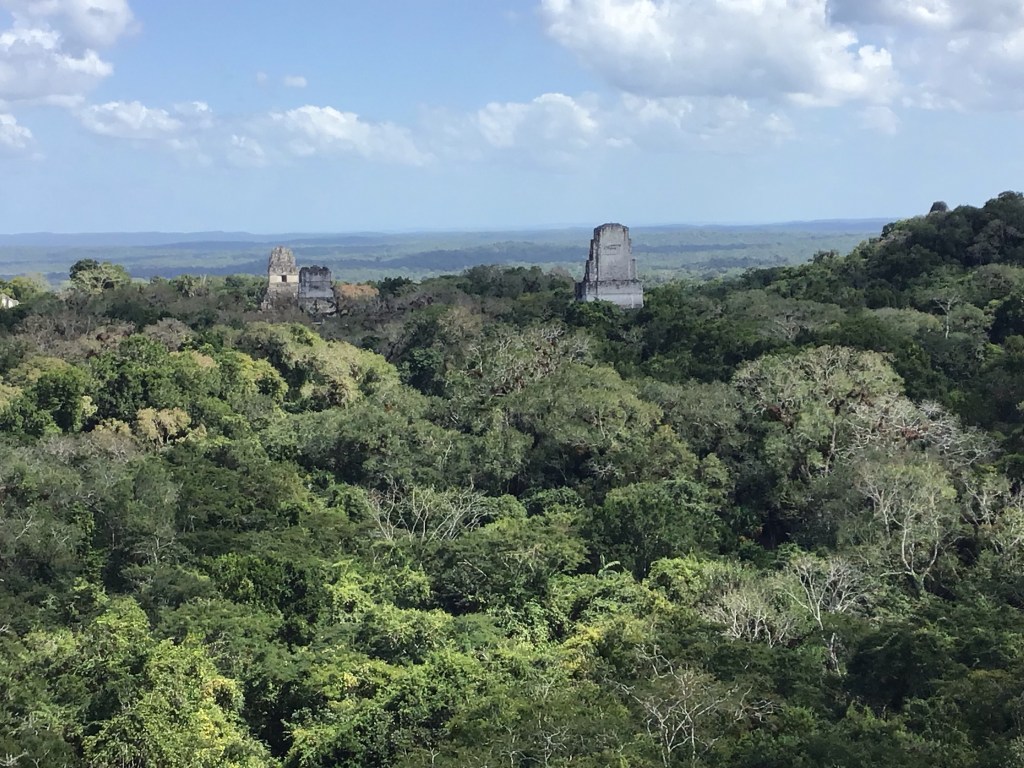
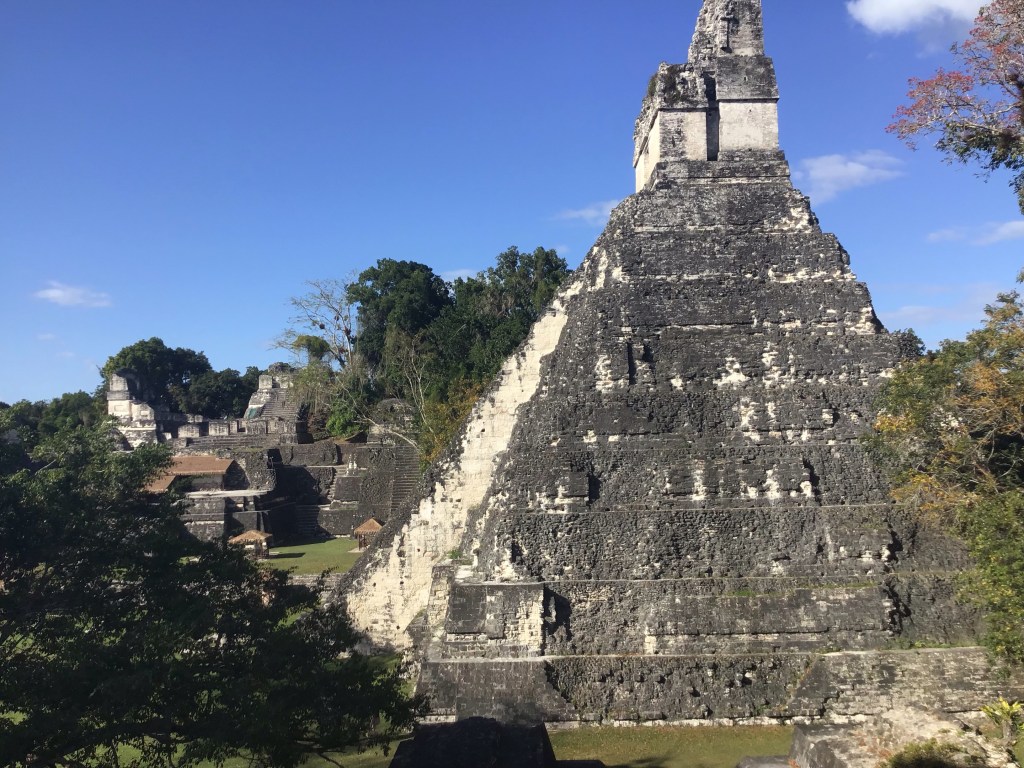
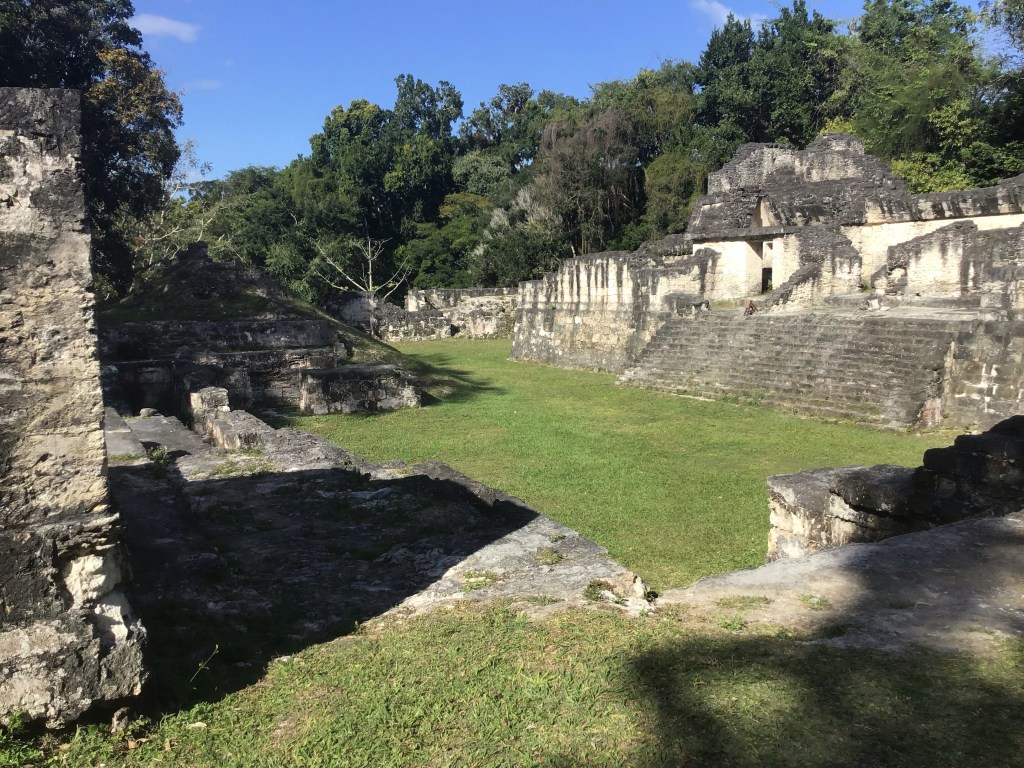
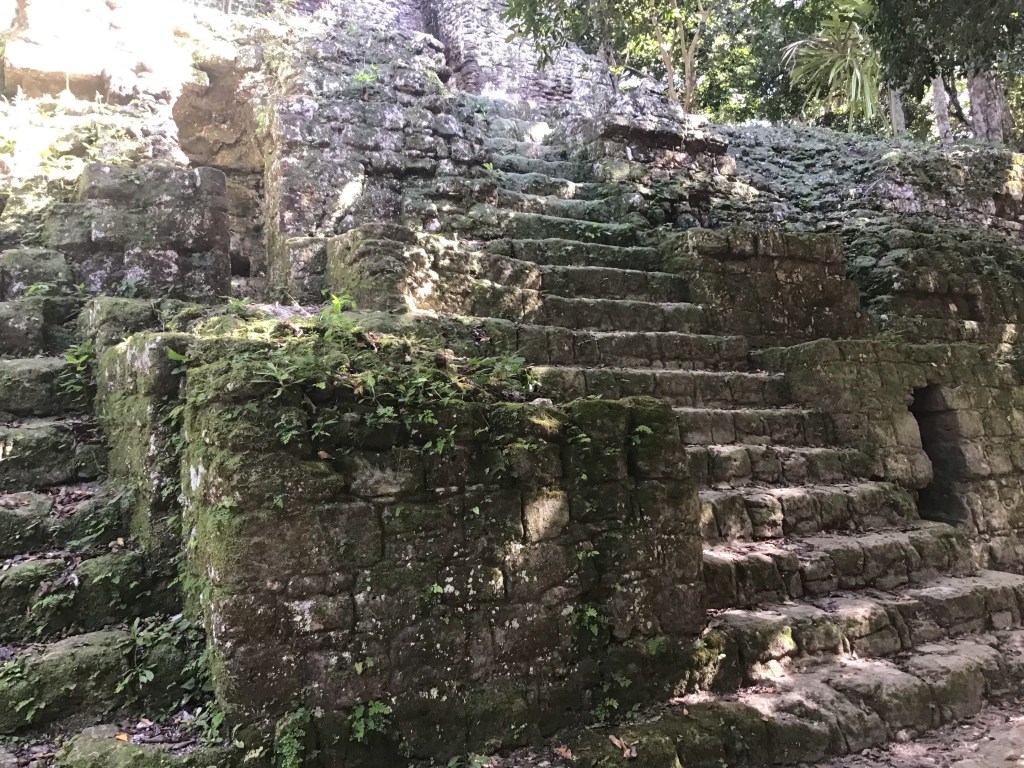
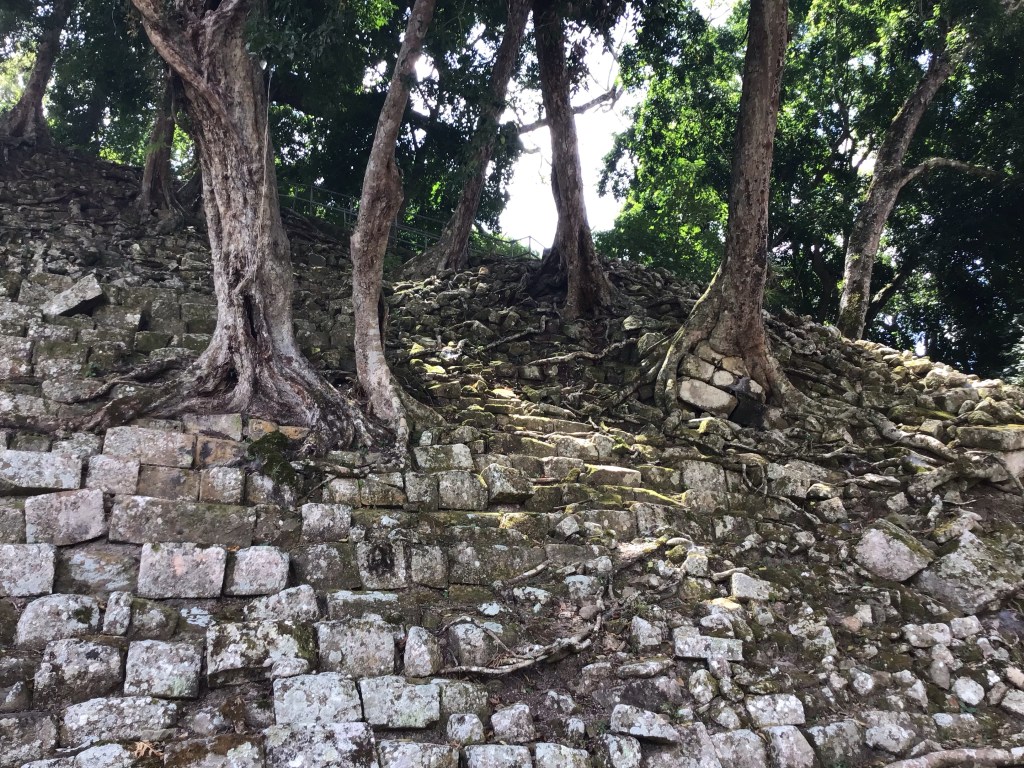
Deep in the rainforest of northern Guatemalan lies Tikal, the ruins of one of the most powerful kingdoms of ancient Maya. Discovered in 1848, more than 3000 structures can be seen on the site. And thousands of mounds with tree roots winding through them are yet to be excavated. The thought of all the historical treasures right there waiting to be unearthed sent me spiraling down the rabbit hole of my imagination! Tikal is one of the largest archeological sites of the pre-Colombian Mayan civilization discovered to date. It was populated as early as the 4th century but reached its peak during the classic period (200 – 900 AD) at which point it was abandoned. Overpopulation, pollution, and drought are the prevalent theories as to why.

Winding pathways through the jungle linked various sites. It took hours and hours to explore the entire site.
View from the top of one of the many of temples
The central acropolis
The Mayans believed the ceiba tree was the sacred tree of life
A wandering wild turkey
View from the top an astrological temple
On the beach in El Salvador I bought some salted, dried fish that reminded me of the fish jerky my dad made when we lived in the north. But I realized that it was probably only salted. So I’ve been carting this fish around with me until I was able to cook it today. It was a few different kinds of fish and was good but I’m glad to get it out of my pack.

Copan Ruins, Honduras

Standard
Over looking the ball field
The image of the macaw is found everywhere in ancient maya monuments but the most in Copan.
The hieroglyphic stairway is one of the most remarkable monuments built by the maya during the classic period. It has over 2000 hieroglyphics on 63 stairs and recounts much of the dynastic history. It is so far the longest known Mayan hieroglyphic text. The stairs are literally a stone book.
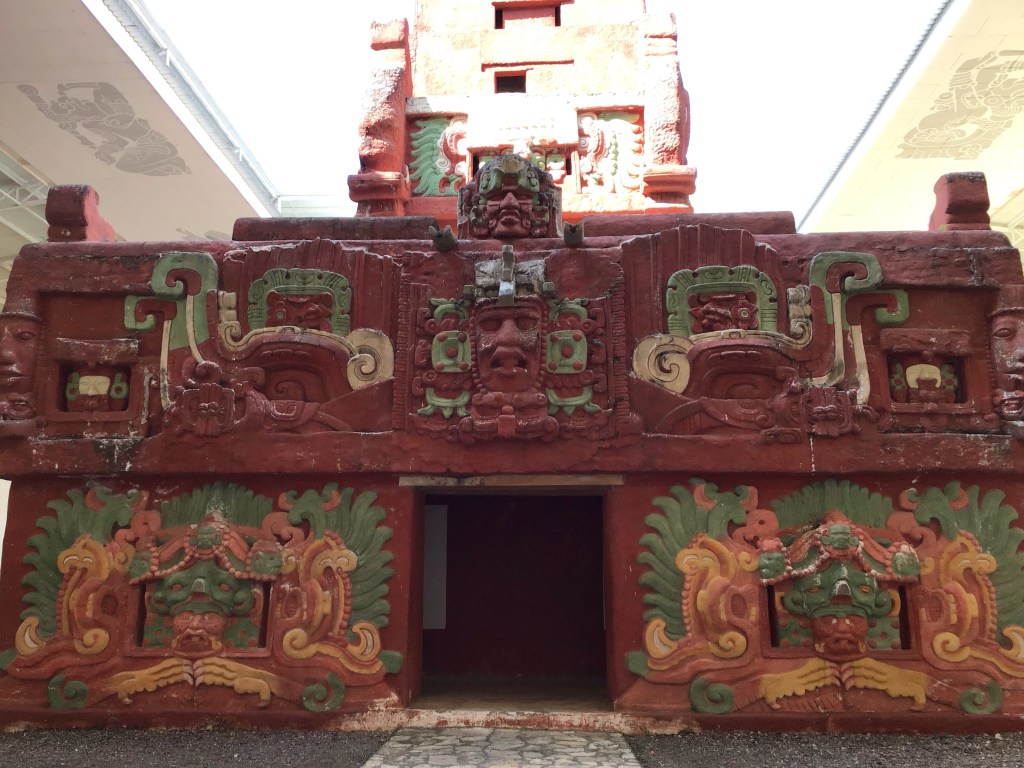
Named Rosalita, this temple was found intact under one of the temples in the main square of the acropolis
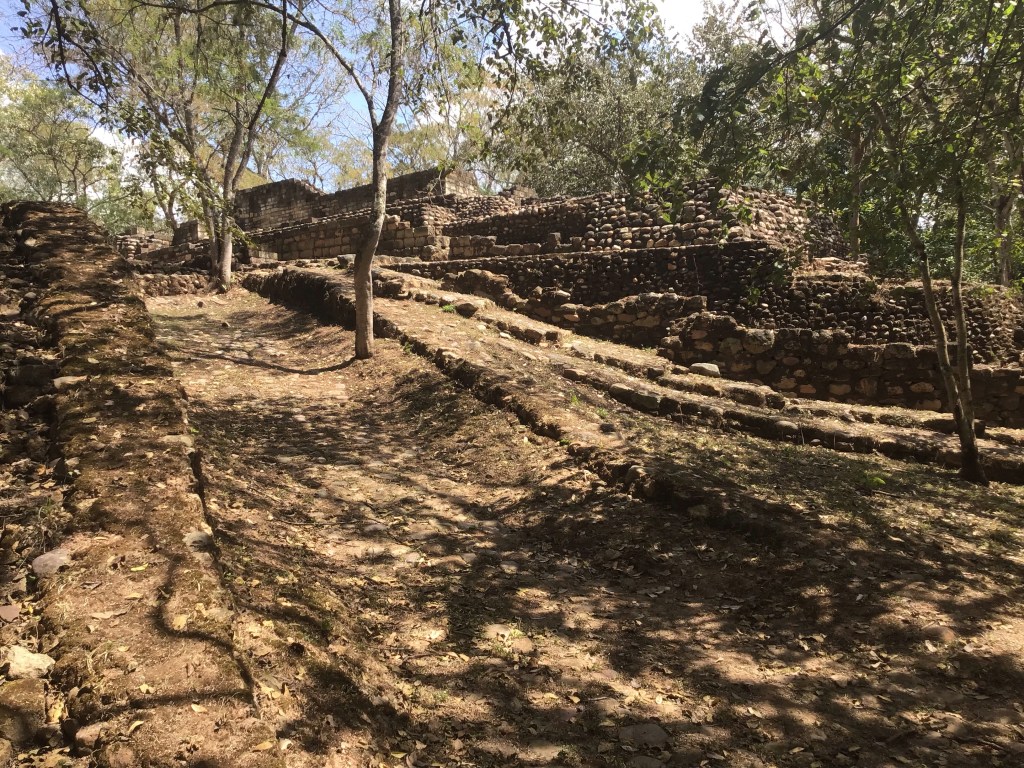
The majority of Copan’s population was distributed throughout the valley in residential groups with their own places of worship, courtyards and plazas.
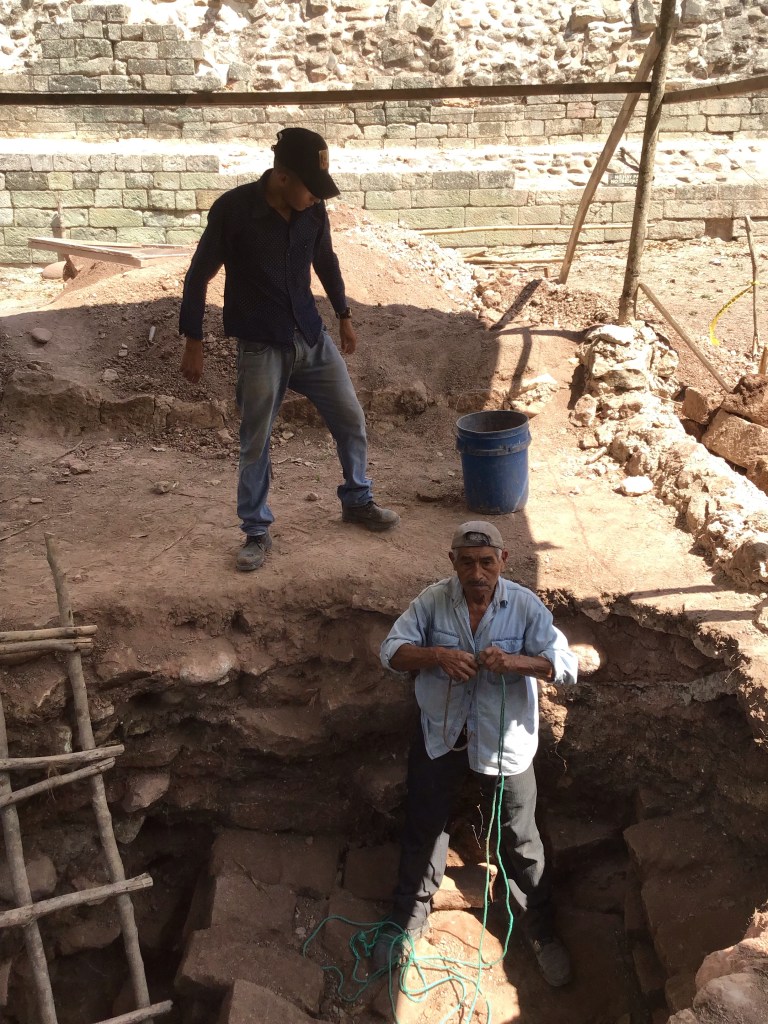
The painstaking work of hauling up dirt, bucket by bucket, straining and sifting through it all looking for artifacts
The scarlet Macaw was a sacred bird for the ancient Mayan. Not only did they use their feathers to decorate the headdresses of the high and mighty but the macaw also represented the powerful god of the sun, K’ inich Ahau in flight between earth and heaven with its vibrant colors. It was a real treat to see them up close and personal, and in flight!

El Salvador

Standard

We have spent the last week in El Salvador. Via Santa Ana we made our way to the Routes de los Flores, a collection of five cute towns that were reputed to be lovely. I pictured a 27-kilometre route along a quiet country road lined with flowers. It was a loud, busy road, nice scenery, but no flowers. And expensive accommodation. So we skipped the last town and beelined it to the coast. As we walked along the road, with no buses in sight, a couple stopped and offered us a lift in the back of their pick-up truck. 45-minutes later, after a helter skelter ride down the side of a mountain to Jujutla, they let us off and pointed out the bus we needed to Metalio. It was just one of the many random acts of kindness that we experienced in the beautiful and mountainous El Salvador.

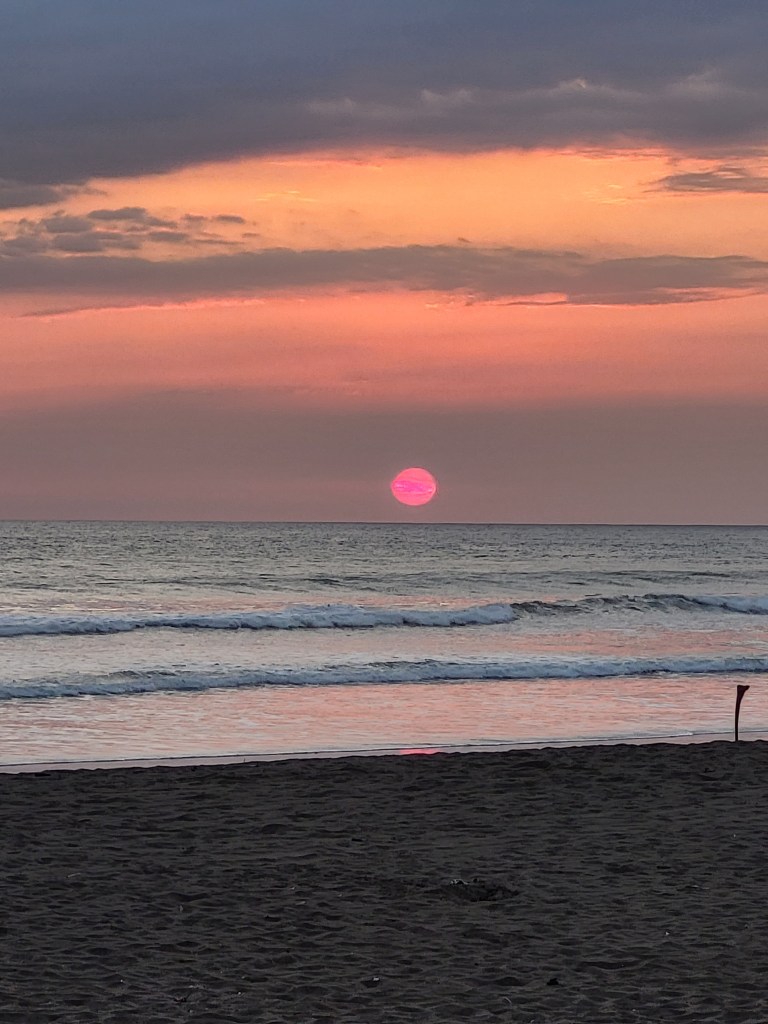
At the Metalio beach, at a virtually empty seaside outdoor home restaurant, the owners, for a small fee, allowed us to pitch our tent on their property for a few days. It was a nice rest with shade, sand, sun and surf. Except on the first afternoon. I was going full stride, eyes on the beach, reader in hand, and didn’t notice the low hanging bamboo support beam of the palm canopy. I nailed my head on the edge of it so hard it dropped me straight to the ground like a shouldered sack of oranges split open. Everyone rushed over with concern and I’d like to say that I was more embarrassed than hurt, but it took a couple of hours for the stars to dim and a couple of days before my head stopped aching, so I’m guessing it was about even. Because I was pretty embarrassed!

The main traditional food in El Salvador are pupusa’s. They are two tortillas fried together with a filling of beans and cheese and served with a spiced fermented cold slaw and tomatoe sauce. Very tasty and super cheap!

I’ve had some unfortunate ‘device’ luck on this trip. In Mexico my iPad dropped out of a top bunk to the floor and the screen got smashed. My kobo reader called it quits in El Salvador and yesterday a Guatemalan mini bus claimed my new iPhone. We were on a circuitous route travelling from the El Salvadoran border town of Sam Christopher, through southern Guatemala, heading for the Copan ruins in Honduras. I had my phone in hand, keeping track of where we were, when the crowded little mini bus stopped suddenly and we were immediately rushed off and onto another bus. It was 10 minutes later, zooming along in another direction, crushed by bodies, when I realized I wasn’t holding my phone anymore. My lifeline is my phone and it was a devastating blow. Not just the expense and inconvenience, but that my phone was currently unlocked (which I know better and in hindsight is embarrassingly ridiculous) and all my passwords are on my phone. Fortunately my broken iPad, now glitchy, is still functioning for which I’m very grateful. But what I’m the most grateful for is my genius tech wizard daughter, Sabrina! She was able to lock and wipe my phone from her home in Hinton. I can’t access a lot of things I need from my my iPad but at least I’m not worried about my life being hacked. A few months ago (through no fault of mine:)) I experienced a complete identity theft (phone taken over, bank accounts emptied, everything) and I don’t want to ever go through that again. Nevertheless, even with the relief of knowing I’m safe from being hacked, I’m feeling a bit battered and off my game. That’s ok. Life lessons are usually hard won and come at a cost, in one form or another.

We are now in the rowdy little cowboy town of Chiquimula. Tomorrow we will head into Honduras to see the Copan ruins.

El Fuego

Standard

We arrived in the lovely colonial city of Antigua and immediately arranged a guided climb up the 3975 m high Acatenango volcano. It is touted as one of the toughest climbs in the area and from the top, gives a great view Fuego, a highly active volcano that regularly spews volcanic ash. We weren’t expecting the trek to be easy but we didn’t realize just how deep we would need to dig on the two-day excursion.

Our group consisted of only Gord, myself and our guide, Vinciente, a wiry 57-year-old who has been guiding for 36 years and spoke no English. I didn’t know what his thoughts were when he saw our age and ability, and to be honest, I didn’t know what his thoughts were when we finished. Relief that we didn’t die on his watch I expect. But he was unfailingly kind, patient, and attentive.

Vinciente

Right off the mark the trail started steep and continued with unrelenting steep for the next five hours until we reached our camp an hour from the top of Acatenango. The itinerary was to hike up the last hour to the cone at 4 AM the next morning. We also had the option to pay extra and continue on right then for a closer look at Fuego. It meant climbing straight down the other side of Acatenango and straight up Fuego. Vincente told us it would be five more hard hours. Gord was physically finished and didn’t think he had it in him but, like me, he also wanted to see what we came to see. So he gathered his resolve and abounding grit, picked up his poles and we rallied forth. It was 3 PM at that point.

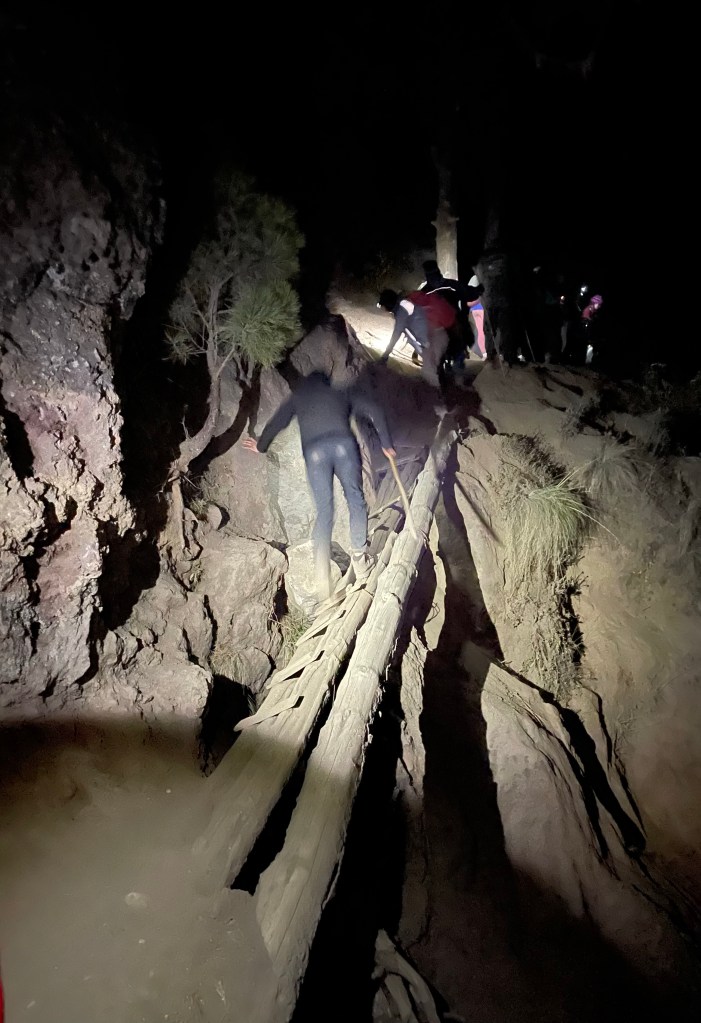
On the the narrow, steep, winding trail of loose volcanic scree climbing up Fuego all I could think was, how in the hell are we going to get back down this trail in the dark. We had headlights, but still.

These volcano excursions are a big business here. It’s a pretty unique experience and there were lots of people on the mountain (I’m sure there were some our age but we didn’t see any). We had periodically heard booming and seen belches of smoke and ash, but when we finally clawed our way over the lip of the lower ridge line, we could see Fuego in all its power and beauty.

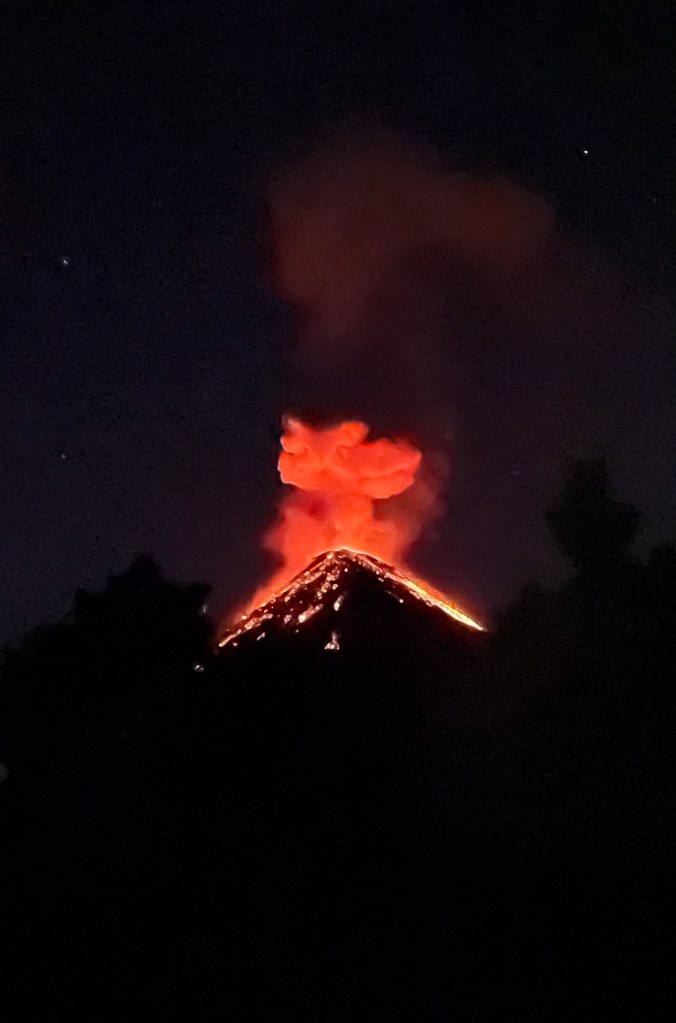
Everybody was at a completely safe distance but we hung further back down the ridge line, more from fatigue than anything else. By the time it was dark I felt almost hypothermic. And then it happened. A thunderous boom and molten red lava exploded from the crater. A collective gasp went up as everybody stood in breath-taking awe of the extraordinary sight.

On the ridge line
You can see the people standing closer than us on the ridge line
I missed getting a picture on the ridge line because my hands weren’t working right when I needed them to. But here was another incredible eruption that we saw on our way back to camp

In the pitch black on the way down I wanted to take a picture of the headlights snaking down the mountain, but I needed my total concentration and focus on the task at hand. Namely, staying injury free and not falling. I found myself using the breathing techniques that I used during labor and repeating to myself over and over, “relax your shoulders, relax your body, you can do this, you can do hard things”. With nothing left physically and working to control the fear, it became a purely mental challenge. When we finally reached the bottom of Fuego and started up Acatenango towards our camp, I was exhausted and Gord was beyond exhausted. But at 9 PM, feeling a little the worse for wear, but injury free, we stumbled back into the rudimentary shelter we called home for the night. Gord and his new knees did great. As tired as we were, we were happy (and a little bit proud) we had done it. But we passed on getting up at 4 AM – we had seen what we wanted to see.

On the hike back to camp
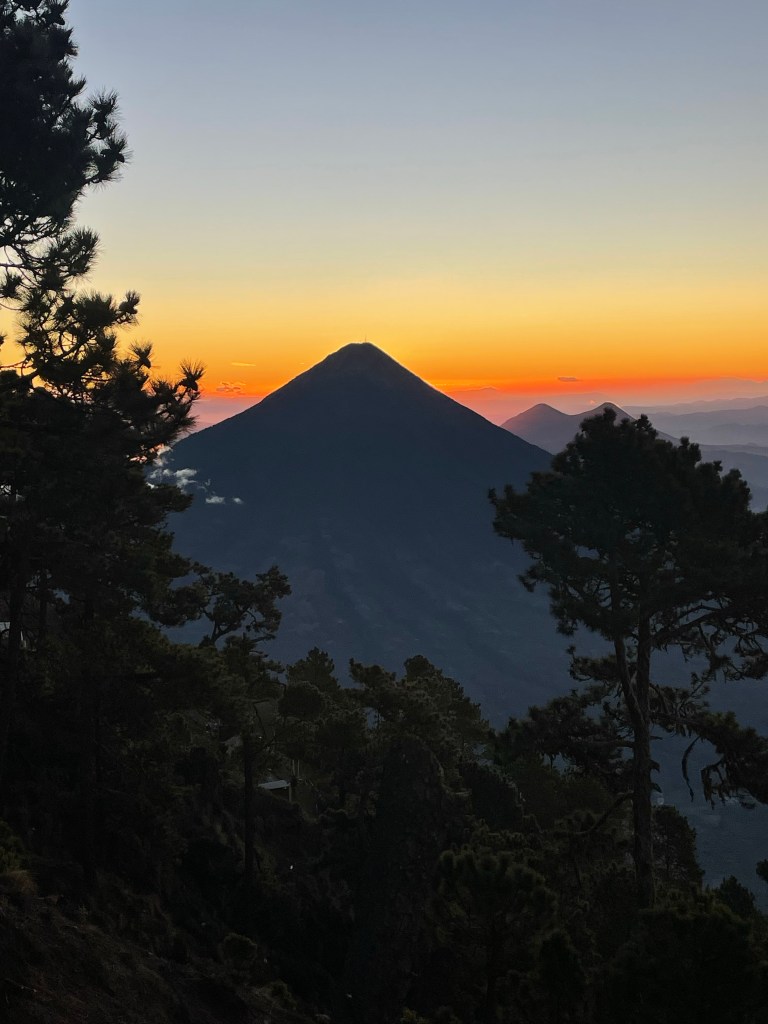
Looking across to Fuego from our camp

The next day at a rest stop half an hour from the very bottom I overheard an out of breath girl on her way up earnestly saying to her guide, “Is it downhill now or do we have just a little bit more up and then down”. Oh sweet summer child, I thought. Good luck!

Sunrise

Hiking Lake Atitlan

Standard

It felt wonderful to be hiking again against the spectacular backdrop of Lake Atitlan. When the roads ended it was a treat to be only on trail. And when the trail ended at Santa Cruz we took a boat to our final village of Panajachel.

San Juan
San Pedro. A typical Guatemalan stove
A small cabana hotel in Jabalito where, for a fee, we were allowed to pitch out tent. Such a gorgeous setting but the barking dogs and disfuncional night crowing roosters were still in attendance.
Hiking the trail

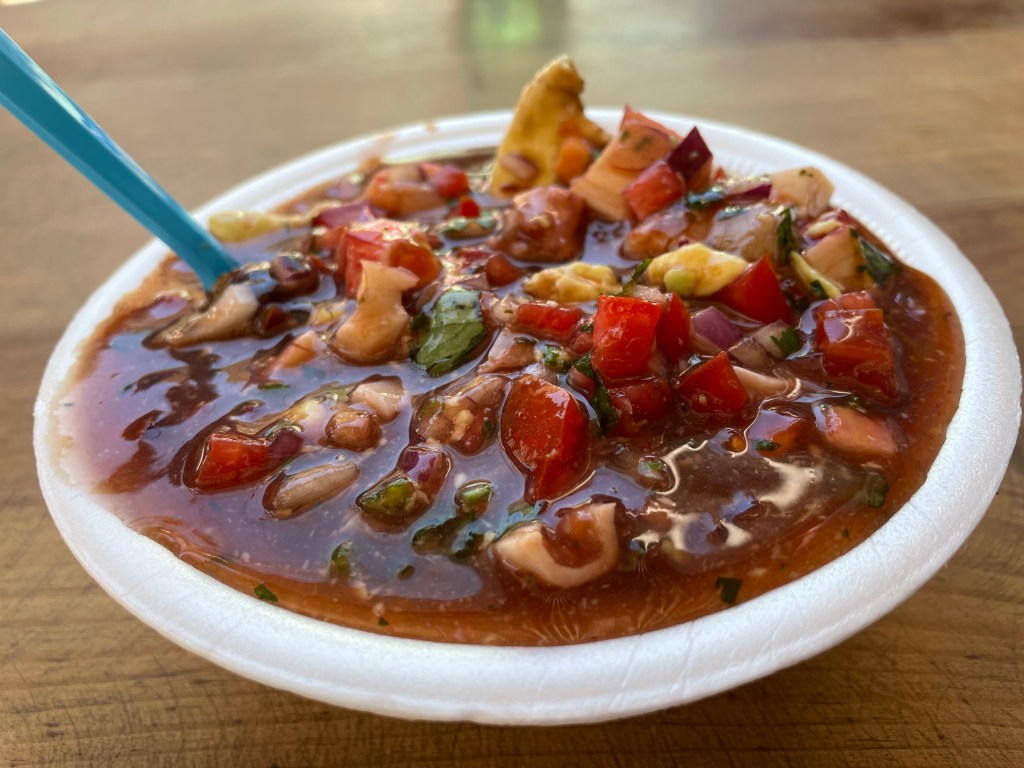
I finally had a chance to try the traditional dish of cervechia – a cold seafood soup in Panajachel. It was a combination of shrimp, crab, calamari, oysters, avacado, lime juice, hot sauce, salsa, with tomato vegetable broth and some brown liquid she squirted in. I will be having it any chance I get and I think when it’s no longer available my taste buds will be yearning for it. I savoured every bite!

Today we say goodbye to Lake Atitlan and head to Antigua. Hopefully our muscles are conditioned enough to tackle the upcoming volcanoes.

Guatemala

Standard

We are now in Guatemala and have been exploring Lake Atitlan for the past few days. Getting here was pretty straightforward. We walked across the Mexico/Guatemala border into the town of Tecun, took a five hour bus ride, the driver let us off at a random street corner and pointed us down the intersecting road. We started walking, ten minutes later a chicken bus stopped and picked us up.

Chicken buses are easily recognizable by their bright colors, rickety appearance, noxious fumes belching out of the back, and the quantity of people and chickens aboard. The drivers often delight in passing on blind corners as they speed up and down the steep curving roads. Gord said that if a volcano blows, our driver is the man we want.

An hour later we were let out on a corner in Panajachel (the little town on the northern shore of Lake Atitlan where I had asked to be let out at). We walked up the road and found a cheap hotel. After three days of exploring we realized that we were not in Panajachel – we were in Santiago Atitlan, a town across the lake on the southern shore (no wonder I couldn’t get my bearings following the rough guide map 😂). Nobody here speaks any English at all and while I’ve been thrilled at how well my humble Spanish has been serving us, it’s clearly not foolproof. Too funny!

My go-to food has become fresh avocados, sweet onion, tomato and lime juice on a couple of fresh warm tortillas. So delicious! And cheap! I bought a bizarre looking brown drink on the bus (where vendors also sell food and drinks) that looked like mud water with floaties. From my past experiences, I anticipated it would be cold and delicious regardless of its appearance. Nope! It tasted like warm mud water with floaties. I figured it was some kind of oat, rice or bean water and good for me so down the hatch it went.

Lake Atitlan is a beautiful, turquoise lake encircled by three volcanos, at least 340 metres deep, it’s shores dotted with villages. Yesterday we left Santiago and hiked to San Petro along a steep volcano road lined with coffee and avocado trees and corn. Pickers and farm workers dotted the countryside. The farming is all done with a hoe, a pick axe and a machete, not one tractor to be seen. We’ve seen old men carrying loads on their back that defy logic and gravity (one man was staggering under the weight of three -one hundred pound bags). Truly astounding!

View from our little corner room

We camped for the night in small sheltered area out of sight and high off the road. We woke at 6:30am to people already working and chopping corn husks around us and were greeted with “buenas Dias amigos”. The Guatemalan people we have come across are all helpful and kind.

Our camp spot

We are now in a little hotel room in San Pedro with a gorgeous view of the lake. Like the room in Santiago we are paying $10 each a night. We will stay here for a couple of nights before hiking to the next village.

A village lady making tortillas

Holy Quacamole

Standard

Our friend Elvis and his girlfriend Andreas picked us up at the Tapachula bus terminal after a 21 hour (comfortable) bus ride from Mérida, drove us to his hometown and then turned over his cozy room behind his welding shop to us for our stay. We met him through my friend Nancy when he was visiting Canada last summer. He lives in the border town of Ciudad Hidalgo and we are having an enjoyable week with him roaming the countryside seeing local sights, hearing great music, meeting his good friends, all while experiencing the most delicious authentic mexican food.

Had an amazing fajita feast with the best quacamole I have ever tasted in the little hill town of Union Juárez
Hill town of Union Juarez
A nice hike up to Pico de Loro
A feisty 85 year old abuela (grandmother) made the steep climb to the top

At the home of Elvis’s friend, Ipolito, we had a wonderful lunch of taco’s (the tortillas in Mexico are made fresh every day, sometimes with a mixture of wheat flour, but often with just corn flour), and a variety of exotic fruits that he has on his tilapia farm. He gave us a tasting tour and we enjoyed so much fruit.

Tasting fresh Yucca
On the way around our tasting tour we came across an opossum in the eavestrough. Poli swung it down bare handed. The dogs went wild, the opossum was ferocious and a hair-raising time was had by all, with no injuries to man or beast…but it was a narrow miss. The picture doesn’t show the snapping and thrashing.
The opossum was not impressed!

Andreas (Elvis’s girlfriend) made us an awesome breakfast one morning of deep fried cauliflower, spiced rice, black beans and salsa.
Illegal (but accepted) trading and traveling across the River between Mexico and Guatemala is a common practice.